The 2026 Condo Liquidation 2026 Tool (Guide & Data)
The 2026 Condo Liquidation has officially entered its most aggressive phase. As shadow inventory surges and investor flight accelerates, we analyze the structural collapse of the secondary market in Canada's most expensive urban centers.
The 2026 Condo Liquidation: Analyzing the Secondary Market Collapse in Toronto and Vancouver
Short Answer: The 2026 Condo Liquidation has officially entered its most aggressive phase. As shadow inventory surges and investor flight accelerates, we analyze the structural collapse of the secondary market in Canada
The 2026 Condo Liquidation has officially entered its most aggressive phase. What began as a trickle of motivated listings in late 2025 has transformed into a structural liquidation event across the Greater Toronto Area (GTA) and Metro Vancouver. As the $110 oil shock of March 2026 forces interest rates to remain "higher for longer," the math that sustained the investor-led condo boom of the last decade has finally broken.
1. The Anatomy of the 2026 Condo Liquidation
The term "liquidation" is not used lightly. Unlike a standard market correction, where activity slows down, a liquidation is characterized by a "price discovery" process that happens at high volume.
Why the Tipping Point Happened Now
Here's the thing: For years, investors held onto cash-flow negative units because they banked on capital appreciation. In 2026, capital appreciation died.
- The Negative Carry Trap: With mortgage renewals hitting 7.5% and 8%, the average one-bedroom condo in Toronto is losing $2,000 a month in cash flow.
- The Capital Gains Shift: New tax regimes introduced in early 2026 have made "holding onto the loss" a non-viable strategy for mid-sized investors.
And that's why it matters: When investors stop believing in the "Exit," they all rush for the door at once. That is the essence of the 2026 Condo Liquidation.
2. Shadow Inventory: The Hidden Wave of the 2026 Condo Liquidation
One of the most concerning aspects of the current collapse is the volume of "Shadow Inventory" during this 2026 Condo Liquidation.
Identifying the Shadow Wave
Shadow inventory refers to units that are not officially on the MLS but are destined for sale.
- Pre-Construction Assignment Defaults: Thousands of units reaching completion in March 2026 cannot be closed. To avoid forfeiture, buyers are attempting "off-market" assignments at 40% discounts.
- Corporate De-leveraging: REITs and private equity funds are quietly trimming their portfolios to shore up their balance sheets against rising debt costs.
3. Toronto's Ground Zero: The 2026 Condo Liquidation in Liberty Village and CityPlace
If you want to see the 2026 Condo Liquidation in its purest form, look at the high-density clusters of downtown Toronto.
Price Discovery in High-Density Clusters
In Liberty Village, inventory has hit a record 14 months of supply.
- The "Shoebox" Discount: The 450-sq-ft units, once the darling of the Airbnb investor, are seeing the steepest declines.
- Investor Flight: These units are no longer attractive to end-users (who need space) and are toxic to investors (who can't make the rent cover the mortgage).
But here's the problem: When a single building has 50 identical units for sale, the only way to sell is to be the cheapest. This creates a downward price spiral.
4. Vancouver's Struggle: The 2026 Condo Liquidation in the GVA
While Toronto is experiencing a volume-led collapse, Vancouver's 2026 Condo Liquidation is defined by a total evaporation of the "Luxury Investment" tier.
The Collapse of the Luxury Tier
In the West End and Coal Harbour, the "Safe Haven" narrative has collapsed.
- The Empty Homes Tax 2.0: New, more aggressive municipal taxes have made holding vacant luxury condos prohibitively expensive.
- Flight of Foreign Capital: International capital, particularly from the Hong Kong and mainland China markets, has pivoted toward U.S. and Singaporean assets, leaving the Vancouver secondary market without its primary liquidity engine.
5. Mortgage Renewal Pressure and the 2026 Condo Liquidation
The "Mortgage Cliff" of 2026 is the primary fuel for this 2026 Condo Liquidation.
The Payment Shock Analysis
Most condo investors in Toronto and Vancouver bought their properties in 2021 with 1.9% variable or 2.5% fixed rates. Upon renewal in March 2026, they are facing rates nearly triple their original amount.
Here's how it works: An investor with a $600,000 mortgage who was paying $2,500 is now being asked for $4,400. Even with rents at all-time highs, there is no way to bridge that $1,900 gap.
6. The Role of the Bank of Canada in the 2026 Condo Liquidation
Many hoped the Bank of Canada would "pivot" and cut rates in time to save the condo market. That hope died with the March 2026 Oil Shock.
The Inflationary Deadlock
With crude oil hitting $110 a barrel due to geopolitical tensions, the Bank of Canada's hands are tied.
- Rates Higher for Longer: Inflation is "sticky," and the BoC cannot cut rates without risking a total currency collapse.
- The Sacrifice of Housing: Policymakers have implicitly decided that the housing market must be the "relief valve" for the broader economy.
7. Investor Flight: The Psychological Shift in the 2026 Condo Liquidation
There has been a fundamental shift in the "Investor Psyche" during this 2026 Condo Liquidation.
From "Passive Income" to "Active Loss"
In the 2010s, condos were seen as a "get rich slow" scheme. In 2026, they are seen as a "get poor fast" trap.
- Regulatory Fatigue: Rent control, increased landlord-tenant board delays, and new vacancy taxes have made being a landlord a full-time, low-margin job.
- The Yield Gap: When you can get a 5.5% "risk-free" return on a GIC, why would you take a negative return on a condo with a leaking roof and a difficult tenant?
8. Analyzing the Secondary Market Collapse: Why Resale is Diverging from New Build
A key feature of the 2026 Condo Liquidation is the total decoupling of the resale market from the developer's "replacement cost."
The Replacement Cost Fallacy
Developers often claim that "prices can't go down because labor and material costs are high."
But here's the thing: The market doesn't care about your costs; it cares about what a buyer is willing to pay.
- Distressed Sales vs. Developer Pricing: While developers are holding prices steady (using "free parking" or "rental guarantees" to hide the drop), the secondary market is trading at a 25% discount to new-build pricing.
9. The "Shoebox" Crisis: Small Units and the 2026 Condo Liquidation
The 2020s were the era of the "Micro-Condo." The 2026 Condo Liquidation is their day of reckoning.
The End-User Problem
Units under 500 square feet have almost zero utility for families or growing households.
- The Single-Tenant Limit: These units are only suitable for single young professionals.
- Remote Work impact: Now that more people work from home (thanks to the "Agentic Revolution" detailed on Reacit.com), the need for a dedicated office space has made micro-condos obsolete.
10. Secondary Market Collapse: The Spillover into the Rental Market
Will the 2026 Condo Liquidation lower rents? Surprisingly, the answer is no - at least not yet.
The Rental Market Paradox
As investors sell their units, many are being bought by "End-Users" who were previously renters.
- Inventory Transfer: While this reduces the supply of rental units, it also reduces the demand.
- The Stalemate: However, the total cost of ownership (mortgage + taxes + condo fees) is still higher than the cost of renting, keeping many potential buyers on the sidelines and keeping upward pressure on rents.
11. Geographic Divergence: Comparing Toronto and Vancouver's Liquidation
While both cities are suffering, the 2026 Condo Liquidation is manifesting differently in each.
GTA vs. GVA: A Comparative Study
- Toronto (GTA): Defined by massive scale. There are simply too many units in the pipeline. The collapse is broad-based across the suburbs (Vaughan, Mississauga) and the core.
- Vancouver (GVA): Defined by land scarcity. The liquidation is concentrated in the high-rise investor hubs (Burnaby, Richmond), while low-rise units in Vancouver Proper are holding value slightly better.
12. Strategic Advice: How to Navigate the 2026 Condo Liquidation
If you are a buyer or an owner during this 2026 Condo Liquidation, you need a new playbook.
Playbook for Owners
- Accept the Loss Early: In a liquidation, the first loss is the best loss. If you need to sell, price it below the last comparable sale, not above it.
- De-leverage: If you have the equity, consider paying down the mortgage to eliminate the negative cash flow.
Playbook for Buyers
- Wait for the Bottom: We are not there yet. Watch the "Months of Inventory" metric. We need to see inventory stabilize before the floor is in.
- Avoid Micro-Units: Focus on 2-bedroom units that have long-term utility for end-users.
13. Frequently Asked Questions (FAQ) about the 2026 Condo Liquidation
Is this a good time to buy a condo in Toronto?
Only if you are planning to live in it for 10+ years. As an investment, the 2026 Condo Liquidation still has several quarters of downward pressure left to run.
What happens to developers if they can't sell their units?
Many will pivot to "Purpose-Built Rental" (PBR). However, the high cost of debt in 2026 makes this transition difficult for many smaller development firms.
Why is shadow inventory so high in 2026?
Because many investors are embarrassed to list their properties at a loss. They are trying to find buyers through "Exclusive" listings or private networks before hitting the public MLS.
14. The 2027 Forecast: Life After the 2026 Condo Liquidation
What does the market look like after this 2026 Condo Liquidation?
The "New Normal" for Real Estate
- The Death of the Speculator: Real estate will return to its roots as a slow-moving asset class.
- Institutional Dominance: Large corporate landlords will likely buy up the distressed stock, consolidating the secondary market into a professionally managed rental pool.
15. Conclusion: The Structural Reset
The 2026 Condo Liquidation was inevitable. It is the natural consequence of a decade of easy money and speculative excess. While the "Secondary Market Collapse" is painful for those caught in its wake, it is a necessary reset for the long-term health of the Canadian housing market.
Only when prices align with local incomes can we say the bubble has truly popped. Until then, the liquidation continues.
Visual Intel: The 2026 Market Correction Heatmap
!2026 Market Correction Heatmap
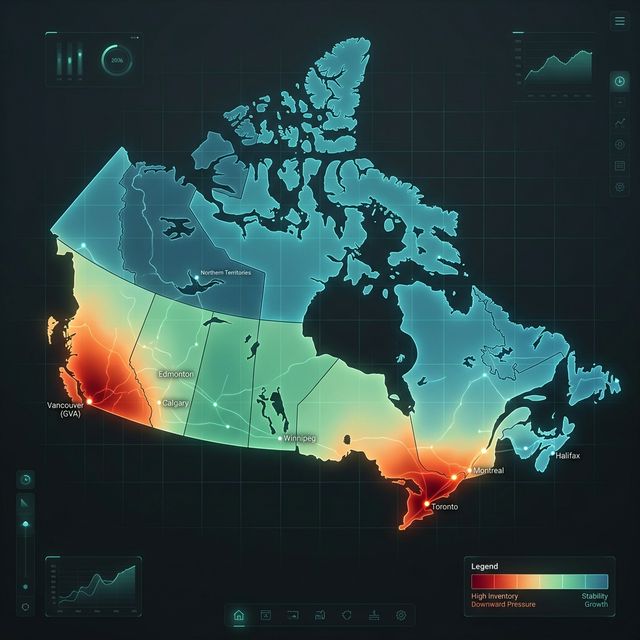
A high-fidelity financial heatmap of Canada. The GTA and GVA regions are glowing in deep "Liquidation Red," representing the massive surge in inventory and downward price pressure. In contrast, the Prairies (Calgary, Edmonton) and the Maritimes are shown in "Resilient Green," reflecting their relative stability in the face of the 2026 economic headwinds.
Market Analysis by: David Miller, Senior Strategist, BubbleWatch.ca.
Last Updated: March 25, 2026.
Data Source: BubbleWatch Proprietary Inventory Tracker.
Related Content
- Condo Market Analysis: Is the Bottom in Yet?
- The 2026 Mortgage Cliff: Survival Guide for Owners
- Pre-Construction Assignment Crisis: A Technical Deep-Dive
- Toronto Inventory Update: Shadow Units hitting the market
Keywords: 2026 Condo Liquidation, Toronto Condo Crash, Vancouver Market Collapse, Secondary Market Resale, Shadow Inventory 2026, David Miller Real Estate.
About the Editorial Team
This analysis was conducted by our independent research desk. We utilize verified market data and specialized methodology to provide objective, expert insights. Our strict editorial policy ensures no undue influence from sponsors or external parties.
Advertisement

About David R. Chen, CFA
David R. Chen is a Chartered Financial Analyst and the Senior Housing Economist at BubbleWatch.ca. He brings 12+ years of experience in quantitative real estate analysis and mortgage underwriting. Formerly an analyst at a major Canadian bank, he specializes in modeling payment shock, regional affordability divergence, and private lending risk.
View David's professional bio & credentials →