Canada Builds Initiative 2026 Tool (Data & Overview)
Detailed impact analysis and policy breakdown
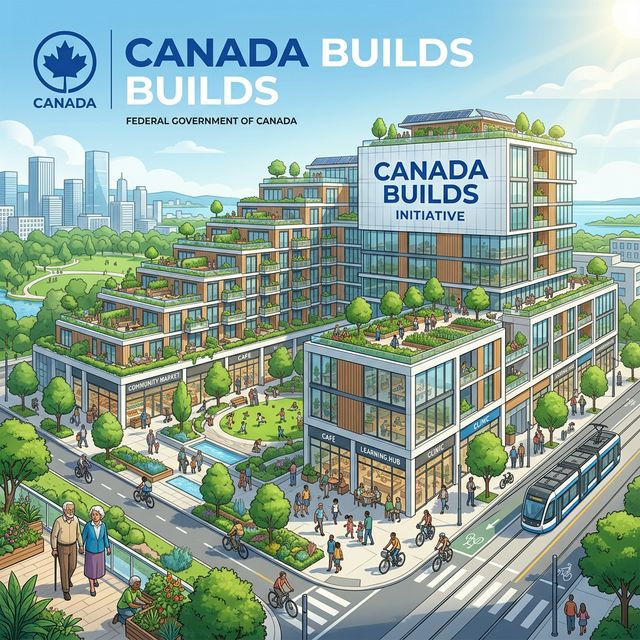
Canada Builds is a federal-provincial housing supply initiative focused on financing and public land for rental housing.
What It Is
Canada Builds is part of the federal housing supply agenda connected to Budget 2024 and Canada's broader public-land strategy. The idea is to work with provinces, territories, municipalities, housing providers, and builders to unlock rental housing and use public land more actively for homes.
The most important shift is that public land is treated as a housing input, not just a balance-sheet asset. Federal materials tied to Budget 2024 described a Public Lands for Homes direction, long-term leases, modular housing opportunities, and efforts to unlock a large number of homes by 2031.
Why Public Land Matters
Land cost can decide whether a rental project works. In expensive cities, a below-market rental building may be impossible if the land has to be bought at full speculative value. Public land, long-term leasing, lower-cost financing, and standardized approvals can improve the economics.
But public land is not magic. The benefit reaches renters only if the project actually gets built and affordability survives the full lifecycle: land transfer, rezoning, design, financing, construction, operation, and renewal of affordability covenants.
What Would Make It Work
| Requirement | Why It Matters |
|---|---|
| Published site list | The public needs to know which parcels are real, serviced, and buildable. |
| Clear affordability terms | "Affordable" should mean measurable rents, income bands, and duration. |
| Faster approvals | Land savings can be erased by years of delay and carrying costs. |
| Delivery partners | Non-profit, co-op, public, and private builders each need workable roles. |
| Progress reporting | Unit counts should distinguish announced, approved, under construction, and completed homes. |
Execution Risks
Housing announcements are not completed units. The largest risks are municipal approvals, servicing capacity, procurement delays, construction labour, interest costs, neighbourhood opposition, and unclear accountability between levels of government.
There is also a targeting risk. If public land produces mostly market rentals in already expensive areas without durable affordability requirements, the supply may help vacancy over time but do little for households under the most rent pressure.
Market Impact
The near-term market effect is limited because supply-side policy works slowly. Rents in 2026 will still be driven by vacancy, income, migration, investor financing, and construction completions already in the pipeline.
The medium-term effect could be meaningful if the program turns underused public parcels into rental homes faster than normal land assembly would allow. The strongest version of this policy would create transparent project dashboards, repeatable deal templates, and a credible path from announcement to occupancy.
BubbleWatch Read
Canada Builds should be judged by completions, not press releases. The right scorecard is practical: how many homes are completed, where they are, what rents are charged, how long affordability lasts, and whether the public land remains a public affordability asset.
For renters, this is unlikely to change the next lease renewal. For policymakers, it is one of the more important long-clock tools because land is the one input governments can sometimes control directly.