Easements and Rights-of-Way When Buying a Home in
A clause-by-clause method for translating registered access, utility, drainage, support, and shared-drive rights into the physical use, cost, construction limits, financing, and exit consequences a buyer actually inherits.
Easements and Rights-of-Way When Buying a Home in Canada: Read the Instrument Before You Offer
An easement gives a defined land-related right over another parcel or limits how the burdened parcel can be used. A right-of-way is commonly an easement for passage. Utility, drainage, access, support, servicing, flooding, and shared-drive rights can shape daily use and future construction even when the title entry looks routine.
The title summary rarely contains the whole answer. Buyers need the registered instrument, referenced plan, current title of each relevant parcel, physical route, maintenance evidence, and a local lawyer's interpretation.
A ten-foot strip on a plan does not tell you whether vehicles are allowed, who plows snow, whether the owner can gate it, or whether a utility can remove a new garage. Read the grant and site together.
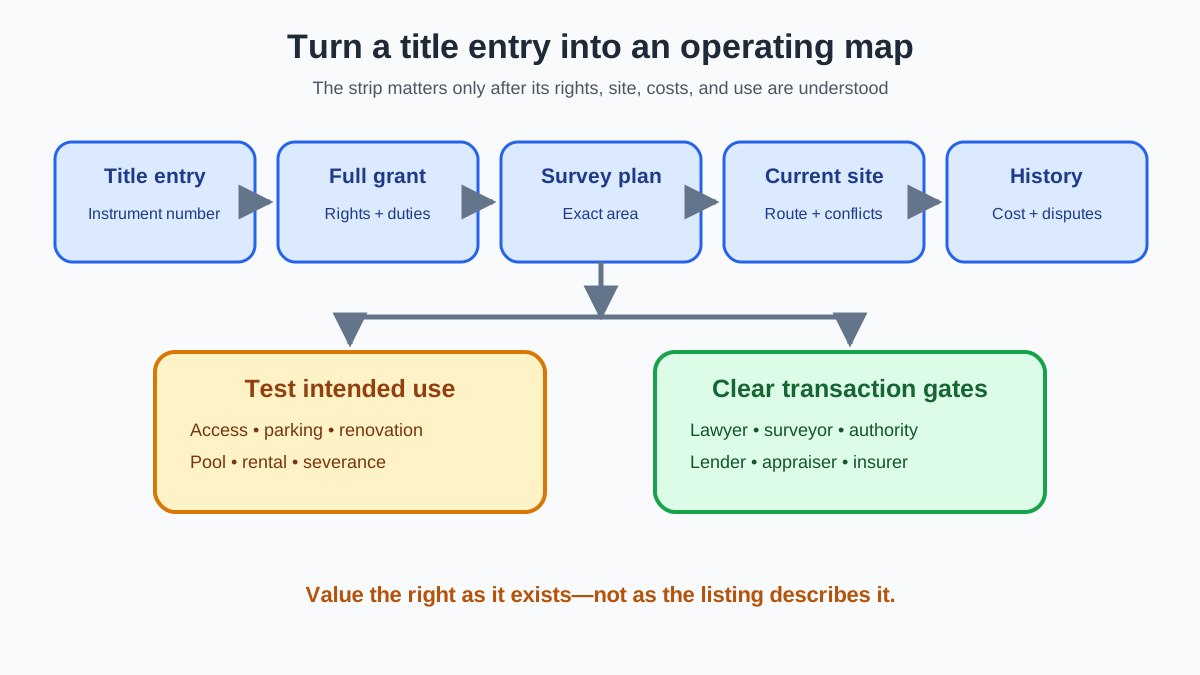
Short answer: answer seven questions for every right
- Identity: which title entry and registered instrument create or record it?
- Land: which parcel benefits and which parcel is burdened?
- Area: exactly where, how wide, and how high or deep is the right?
- Purpose: access, utilities, drainage, support, maintenance, or another defined use?
- Operation: who may enter, with what vehicles/equipment, at what time, and who pays?
- Interference: what may the burdened owner build, park, plant, fence, or store there?
- Durability: does it run with land, expire, relocate, merge, release, or require consent?
Then test the right against the buyer's actual plan: living, parking, renovation, addition, pool, garden, rental, severance, farm operation, or resale.
Title notation is the index, not the agreement
A title search may show a registration number, charge, notation, “together with,” “subject to,” statutory right-of-way, or other shorthand. Obtain the underlying instrument and every plan or schedule it incorporates.
British Columbia's regulator explains in its land-title guide that a benefiting appurtenant easement can appear as a legal notation and cautions that the notation alone does not guarantee the easement exists or is enforceable. It also describes charges that can burden title and remain after completion.
In Ontario, a land-registration easement bulletin describes an easement as a right or interest annexed to land and says its purpose must be clear and specific. It explains dominant and servient parcels, creation, transfer with land, merger, and registration procedures under that province's system.
Do not turn those provincial explanations into national legal rules. Use them to see which questions the local lawyer must answer.
Benefiting and burdened land
Traditional private easements often involve:
- dominant land: parcel receiving the benefit;
- servient land: parcel carrying the burden.
Statutory rights-of-way or easements in gross may operate differently and can benefit governments, utilities, railways, pipeline operators, conservation bodies, or other authorized holders without an ordinary neighbouring dominant parcel.
For the property being purchased, mark each instrument as:
| Entry | Buyer parcel benefits? | Buyer parcel burdened? | Other parcel/body | Purpose |
|---|---|---|---|---|
A property can be both benefited and burdened by related driveway rights. One instrument may let the buyer cross a neighbour's front strip while another lets that neighbour cross the buyer's rear strip.
Confirm the current titles still match the parcel descriptions in an old instrument after severance, consolidation, or renumbering.
Read the granting words and every reservation
Have the lawyer identify:
- grantor and grantee;
- dominant and servient land;
- heirs, successors, assigns, guests, tenants, contractors, customers, or invitees covered;
- purpose and permitted activities;
- route, width, depth, height, or three-dimensional area;
- hours, frequency, season, and vehicle type;
- rights to enter, inspect, excavate, install, repair, replace, remove vegetation, and restore;
- obligation to minimize damage;
- maintenance, capital replacement, tax, insurance, and indemnity;
- gates, locks, parking, storage, and obstruction;
- relocation, expansion, termination, abandonment, merger, and release;
- dispute, notice, consent, and enforcement provisions;
- plans, schedules, and amendments.
Avoid summaries such as “shared driveway.” A right to pass and repass on foot differs from an unrestricted vehicle access right with repair authority.
Plot the legal area on the current site
Use a surveyor's plan, not a listing photograph. Ontario's 2026-updated subdivision-plan bulletin notes that registered easements and rights-of-way affecting land are shown on plans under that province's survey standards and tied to instrument numbers.
Walk the plotted area and record:
- pavement or travelled route versus legal limits;
- pinch points at buildings, fences, walls, trees, poles, ditches, and snow storage;
- grade, drainage, surface, bridge, culvert, and seasonal condition;
- vehicle turning and emergency access;
- buried or overhead utilities;
- improvements inside the strip;
- use outside the strip;
- gates, locks, signs, and informal parking;
- evidence of maintenance or dispute.
The physical driveway can drift outside the registered easement. A legal strip can also be unusable because the constructed route is narrow, steep, washed out, or blocked.
Use the property-survey buyer audit to match the instrument, plan, and site.
Access rights need an operational test
For the only or main route to a home, ask:
- Is year-round vehicle passage expressly covered?
- Are residents, visitors, deliveries, emergency services, trades, and tenants covered?
- Can the route support fire trucks, waste collection, fuel, moving trucks, and construction equipment?
- Who maintains surface, drainage, bridge, culvert, lighting, vegetation, gate, and snow?
- Is there a cost formula and collection mechanism?
- Can an owner improve or widen it?
- Who restores damage after heavy use?
- Are parking and stopping prohibited?
- Does the right reach a public road legally and physically?
- Does the lender and insurer accept it?
A long-used private lane can be physically obvious but legally weak. Do not assume prescription, necessity, historic use, or a neighbour's promise creates a transferable right; ask the local lawyer.
The rural due-diligence guide adds public-road status, winter access, bridges, emergency response, and subdivision questions.
Utility rights can control the building envelope
Utility and statutory rights-of-way can permit installation, access, inspection, repair, replacement, vegetation removal, and excavation for water, sewer, storm, gas, electricity, telecom, pipeline, or other infrastructure.
The owner may be restricted from placing:
- buildings, additions, or foundations;
- pools and hot tubs;
- retaining walls;
- fences or locked gates;
- large trees;
- fill or grade changes;
- sheds and decks;
- parking or stored materials;
- septic or drainage components.
Read the instrument and obtain the utility or holder's current process for consent. A municipal building permit does not necessarily waive a private or registered utility right.
If a house, garage, or pool already occupies the strip, investigate authorization, lender acceptance, title-insurance treatment, and removal risk before conditions expire.
Drainage rights run with water, not listing language
Drainage easements can allow pipes, swales, ditches, overland flow, ponds, outlets, inspection, and maintenance. The legal right must be compared with actual topography and storm behaviour.
Ask:
- Which parcel sends or receives water?
- Is flow limited by location, volume, infrastructure, or purpose?
- Who cleans and replaces the pipe, ditch, catch basin, or culvert?
- Can the buyer regrade, fence, landscape, or build there?
- Does current flow occur within the easement?
- Is there erosion, ponding, foundation, septic, or slope risk?
- Has development upstream changed volume?
- Are municipal storm plans or agreements involved?
Hire an engineer or drainage professional for physical performance. The lawyer interprets the right; neither a title instrument nor an engineer alone answers both layers.
Support, party-wall, and shared-building rights
Attached, semi-detached, row, urban infill, and retaining-wall properties may depend on rights for structural support, party walls, roof access, footings, eaves, maintenance, or construction entry.
Review:
- ownership and location of wall, footing, roof, or support land;
- rights to attach, enter, shore, excavate, repair, and rebuild;
- notice and engineer requirements;
- cost allocation;
- insurance and damage responsibility;
- fire, demolition, redevelopment, and total-loss treatment;
- restrictions on excavation or alteration;
- access when a neighbour refuses cooperation.
Do not plan underpinning, a laneway suite, or demolition until the lawyer and engineer review these rights.
Maintenance agreements are a financial document
An access right can exist without a useful maintenance formula. Obtain the registered and private agreements plus actual records.
Build a five-year ledger:
| Cost | Year 1 | Year 2 | Year 3 | Year 4 | Year 5 | Allocation |
|---|---|---|---|---|---|---|
| Snow/ice | ||||||
| Grading/gravel | ||||||
| Drainage/culvert | ||||||
| Paving | ||||||
| Gate/lighting | ||||||
| Insurance/legal | ||||||
| Major reserve |
Check invoices, payment records, arrears, disputes, deferred work, and future bids. An “equal split” among three users may not address a commercial user, heavy trucks, seasonal cottage, or parcel that changes use.
If the agreement is unregistered, ask whether it binds future owners and how it interacts with the easement.
Interview operating parties without replacing documents
With the seller's and professionals' guidance, obtain factual history from the people who use or maintain the right. Do not ask a neighbour for legal conclusions or reveal confidential negotiating details.
Useful questions include:
- Who uses the route or service now?
- Who hires and pays contractors?
- What work occurred in the last five years?
- Are contributions current?
- Has access ever been blocked or rerouted?
- Have there been damage claims, complaints, or insurance events?
- Are gates, keys, parking, snow, drainage, or pets disputed?
- Is major repair planned?
- Does anyone use land outside the registered area?
- Are there informal promises not contained in the documents?
Record date, speaker, exact factual response, and supporting records. Give any inconsistency to the lawyer. A friendly conversation can expose an issue, but it cannot amend title safely.
Ask the seller for all notices, texts, emails, invoices, agreements, and claims related to the right. If the seller refuses, price the missing evidence as uncertainty rather than assuming silence means harmony.
Separate legal availability from service capacity
An easement can grant a right while the physical system lacks enough capacity for the buyer's use. This is common with shared wells, septic systems, private water lines, docks, lanes, drainage, and utility services.
Test both columns:
| Legal question | Physical/operating question |
|---|---|
| May this parcel connect? | Can the system supply demand? |
| May vehicles pass? | Can route/bridge carry them? |
| May water drain? | Can pipe/ditch handle storms? |
| May owner repair? | Is there safe equipment access? |
| May right be shared? | Is cost allocation funded? |
| May use expand? | Does authority permit expansion? |
The lawyer reviews the right. The engineer, inspector, water professional, contractor, or authority tests capacity and condition. A registered shared-well easement does not prove water quality or yield; use the well-water buyer test.
Value benefiting rights and burdens separately
Do not subtract a generic percentage from the purchase price. Build an adjustment from evidence:
Benefit side
- value of legal access or servicing;
- avoided cost of another route or connection;
- parking, beach, dock, trail, or shared-facility utility where legally included;
- durability and transferability;
- funded maintenance and reliable operation.
Burden side
- land area unavailable for desired use;
- privacy, traffic, noise, entry, and vegetation limits;
- annual maintenance and future capital cost;
- construction redesign;
- removal exposure for existing improvements;
- lender, insurer, and appraisal friction;
- dispute and resale disclosure risk.
Ask the appraiser to analyze the market effect of the actual right and comparable properties. Do not instruct an appraiser to hit a predetermined discount.
A utility strip across an unused rear setback may have modest current impact but high impact on a planned addition. Value depends on the buyer's use and what future buyers commonly expect.
Prepare a one-page easement abstract
After legal review, keep a plain-language operational abstract with the registered instrument - not instead of it:
- title and registration number;
- benefiting and burdened parties/land;
- plan and exact area;
- permitted purpose and users;
- maintenance and cost formula;
- access, construction, and interference rules;
- insurance and indemnity;
- termination, relocation, and release;
- current contacts and keys;
- unresolved legal or physical issue.
Use it for household operation, insurance review, contractor briefing, and future resale. Update contacts and cost history without changing the legal summary unless the lawyer reviews an amendment.
Existing use can exceed the legal right
Warning patterns include:
- driveway wider than the easement;
- parking within a passage-only strip;
- snow stored on neighbouring land;
- commercial deliveries under a residential access right;
- dock, beach, trail, or parking use based on handshake;
- utility line outside its granted corridor;
- gate added without shared access terms;
- neighbour garden or shed in the buyer's burdened area;
- buyer's building over the easement;
- route shifted around a washed-out area.
Document the use without confronting neighbours during a showing. Give it to the lawyer and surveyor. A seller's statement that “everyone has always done it” is evidence to investigate, not a legal conclusion.
Intended future use is a separate test
An easement acceptable for the current house may block the buyer's plan. Test each intended project against title, planning, engineering, lender, and holder consent:
- addition or garage;
- pool, deck, or shed;
- fence, trees, or landscaping;
- secondary suite or rental;
- home business;
- severance or subdivision;
- driveway relocation;
- well or septic replacement;
- solar, heat pump, or utility upgrade;
- demolition and rebuild.
Obtain written pre-application or professional feedback where possible, but do not promise approval in the purchase decision. If the project is essential, use an appropriate condition drafted with legal advice.
Lender, appraisal, and insurance review
The lender cares about legal access, marketability, value, enforceability, building location, and priority of interests. The appraiser may need the title instrument and survey. The title insurer may offer, limit, endorse, or exclude coverage based on known facts.
Send complete information:
- current title;
- registered instrument and plan;
- survey and current-site differences;
- maintenance agreement and costs;
- dispute or notice;
- existing encroachment or consent;
- intended use only when relevant to the loan;
- lawyer's report requested by lender.
BCFSA's 2025 legal update on financing properties with easements and encroachments says material adverse impacts on the lender's security can matter and stresses full disclosure to lender and title insurer. Do not withhold an issue hoping the policy will cover it.
Purchase-contract treatment
The seller may be required to convey title subject only to specified permitted encumbrances. Standard forms differ and can treat utility rights, private easements, and disclosed charges differently.
BCFSA provides current title and encumbrance clauses and notes that unregistered easements known to the seller should be specifically addressed. Buyers elsewhere need local forms and advice.
Ask the lawyer to define:
- title-search deadline;
- documents and plans required;
- permitted encumbrances;
- buyer satisfaction with title and use;
- survey/access inspection;
- seller disclosure of unregistered arrangements;
- representations through closing;
- cure, discharge, amendment, holdback, price, or termination;
- lender and insurer approval.
Do not accept “usual easements” without identifying which instruments remain on title.
Releasing or relocating an easement is a project
A buyer cannot erase an unwanted right unilaterally. Release or relocation may require benefiting-owner or holder consent, new survey work, planning approval, utility engineering, lawyer documents, lender consents, registration, payment, and construction.
Ontario's registration bulletin explains that easements can merge in some ownership circumstances but still need a register amendment in that system. It also notes Planning Act approval issues for creation and removal in various cases.
Before assigning value to a hoped-for release, obtain:
- holder's written position;
- alternative route and engineering feasibility;
- survey plan scope;
- authority approvals;
- all lender/charge-holder consents;
- fees, compensation, tax, and construction cost;
- timeline and refusal risk.
Treat an unapproved release as zero in the base valuation.
A worked shared-driveway case
A detached urban home shares a paved side driveway. Title says the buyer's parcel is together with and subject to rights under two 1974 instruments. The visible route is 3.4 metres wide, while the plan shows a 2.7-metre easement offset from the pavement.
The buyer plans a rear addition requiring construction access. The instruments permit passage but contain no modern snow or resurfacing allocation. A neighbour parks partly inside the legal strip.
The buyer's team should:
- have the lawyer interpret both reciprocal grants;
- have the surveyor locate legal and paved limits;
- measure construction and emergency access;
- collect maintenance history and neighbour agreement;
- ask the architect whether the addition preserves the right;
- disclose the issue to lender and insurer;
- negotiate contract protection or price based on unresolved cost.
The fact that a car currently reaches the rear does not establish future construction access or an obligation to share new pavement.
Easement risk matrix
| Finding | Daily use | Value/development | Typical next evidence |
|---|---|---|---|
| Utility strip at rear yard | Low now | May block addition/pool | Instrument, plan, holder consent process |
| Only access over neighbour | High | High marketability | Legal opinion, survey, maintenance, lender |
| Reciprocal shared drive | Medium | Parking/building limits | Both instruments, field location, agreement |
| Drainage easement with ponding | High in storms | Repair and build risk | Instrument, engineer, authority records |
| Broad municipal right | Variable | Removal/entry risk | Full grant, infrastructure map, municipality |
| Informal access outside grant | High | Enforcement risk | Survey, lawyer, possible new agreement |
What to do next
- Order current title and every easement instrument and plan.
- Have the lawyer identify benefited/burdened land, rights, obligations, duration, and release.
- Have a surveyor plot the area and compare current use.
- Inspect access, utilities, drainage, structures, and interference.
- Obtain maintenance costs, disputes, consents, and notices.
- Test the right against intended renovation, rental, or severance.
- Give the complete file to lender, appraiser, and insurer.
- Resolve contract treatment before waiving title or financing conditions.
Frequently asked questions
What is the difference between an easement and a right-of-way?
An easement is a land-related right over another parcel or burden on it; a right-of-way commonly refers to an easement for passage. The registered instrument and local law define the exact interest.
Does an easement lower property value?
It can benefit value by providing access or servicing, or burden value by limiting use, privacy, construction, or marketability. Measure the specific right, site, cost, and buyer use rather than applying a fixed discount.
Can I build on a utility easement?
Often the instrument restricts structures or gives the holder removal and access rights. Obtain the full grant, survey location, authority and holder process, permit feedback, lender response, and legal advice before designing or buying.
Who maintains a shared driveway?
The easement or separate agreement may allocate work and cost, but some old grants are silent. Review the documents, payment history, provincial law, and a lawyer's advice.
Can a neighbour block my right-of-way?
Interference rights and remedies depend on the instrument and law. Document the obstruction and obtain legal advice; do not remove property or escalate physically on your own.
Can an easement be removed from title?
Release may require the benefiting party or holder, survey and registration work, planning or utility approval, lender consents, and payment. It is not automatic because the right is unused.
Is a long-used driveway enough without a registered easement?
Do not assume so. Historic use may raise complex legal doctrines, but enforceability and transferability depend on jurisdiction and evidence. Obtain a survey and local legal opinion before buying.
Does title insurance cover easement problems?
Coverage depends on the policy, endorsement, known facts, exclusions, and loss. It does not create the desired right or approve construction. Disclose the complete issue and read both owner and lender policies.
This article is educational and does not provide legal, surveying, engineering, planning, mortgage, appraisal, insurance, or tax advice. Easement law and registration vary across Canada. Obtain current title, instruments, survey evidence, and advice from qualified local professionals.
Advertisement

About David R. Chen, CFA
David R. Chen is a Chartered Financial Analyst and the Senior Housing Economist at BubbleWatch.ca. He brings 12+ years of experience in quantitative real estate analysis and mortgage underwriting. Formerly an analyst at a major Canadian bank, he specializes in modeling payment shock, regional affordability divergence, and private lending risk.
View David's professional bio & credentials →