Fixtures and Chattels in a Canadian Home Purchase
A room-by-room contract inventory that replaces fixture-versus-chattel assumptions with exact descriptions, ownership evidence, operating standards, account transfers, removal rules, and pre-closing verification.
Fixtures and Chattels in a Canadian Home Purchase: Itemize What Stays, Leaves, Works, and Transfers
Real-estate contracts often distinguish fixtures attached to land or buildings from chattels that remain personal property. The legal classification can be fact-specific, and standard-form wording varies by province. Buyers and sellers should not leave valuable items to a vocabulary contest after closing.
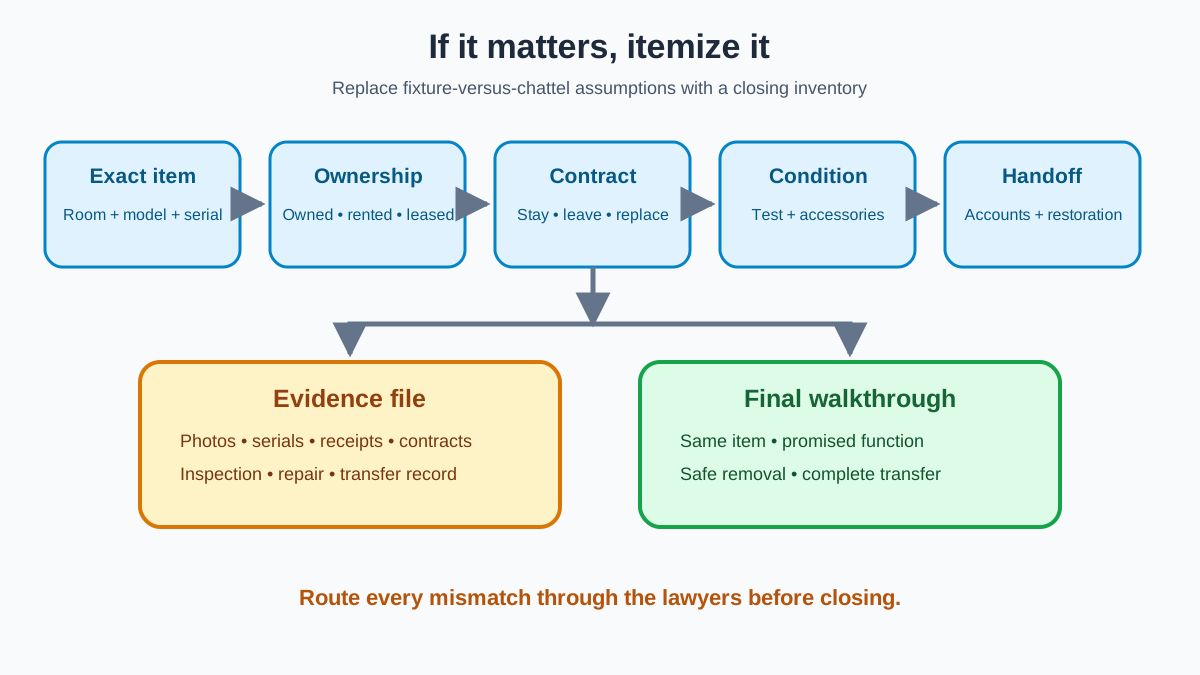
Name every important inclusion and exclusion in the purchase agreement. Add its location, make, model, serial number, ownership or rental status, working-condition promise, accessories, smart-account handoff, and removal-restoration duty.
The objective is a closing inventory both parties can verify without guessing whether a wall-mounted television, EV charger, water heater, garden shed, or video doorbell “normally stays.”
Short answer: contract the item, not the category
For anything material, record:
- Exact item: plain description plus location.
- Identity: make, model, colour, size, and serial number where available.
- Treatment: included, excluded, replaced, bought out, or subject to contract assumption.
- Ownership: seller-owned, rented, leased, financed, subscription, or third-party.
- Condition: specific working standard and test date.
- Accessories: remotes, keys, racks, hoses, mounts, manuals, cables, and parts.
- Digital transfer: account, hub, factory reset, subscription, and privacy data.
- Removal: holes, wiring, plumbing, caps, patching, paint, permits, and disposal.
Have the real-estate professional and lawyer use local contract language. A spreadsheet can organize evidence, but the signed agreement determines the transaction.
Why “fixture” is not a safe inventory system
Courts and lawyers may consider attachment, purpose, intention, contract wording, and local law when classifying an object. That analysis is expensive after a dispute and unnecessary when parties describe the result in advance.
Potentially disputed items include:
- wall-mounted televisions and brackets;
- mirrors, art, and shelving;
- chandeliers and specialty light fixtures;
- appliances fitted into cabinetry;
- central vacuum equipment and attachments;
- window coverings, rods, and blinds;
- security cameras and alarm panels;
- smart thermostats, locks, speakers, and doorbells;
- EV chargers and charging cables;
- water heaters and treatment equipment;
- propane tanks and fuel;
- hot tubs and pool equipment;
- garden sheds, gazebos, play structures, and docks;
- workbenches, garage cabinets, and storage systems;
- solar panels, batteries, generators, and transfer switches.
Write the agreement so classification does not decide ownership. BCFSA's residential contract training tells licensees to itemize included and excluded chattels and fixtures rather than relying on a generic label.
Build the inventory during the showing
Create one row for each material item:
| Room/area | Item | Make/model/serial | Include/exclude | Owned/rented | Condition | Accessories/photo |
|---|---|---|---|---|---|---|
| Kitchen | ||||||
| Laundry | ||||||
| Mechanical | ||||||
| Living areas | ||||||
| Bedrooms | ||||||
| Garage | ||||||
| Exterior/yard |
Photograph the whole item, data plate, serial, connections, accessories, and surroundings. Date the image and preserve the unedited original.
Ontario's regulator recommends in its post-offer damage guidance that buyers document model and serial numbers for included appliances and other chattels and fixtures. The goal is to detect substitution as well as damage.
Use precise inclusion descriptions
Weak wording:
All appliances, lights, and window coverings.
Stronger inventory concept for lawyer or licensee drafting:
Kitchen refrigerator located in the north cabinet opening, Brand X model A123, stainless finish, serial 456; seller-owned; included with two shelves, three drawers, ice bin, water filter housing, and manual.
The exact legal clause needs local drafting, but the evidence tells the drafter what the parties intend.
Distinguish:
- refrigerator from bar fridge and garage freezer;
- oven from countertop microwave;
- washer/dryer pair from seller's second machine;
- dining chandelier from entry pendant;
- curtain panels from rods and blinds;
- television from bracket and concealed cable;
- hot tub shell from cover, steps, pump, controls, and chemicals.
Avoid brand-only descriptions when multiple similar items exist.
Exclusions need removal and restoration terms
An exclusion can leave more damage than value. If the seller removes a chandelier, television mount, mirror, shelf, EV charger, cabinet, alarm device, or garden structure, define:
- deadline for removal;
- licensed trade where electrical, gas, plumbing, structure, or permit work is involved;
- safe capping or termination of services;
- replacement fixture, if any;
- patching, sanding, matching paint, flooring, siding, masonry, roof, or landscape restoration;
- debris disposal;
- proof of permit/inspection;
- damage responsibility;
- buyer verification visit;
- remedy or holdback negotiated by lawyers.
“Seller to remove TV” does not say whether the bracket remains or twelve anchor holes are acceptable. Contract the wall outcome.
Verify ownership and third-party contracts
An item in the home may be owned by a rental company, utility, finance provider, tenant, stager, telecom company, solar provider, alarm company, or another family member.
Ask for every agreement involving:
- water heater, furnace, air conditioner, boiler, or heat pump;
- water softener, filter, reverse-osmosis unit, or tank;
- propane or fuel tank;
- solar panels, battery, inverter, or roof lease;
- alarm and monitoring equipment;
- smart-home hardware bundled with service;
- internet, satellite, or telecom equipment;
- EV charger financing or network contract;
- hot tub or pool equipment;
- leased appliances;
- tenant-owned fixtures or improvements.
Record owner, account number, term, payment, rate increase, buyout, transfer fee, lien or security interest, early termination, service area, warranty, and assignment approval.
Do not write “buyer assumes rental” before the buyer reviews and the provider confirms transfer. The lender and lawyer may need to know about registered or financed equipment.
Calculate the full cost of an assumed contract
For a rental or service agreement, build a cash-flow schedule:
| Input | Amount |
|---|---|
| Monthly payment before tax | |
| Tax | |
| Annual escalation | |
| Remaining minimum term | |
| Transfer/administration fee | |
| Current buyout | |
| Future buyout formula | |
| Required maintenance | |
| Estimated total remaining payments |
Compare buyout, continued rental, replacement, and seller payout. Include financing cost and warranty scope.
A $45 monthly charge can exceed $5,000 over ten years before escalation, yet still deliver service or replacement benefits. Read the actual agreement rather than declaring every rental good or bad.
Add assumed obligations to the closing-cost and cash worksheet and household budget.
The Competition Bureau warned homebuyers about rental-equipment exit fees and advised reviewing terms before signing a home purchase. That warning is old enough that current provider terms must still be obtained, but the document-risk lesson remains valid.
Audit an equipment contract line by line
Do not rely on the current monthly bill. Extract:
- original customer and installation address;
- equipment model, serial, installation date, and ownership label;
- initial and current payment;
- automatic escalation or fee schedule;
- minimum term and renewal;
- maintenance, parts, labour, and replacement scope;
- excluded damage and owner duties;
- assignment and credit approval;
- moving or property-sale clause;
- early termination and buyout formula;
- return, removal, and site-restoration process;
- registered notice, lien, security interest, or discharge;
- tax and administration fee;
- complaint and dispute process.
Ask the provider in writing for current payout, transfer package, account standing, and confirmation of what happens at closing. Compare the provider response with the contract and lawyer's title search.
The Office of Consumer Affairs' rent-to-own guidance recommends considering total item cost, added charges, and early-purchase terms. A home equipment contract may use another structure, but the same full-cost questions are useful.
Define working condition in testable terms
“Good working order” can be disputed without a test and timing. Ask the lawyer or real-estate professional about wording that states which items must operate, when, and subject to what ordinary wear.
Create a test plan:
| Item | Function to test | Showing result | Inspection result | Final visit result |
|---|---|---|---|---|
| Refrigerator | Cooling, ice/water | |||
| Range | Burners/oven/display | |||
| Dishwasher | Fill, wash, drain, leak | |||
| Washer/dryer | Cycle, heat, drain/vent | |||
| HVAC | Mode, thermostat, zones | |||
| Alarm/smart devices | Local function and transfer | |||
| Garage door | Motor, sensors, remotes | |||
| Pool/hot tub | Pump, heater, controls |
Do not run unsafe, winterized, disconnected, or seasonally closed equipment without seller permission and a qualified person. Record limitations.
A home inspection is time-limited and does not guarantee future operation. Contract wording, specialist tests, warranties, and final verification serve different roles.
Appliances need more than a brand name
For major appliances, capture:
- data plate and serial;
- approximate age and purchase receipt;
- warranty and transfer rules;
- recalls or service notices from manufacturer sources;
- repair history;
- dimensions and cabinet opening;
- water, gas, electrical, and vent connection;
- included racks, trays, hoses, filters, and manuals;
- known intermittent fault;
- seller-owned versus rented/financed.
If the seller may replace an appliance before closing, specify the permitted replacement rather than allowing an undefined “equivalent.” Price, capacity, fuel, finish, dimensions, efficiency, and features can differ.
Check recalls by model and serial
Search Health Canada's current recalls and safety alerts database for included appliances, alarms, smart equipment, generators, pool products, and other material consumer products. A product family or appearance is not enough; affected serial ranges and remedy instructions can be specific.
For each match, record:
- recall identifier and publication/update date;
- exact affected model and serial range;
- hazard;
- stop-use or operating instruction;
- inspection, repair, refund, or replacement remedy;
- manufacturer case number;
- completed remedy evidence;
- transferability of any open case.
Do not redistribute a recalled product contrary to law or official instructions. The seller should follow the manufacturer and Health Canada process, and the purchase agreement should address removal or accepted remedy with legal advice.
A recall search does not replace electrical, gas, mechanical, or appliance inspection. It adds product-specific evidence to condition and identity.
Smart-home devices require a digital handoff
A physical device may remain useless or insecure if the seller retains the account. Inventory:
- thermostat;
- lock and keypad;
- doorbell and cameras;
- alarm panel, sensors, and monitoring;
- garage controller;
- lighting hub and switches;
- speakers and displays;
- irrigation controller;
- leak and smoke sensors;
- solar/battery application;
- EV charger account;
- building or gate applications.
Before possession, define:
- device remains physically installed;
- seller removes device from personal account;
- recordings and personal data are deleted lawfully;
- device is factory-reset at the correct time;
- buyer receives transfer code, manual, hub, accessories, and service contact;
- subscription transfer or cancellation is confirmed;
- temporary codes and former users are removed;
- local physical keys and overrides work.
Do not ask a seller to reveal reusable personal passwords. Transfer ownership through the provider's supported process.
Innovation, Science and Economic Development Canada's consumer IoT checklist recommends checking privacy, security, updates, offline function, data removal, and factory-default instructions. Apply those questions before assigning value to an older connected device.
Also confirm whether the manufacturer still supports the product. A camera or thermostat can remain physically installed after its cloud service, mobile application, or security updates end.
Create a transfer test on the day of possession: buyer creates a new account, claims the device, installs current updates, changes default credentials, removes shared users, and confirms local manual control. Keep cameras pointed away or disabled until privacy settings are reviewed.
Heating, energy, and service equipment
Mechanical items can blur property, contract, fuel, and warranty issues. Review:
- owned or rented heating/cooling equipment;
- tank ownership and remaining fuel;
- maintenance plan;
- gas, oil, propane, electricity, or district service;
- heat-pump heads and outdoor units;
- thermostat, condensate pump, filters, and controls;
- generator, transfer switch, battery, and fuel;
- solar lease, power-purchase agreement, incentive, and grid interconnection;
- permits and inspection;
- removal rights and roof obligations.
Have qualified trades assess condition. The inclusion clause does not establish safe installation or remaining life.
Transfer warranties and service history
Collect purchase receipts, warranty certificates, installer invoices, maintenance records, permit numbers, service cases, and extended-plan contracts. Ask the manufacturer or provider whether coverage follows the product, original purchaser, registered address, or a formal transfer.
Record the transfer deadline, fee, proof of closing, new-owner registration, excluded labour or travel, and maintenance needed to preserve coverage. Do not advertise a “ten-year warranty” until the current terms and remaining period are verified.
For work tied to the building, distinguish product warranty, installer workmanship, new-home warranty, manufacturer parts, and service-plan coverage. They can have different claim parties and expiry dates.
Give the buyer an organized handoff rather than a box of unlabelled receipts. Match each document to the inventory row and note any missing record.
Exterior items and land rights
Sheds, gazebos, play structures, docks, gates, mailboxes, fences, storage containers, gardens, composters, rain barrels, and irrigation can involve ownership, permits, boundaries, easements, common property, or seasonal removal.
Ask:
- Is it included and seller-owned?
- Is it attached or movable?
- Does a permit or approval exist?
- Does it cross a boundary or protected area?
- Are anchors, foundation, utilities, or water connections included?
- Who restores the site if excluded?
- Is dock or waterfront use tied to another licence?
- Does a condo/strata corporation own or regulate it?
Use the property-survey audit for location questions. An included shed that must be removed from a utility easement is a liability, not a bonus.
Fuel, consumables, and inventory quantities
Contracts may address fuel oil, propane, pellets, firewood, pool chemicals, filters, salt, and other consumables through inclusion or adjustment. Define measurement and price date.
For a tank:
- identify owner;
- obtain level reading and method;
- confirm fuel type;
- check delivery records and account status;
- inspect for leak/environmental concern through qualified professionals;
- define price per unit and tax;
- allocate final delivery;
- transfer or close supplier account.
Do not estimate hundreds of litres from a listing photo. The lawyer's statement of adjustments should match the contract.
Tenants, staging, and borrowed items
In a tenanted or staged home, ask who owns appliances, window coverings, portable air conditioners, shelving, garden items, light fixtures, and smart devices. Obtain the lease, improvement agreements, staging inventory, and seller representation.
Do not remove a tenant's property or assume it transfers with the real estate. Vacant-possession and abandoned-property law differs across provinces; use the vacant-possession closing guide and local legal advice.
The final walkthrough inventory
Bring the signed inclusion/exclusion schedule, photographs, serials, inspection notes, repair receipts, and test list to the negotiated pre-closing visit.
Verify:
- exact included items remain;
- no cheaper substitution;
- accessories, keys, remotes, manuals, and racks are present;
- excluded items were removed with agreed restoration;
- working-condition tests are performed safely;
- rental/lease transfer is on track;
- no move-out damage affects connections or finishes;
- smart-device handoff steps are ready;
- debris and seller personal property are handled under the agreement.
Follow the final-walkthrough evidence protocol. Report a discrepancy to the lawyer immediately; do not seize a different item, deduct funds, or refuse closing without advice.
A closing discrepancy ledger
| Issue | Contract evidence | Photo/serial | Remedy requested | Lawyer status |
|---|---|---|---|---|
| Missing item | ||||
| Substituted item | ||||
| Non-working item | ||||
| Removal damage | ||||
| Rental not transferable | ||||
| Smart account not released |
Replacement value is not automatically the legal measure of loss. Let the lawyers apply the agreement and negotiate a documented solution.
Holdbacks require agreement
A buyer cannot simply instruct the lawyer to keep money because a dishwasher fails. A holdback normally requires contractual authority or agreement between parties, with amount, holder, release condition, deadline, dispute process, and residual rights.
RECO notes in its damage guidance that lawyers may negotiate a holdback in appropriate circumstances. Use the detailed real-estate closing holdback guide before relying on one.
Seller pre-listing workflow
- Walk every room and exterior area with the listing professional.
- Decide what must stay and what must leave.
- Find ownership, rental, finance, and service agreements.
- Photograph serials and test included equipment.
- Remove or replace sentimental fixtures before listing where advised, with safe restoration.
- Disclose known defects and intermittent faults under local obligations.
- Draft exact inclusions and exclusions.
- Preserve condition through closing and coordinate digital transfer.
Removing a family chandelier before marketing can avoid a dispute, but update photos and ensure the replacement is safely installed.
Buyer decision checklist
- Important items identified by room and location
- Make, model, serial, and photos recorded
- Inclusion/exclusion wording reviewed
- Seller ownership verified
- Rental/lease/finance contracts reviewed
- Working standard and test rights defined
- Accessories and consumables addressed
- Smart accounts and privacy handoff planned
- Removal and restoration outcome specified
- Final visit scheduled near closing
- Lawyer process for discrepancies understood
What to do next
- Build the room-by-room inventory during the next visit.
- Ask the seller for receipts and every third-party contract.
- Choose the exact items whose identity and condition matter to price.
- Have the real-estate professional and lawyer draft local contract terms.
- Arrange specialist tests for mechanical or safety-critical equipment.
- Preserve photos, serials, and signed amendments.
- Repeat the inventory during the final walkthrough.
- Route discrepancies through the lawyers before closing.
Frequently asked questions
What is the difference between a fixture and a chattel?
A fixture is generally attached to and associated with real property, while a chattel is personal property, but classification depends on facts, contract, and local law. Itemize the intended result to avoid relying on the label.
Do appliances stay with a house sale in Canada?
Only if the purchase agreement and applicable law produce that result. List each appliance precisely, including ownership, model, serial, accessories, and promised condition.
Does a wall-mounted TV stay?
Specify the television, bracket, cables, and wall restoration separately. Do not assume the television and mount receive the same treatment.
What happens if the seller swaps an appliance?
Photographs, serial numbers, and precise contract wording help establish substitution. Report it to the lawyer, who can advise on performance, compensation, holdback, or other remedies.
Do rented water heaters transfer automatically?
Do not assume so. Review the agreement, assignment approval, payment, buyout, lien/security interest, and purchase-contract allocation before accepting it.
Should smart-home passwords be included?
The seller should use the provider's ownership-transfer and factory-reset process, not share reusable personal passwords. Define devices, hubs, codes, subscriptions, and deletion steps.
Can the seller remove a fixture before closing?
Only consistently with the signed agreement and law. If an item is excluded, the contract should define removal, replacement, safe service termination, and restoration.
Can the buyer hold back money for a broken appliance?
Not unilaterally. A lawyer can advise whether the contract permits a remedy or whether the parties can negotiate a precise holdback or settlement.
This article is educational and does not provide legal, real-estate, tax, insurance, electrical, gas, plumbing, mechanical, or financial advice. Contract forms and property law vary across Canada. Have qualified local professionals document and verify material items.
Advertisement

About David R. Chen, CFA
David R. Chen is a Chartered Financial Analyst and the Senior Housing Economist at BubbleWatch.ca. He brings 12+ years of experience in quantitative real estate analysis and mortgage underwriting. Formerly an analyst at a major Canadian bank, he specializes in modeling payment shock, regional affordability divergence, and private lending risk.
View David's professional bio & credentials →