Real-Estate Closing Holdbacks in Canada
A transaction-control framework for using a negotiated holdback to close around a narrow unfinished obligation without turning lawyers' trust accounts into an indefinite repair fund.
Real-Estate Closing Holdbacks in Canada: Define the Amount, Work, Evidence, Release, and Dispute Path
A closing holdback is money retained from sale proceeds or otherwise placed under agreed control after the transaction closes, pending a defined obligation or event. It can support a narrow repair, cleanup, document, adjustment, possession, lien, or seasonal issue when the parties and their lawyers agree on precise terms.
It is not a buyer's automatic right, a substitute for due diligence, or permission to close around an unbounded structural, title, tenancy, financing, or insurance problem. The lender may need to approve it, and the lawyer or notary cannot hold or release funds on vague or conflicting instructions.
The safest holdback says exactly why money is retained, how the amount was calculated, who holds it, what evidence closes each condition, when it must end, and what happens when the parties disagree.
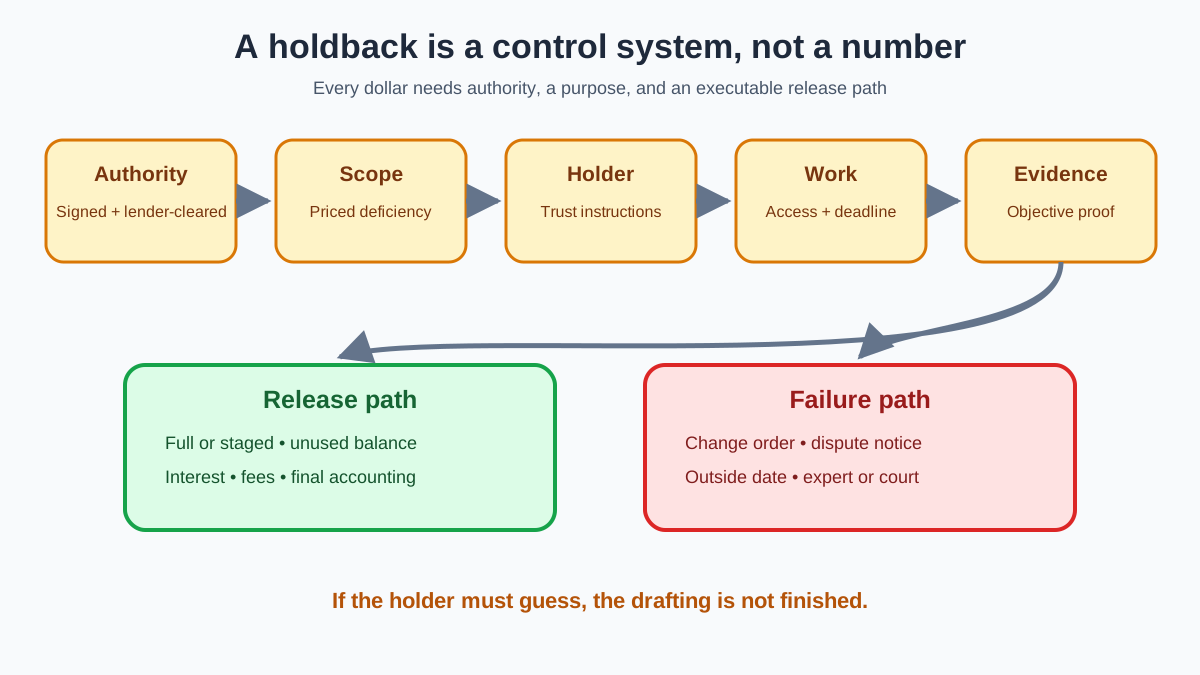
Short answer: a holdback needs nine controls
- Authority: signed purchase term, amendment, escrow agreement, statutory requirement, court order, or lawyer-to-lawyer undertaking appropriate to the jurisdiction.
- Scope: exact unfinished obligation and excluded work.
- Amount: evidence-based exposure plus justified contingency.
- Holder: named lawyer, notary, conveyancer, escrow agent, or other permitted holder.
- Work: standard, contractor, permit, access, safety, and deadline.
- Evidence: objective documents and inspection needed for release.
- Allocation: partial completion, fees, tax, interest, and unused balance.
- Deadline: remedy date, outside date, and overrun procedure.
- Dispute: expert decision, mediation, arbitration, court, or joint direction, plus cost allocation.
If any one remains “to be agreed,” the holdback can outlive the repair and create another dispute.
A buyer cannot invent a holdback at closing
The purchase price and closing funds follow the signed agreement and the lawyers' lawful instructions. A buyer generally cannot reduce the amount delivered because the final visit reveals a missing appliance, debris, unfinished repair, or seller delay.
Ontario's regulator says in its post-offer property damage guidance that a buyer's lawyer may be able to negotiate a holdback with the seller's lawyer in appropriate circumstances. “Negotiate” matters.
Report the issue immediately. The lawyer will assess contractual rights and possible agreement, extension, repair, compensation, claim, or other remedy.
Do not instruct a bank to stop funds, tell movers to occupy the property, or withhold keys without legal advice.
Decide whether closing around the issue is sensible
A holdback may suit a problem that is:
- narrow and measurable;
- safe to leave temporarily;
- lawful and permitted;
- financeable and insurable;
- repairable within a known time;
- supported by contractor or authority evidence;
- small relative to property utility and value;
- accessible after closing;
- covered by an objective release test.
It may be poor protection where:
- ownership or title is uncertain;
- the buyer lacks legal access or vacant possession;
- the lender has not accepted the condition;
- active water, structural, electrical, gas, fire, environmental, or safety risk continues;
- scope is unknown behind finished surfaces;
- repair requires an unwilling neighbour or authority;
- seasonal work cannot be tested for months;
- cost can exceed the retained amount substantially;
- the seller lacks capacity or willingness to manage work after closing;
- buyer occupation will conflict with construction.
In those cases, extension, seller cure before closing, price renegotiation, a larger structured escrow, or termination under an available right may be safer. Only the lawyer can advise on the live transaction.
Compare a holdback with a price adjustment
A price reduction transfers the unfinished work and risk to the buyer immediately. A holdback preserves money while the seller or another party completes a defined obligation. They produce different incentives, mortgage calculations, taxes, and administration.
| Issue | Price adjustment | Holdback |
|---|---|---|
| Who manages work? | Buyer after closing | As agreement states |
| Cost-overrun risk | Usually buyer | Must be allocated |
| Seller incentive | Ends at closing | Retained amount motivates work |
| Access conflict | None with seller | Must be controlled |
| Trust administration | Usually none | Required |
| Lender approval | Often needed | Often needed |
| Unused amount | Buyer benefit through price | Usually returns under terms |
| Dispute risk | Scope/value before closing | Completion/release after closing |
If the buyer prefers its own contractor and accepts scope risk, a documented price change may be cleaner. If a seller must obtain a permit, consent, discharge, or seasonal completion, a holdback can better connect money to evidence.
Do not lower the stated price informally. The lawyers and lender must reflect any amendment in closing and mortgage documents.
Define the deficiency as a deliverable
Weak scope:
Hold back $5,000 until basement fixed.
Better scope package:
- location and observed condition;
- dated photographs and report;
- cause included or expressly unresolved;
- exact demolition, repair, replacement, finish, and cleanup;
- materials, product, colour, capacity, and standard;
- contractor qualification and insurance;
- permits, inspections, certificates, and warranties;
- protection of buyer property and occupants;
- completion and testing date;
- exclusions and concealed-condition process.
Attach the quote or scope when suitable. If a consultant must certify completion, identify that person, standard, fee payer, and replacement process.
“To buyer's satisfaction” can protect discretion but also invite conflict; “contractor invoice” proves billing, not performance. Let the lawyers select an objective standard appropriate to the obligation.
Build a priced scope before setting the amount
Use a holdback budget:
| Cost component | Base | Adverse | Source |
|---|---|---|---|
| Investigation/opening | |||
| Permit/design | |||
| Labour/material | |||
| Licensed trades | |||
| Removal/disposal | |||
| Restoration/paint/landscape | |||
| Temporary protection/access | |||
| Testing/inspection | |||
| Tax | |||
| Contingency | |||
| Legal/administration if agreed | |||
| Total |
Obtain more than one quote when time and issue justify it. Check whether quotes include tax, permits, mobilization, disposal, reinstatement, and hidden conditions.
A percentage such as 110% or 150% of an estimate can be a drafting choice, but it should follow risk rather than habit. A closed, fixed-price appliance replacement needs less contingency than drainage excavation with unknown soil.
The amount needs to motivate completion and cover fallback
If the seller remains responsible for work, the retained amount should be large enough that completing the obligation is rational. A $1,000 holdback against a $7,000 repair gives the seller an incentive to abandon it.
Model:
fallback buyer cost + delay/administration allowed by agreement + contingency = required protection
Then ask whether holding that amount creates mortgage, sale-proceeds, discharge, creditor, estate, or seller-purchase issues. The seller may need funds to complete another home purchase, but that cash-flow need does not reduce the buyer's exposure.
A holdback is not a penalty or windfall. The agreement should state whether unused funds return to seller and whether buyer recovery is capped at the retained amount.
Name the holder and source of funds
The document should identify:
- whose sale proceeds are retained;
- which lawyer/notary/conveyancer holds them;
- trust account or permitted escrow structure;
- who is beneficially entitled pending conditions;
- whether funds can earn interest;
- who receives interest and pays account fees or tax slips;
- whether holder can deduct agreed fees;
- replacement holder if the practice closes;
- instructions if funds remain disputed at outside date.
The Law Society of Ontario's trust-account FAQ says settlement and escrow funds related to legal services belong in trust and notes that money earmarked for conditions should not be withdrawn for another purpose. Other law societies and notarial systems have their own rules.
Do not send holdback money to an agent, contractor, family member, or ordinary joint bank account unless the lawyers confirm a lawful structure.
Release instructions must be executable
The holder needs a document that answers who can direct release. Common structures may require:
- joint written direction of buyer and seller;
- objective consultant certificate;
- lawyer confirmation that listed evidence arrived;
- automatic release on a stated date unless a compliant dispute notice is delivered;
- court, arbitration, or expert determination;
- staged release for completed line items.
Define signatures, email addresses, delivery method, business-day timing, and what makes a notice valid.
Avoid instructions that force the holder to decide whether workmanship is “beautiful,” a tenant acted reasonably, or a legal breach occurred. Those are not ordinary trust-account administration tasks.
Use a release evidence matrix
| Obligation | Completion evidence | Reviewer | Partial value | Release direction |
|---|---|---|---|---|
| Appliance replacement | Model/serial, paid invoice, operation photo | Buyer/representative | ||
| Electrical repair | Permit/inspection and electrician invoice | Authority/consultant | ||
| Roof repair | Scope, photos, invoice, warranty | Roofer/consultant | ||
| Debris removal | Empty-area photos and walkthrough | Buyer/agent | ||
| Survey agreement | Registered instrument and updated title | Lawyers/surveyor | ||
| Seasonal grading | Engineer/authority test | Named professional |
An invoice marked paid does not prove the right product was installed or a permit closed. Match evidence to the risk.
Control post-closing access
If the seller or contractor must return after the buyer owns the property, define:
- notice and scheduling window;
- permitted people and identification;
- contractor licence, insurance, and safety requirements;
- supervision;
- work hours and noise;
- protection of floors, landscaping, pets, children, and belongings;
- utility use;
- hazardous material and waste;
- change orders;
- damage and cleanup;
- photographs and inspection;
- emergency contact;
- right to deny unsafe access without frustrating valid work.
The buyer's home insurance and lender should know about material post-closing construction. Condo/strata approval, elevator booking, and contractor rules may apply.
Do not give the seller an unrestricted key. Use scheduled access under the agreement.
Add a change-order mechanism
Repair work can reveal concealed damage. Define:
- contractor stops and documents the new condition;
- parties receive report and priced recommendation;
- no extra work proceeds except emergency protection;
- responsibility and use of holdback are decided under the agreement;
- deadline extends only through stated process;
- unresolved scope goes to named expert or dispute route.
Without a change process, the seller may choose the cheapest patch while the buyer demands a larger reconstruction.
The agreement should say whether the holdback caps seller liability. That legal consequence can be more important than the amount.
Partial releases need a schedule
For multiple deficiencies, allocate an amount to each rather than holding one undifferentiated sum:
| Line | Held amount | Release evidence | Released | Balance |
|---|---|---|---|---|
| Repair A | ||||
| Repair B | ||||
| Cleanup | ||||
| Permit closeout | ||||
| Contingency |
State whether contingency releases proportionally or only after all work closes. Avoid releasing most funds after demolition if the expensive restoration remains.
BCFSA's current clause library includes deficiency-holdback concepts with defined notice, remedy dates, amounts, access, and release. It is a BC professional resource, not a clause to paste into another province.
Deadlines need weather and permit logic
Set:
- notice date;
- access dates;
- permit/application date;
- work start;
- substantial completion;
- inspection/test;
- deficiency remedy date;
- final evidence date;
- dispute notice deadline;
- outside date;
- long-stop disposition of funds.
For seasonal paving, roofing, landscaping, septic, well, drainage, pool, or exterior work, define suitable weather and the alternative if the season is missed. Do not leave “when weather permits” open for years.
Ask whether money held for months should use a separate interest-bearing account and who handles interest or reporting. The holding lawyer applies professional rules and client instructions.
Distinguish contractual and statutory holdbacks
Construction-lien, builders-lien, tax, non-resident seller, condominium/strata, utility, estate, and other statutes or closing practices can require or justify separate retentions. Their amount, duration, release, and risk may be set by law rather than the parties' repair bargain.
Do not combine them in one line. Use separate schedules showing:
- legal basis;
- amount calculation;
- holder;
- release date and evidence;
- claims process;
- lawyer responsible;
- beneficiary;
- interest and fees.
A buyer's $10,000 repair holdback does not replace a required construction-lien holdback, and release of one does not release the other.
Lender and insurer approval
A material unresolved issue can affect property condition, value, marketability, completion, occupancy, and the lender's security. A holdback between buyer and seller does not automatically satisfy mortgage conditions.
Send the lender:
- issue report and photographs;
- signed holdback agreement;
- scope and quotes;
- permit and contractor plan;
- amount and source;
- completion deadline;
- insurance confirmation;
- appraisal update if requested;
- lawyer's report.
Obtain written funding approval before closing. Do not describe the property as repaired when work is deferred.
Insurance during the holdback period
Tell the home insurer about active damage, vacancy, renovations, contractor access, roof openings, water shutoffs, electrical work, or other material facts. Confirm:
- coverage begins at the correct risk time;
- known damage or repair exclusions;
- renovation/under-construction endorsement;
- contractor insurance requirements;
- vacancy or unoccupancy conditions;
- water, freeze, fire, theft, and liability precautions;
- claim responsibility if work causes new damage.
Use the home-insurance closing guide. A holdback is cash, not insurance.
For a missing or substituted included item, start with the fixtures and chattels inventory. For people or belongings remaining, use the vacant-possession process. Both feed objective evidence into the final-walkthrough record before lawyers decide whether a holdback is appropriate.
Track the seller's net proceeds correctly
A holdback reduces cash released to the seller on closing but does not necessarily change the purchase price. The seller's lawyer should reconcile:
- gross purchase price;
- deposit credit;
- mortgage and lien payouts;
- tax, utility, condo/strata, fuel, and other adjustments;
- real-estate commission and tax;
- legal fees and disbursements;
- statutory retentions;
- contractual holdback by schedule;
- net funds released;
- later partial and final releases.
Use the seller closing-cost worksheet for the wider cash plan. A seller buying another home must tell the purchase lawyer and bridge lender that part of the sale proceeds may remain unavailable.
At final release, obtain a trust statement showing opening amount, interest or fees if any, each disbursement, recipient, date, and zero or remaining balance. Preserve it with invoices and tax records.
Protect against indefinite administration
Law firms change staff, merge, close files, and cannot hold disputed money forever without authority. The agreement should specify:
- named firm and successor process;
- contact updates;
- long-stop date;
- right to pay funds into court or another approved forum;
- administration and legal fees;
- unclaimed-fund treatment;
- document retention;
- jurisdiction and notice address.
The Law Society of Ontario's trust guidance confirms that lawyers maintain records and handle trust money under professional rules. Ask the actual holder what instructions are needed for a clean end state.
Worked example: missing appliance and removal damage
At the final visit, the included refrigerator is missing and the seller removed two wall-mounted shelves, leaving damaged drywall contrary to the exclusion terms. Closing is that afternoon.
The evidence includes serial-number photographs, signed inventory, wall-restoration clause, retailer price, drywall quote, and final-visit images. Lawyers negotiate a $6,000 holdback allocated:
- $3,500 refrigerator, delivery, installation, and tax;
- $1,500 wall repair and matching paint;
- $1,000 contingency and administration under agreed terms.
The agreement defines buyer purchase evidence, contractor completion, 14-day deadline, staged release, unused balance returned to seller, and dispute notice. The lender confirms acceptance.
The example works because identity, scope, amount, evidence, and release are narrow. It would be less suitable for unexplained basement moisture with no repair diagnosis.
Worked example: seasonal drainage work
A spring closing occurs while frozen ground prevents final grading required by a municipal agreement. An engineer has a stamped design and two quotes, and the municipality confirms the inspection process.
The holdback must address:
- base and adverse quote;
- erosion and interim water protection;
- permitted work date;
- buyer access and landscape protection;
- engineer and municipal sign-off;
- weather extension with hard outside date;
- responsibility for damage before completion;
- excess cost and unused funds;
- lender and insurer acceptance.
If no design or authority path exists, a percentage of an unknown cost is not strong protection.
Common holdback failures
Token amount
The retained sum is lower than obvious fallback cost, so the responsible party abandons work.
Vague scope
“Fix leak” does not define source, drying, damaged material, testing, or finish.
Subjective release
Parties disagree about “satisfactory” work and the holder cannot adjudicate quality.
No access protocol
Seller cannot enter, or buyer faces unsafe and disruptive unscheduled work.
No outside date
Funds sit in trust after weather, permit, or contractor delays.
Missing lender disclosure
Mortgage funding or insurance is jeopardized by a late discovered deferred repair.
Holdback mistaken for liability cap
Parties never decide whether losses above the retained amount survive.
Statutory and contractual funds mixed
Different release rules become confused.
What to do next
- Send the issue, contract, photographs, and professional reports to the lawyer.
- Decide whether closing should proceed at all.
- Price base and adverse scope with appropriate trades or consultants.
- Obtain lender, insurer, authority, and condo/strata approval where needed.
- Have lawyers draft authority, amount, work, evidence, access, release, deadline, and dispute terms.
- Track each line item and preserve invoices, permits, photos, and certificates.
- Sign precise release directions only after the stated evidence exists.
- Obtain final trust accounting and retain it with the closing file.
Frequently asked questions
What is a holdback on a house closing?
It is an agreed or legally required amount retained under defined control after closing until a stated obligation or condition is resolved. Terms and professional rules govern release.
Can a buyer demand a holdback at the final walkthrough?
A buyer can request that lawyers negotiate one, but generally cannot create it unilaterally. Existing contract rights and local law determine available remedies.
How much should a repair holdback be?
Base it on a complete fallback scope, tax, restoration, professional work, delay, and justified contingency. It should cover the adverse exposure and motivate performance without becoming a penalty.
Who holds the money?
The signed arrangement should name a lawyer, notary, conveyancer, escrow agent, or other lawful holder. Professional trust rules and written instructions apply.
What releases a holdback?
Use objective evidence such as permit closure, consultant certification, specified installation proof, current title, paid invoice plus inspection, or joint lawyer direction. Define it before closing.
What if the repair costs more than the holdback?
The agreement should state who bears excess cost and whether seller liability is capped. Without that wording, a dispute can arise; obtain legal advice.
Can a holdback remain until spring?
It can if lawyers, lender, insurer, and parties accept precise seasonal work, interim protection, interest/fees, extension, evidence, and a hard outside date.
Is a repair holdback the same as a construction-lien holdback?
No. A private repair holdback and a statutory lien retention can have different legal bases, amounts, durations, holders, and release rules. Track them separately.
This article is educational and does not provide legal, mortgage, trust-account, tax, construction, engineering, insurance, or real-estate advice. Holdback authority and professional rules vary across Canada. Use qualified local lawyers or notaries and obtain all required lender and insurer approvals.
Advertisement

About David R. Chen, CFA
David R. Chen is a Chartered Financial Analyst and the Senior Housing Economist at BubbleWatch.ca. He brings 12+ years of experience in quantitative real estate analysis and mortgage underwriting. Formerly an analyst at a major Canadian bank, he specializes in modeling payment shock, regional affordability divergence, and private lending risk.
View David's professional bio & credentials →