Vacant Possession on a Canadian Home Closing
A possession-readiness system that distinguishes legal title transfer from physical occupancy, verifies lawful tenancy outcomes, controls seller move-out and belongings, and gives the lawyers evidence before funds and keys are released.
Vacant Possession on a Canadian Home Closing: Tenants, Sellers, Occupants, Belongings, and Keys
Vacant possession is the buyer's ability to take physical possession as required by the purchase agreement, free of people, tenancies, belongings, and interference inconsistent with that promise. Legal title, completion, possession, and key release may occur at different times under local practice and the contract.
A seller moving boxes out late is one version of the risk. A tenant with statutory rights, a family occupant who refuses to leave, a seller staying after title transfer, a short-term guest booking, or a locked room full of property can be much harder.
Identify every person and right before the offer becomes firm. Do not assume a sale itself ends a tenancy or that the buyer can change locks immediately after sending closing funds.
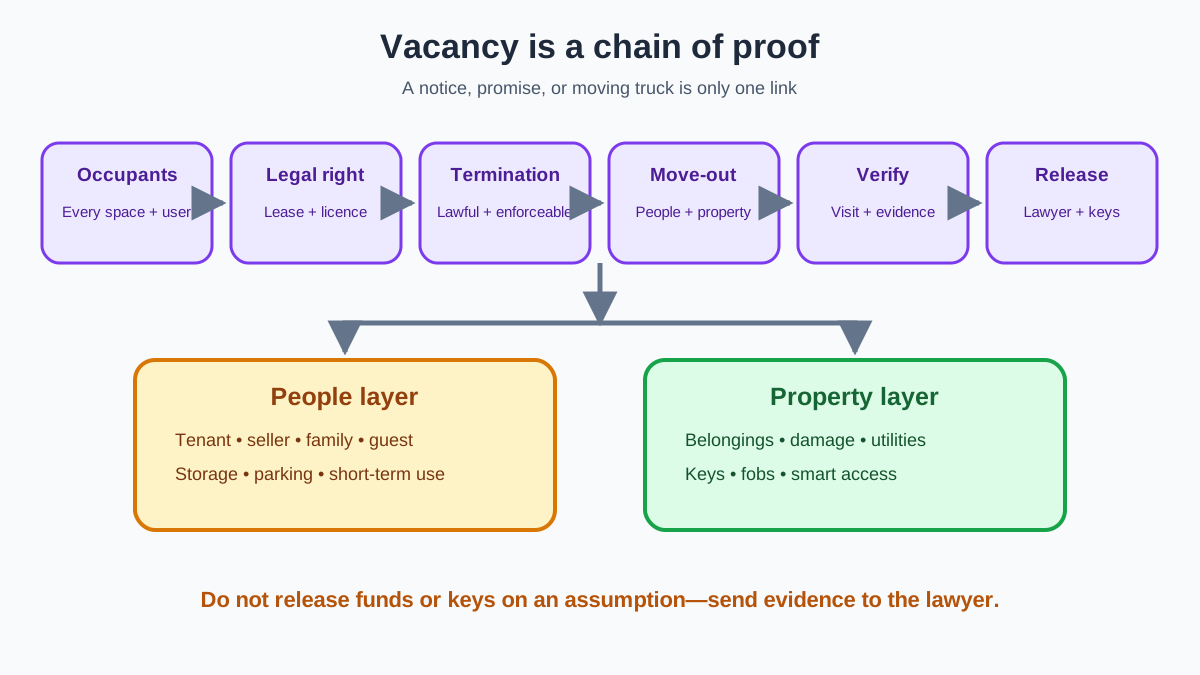
Short answer: prove the path from occupancy to possession
Build one row for every unit, room, parking space, storage area, outbuilding, and land use:
| Space | Occupant/user | Claimed right | Required outcome | Evidence | Deadline |
|---|---|---|---|---|---|
| Main home | |||||
| Basement/secondary suite | |||||
| Room/boarder area | |||||
| Garage/storage | |||||
| Parking | |||||
| Yard/farm/outbuilding | |||||
| Short-term booking |
Have the local lawyer classify each arrangement and confirm the lawful termination or continuation process. A listing statement that “tenant will leave” is not proof.
Completion, possession, and adjustment dates can differ
British Columbia's current purchase-completion guidance explains that legal ownership transfers on completion, while possession occurs on the date stated in the contract, and the dates need not be identical.
Other provinces have their own closing practices. Record:
- completion/closing date and funds deadline;
- title-registration process;
- possession date and exact time;
- adjustment date;
- key and access-device release;
- seller move-out deadline;
- final walkthrough time;
- risk and insurance transition;
- utility meter and service transfer;
- any seller-in-possession period.
Do not schedule movers at noon because the contract says “closing Friday” without learning the actual possession and key process.
Inventory every person with access or possession
Ask the seller in writing about:
- written and oral tenants;
- fixed-term and periodic agreements;
- roommates, boarders, lodgers, and licensees;
- spouse, partner, adult child, parent, caregiver, or friend;
- former tenant retaining belongings or keys;
- employee, farm worker, superintendent, or caretaker;
- commercial, storage, parking, garden, dock, or land user;
- short-term rental bookings;
- seller's own post-closing stay;
- unauthorized occupant or trespass issue;
- court, tribunal, bailiff, sheriff, or enforcement process.
Obtain leases, amendments, notices, agreements to terminate, orders, payment records, deposits, and correspondence through appropriate privacy and legal processes.
An occupant paying cash without a signed lease may still have rights. A fixed term ending before closing may not guarantee vacancy under provincial law.
A sale does not erase residential tenancy law
Residential tenancy statutes differ materially by province and can restrict reasons, forms, timing, compensation, good-faith use, dispute rights, enforcement, and possession.
BCFSA's consumer guide to tenancies tells sellers to ensure the purchase contract reflects the tenancy and whether vacant possession can be provided. It also notes that only the landlord or a properly licensed property manager acting for the landlord may serve an end-of-tenancy notice in BC.
Ontario's current Residential Tenancies Act provides that a landlord cannot recover possession unless the tenant vacated or abandoned the unit or an eviction order authorizes possession. Similar-sounding processes elsewhere are not interchangeable.
Do not instruct a seller to send a generic notice found online. Have a tenancy lawyer or qualified local professional confirm grounds, form, service, dates, compensation, evidence, dispute, and enforcement.
Separate notice, termination, eviction, and physical vacancy
Use a status ladder:
- Seller states an intention to provide vacancy.
- Legal advice confirms a possible ground and process.
- Correct notice or agreement is completed and served.
- Notice period passes.
- Tenant accepts or disputes.
- Tribunal/court order is obtained if required.
- Enforcement process occurs if necessary.
- Occupant and belongings leave.
- Keys/access are returned and locks managed lawfully.
- Buyer verifies the property.
An early step does not guarantee the last one by closing. Contract dates should reflect delay and dispute risk.
Agreements to terminate need verification
A tenant and landlord may enter a lawful agreement to end a tenancy, subject to provincial rules. Review:
- correct parties and unit;
- statutory form if required;
- termination date and possession time;
- compensation and payment timing;
- deposit, rent, and arrears treatment;
- keys, cleaning, repairs, and belongings;
- cancellation of future rent payments;
- independent advice or pressure concerns;
- enforceability and required tribunal/court order;
- confidentiality and buyer disclosure;
- backup if tenant does not leave.
Do not pay the tenant directly as buyer without legal advice. The seller-landlord's process, lender, funds, and closing documentation must align.
Build a vacancy probability schedule
The purchase agreement sets obligations, but the buyer also needs a practical delay model. Ask the lawyer for the earliest, expected, and adverse dates based on the actual process.
| Stage | Earliest | Expected | Adverse | Dependency |
|---|---|---|---|---|
| Valid notice/agreement | Facts and form | |||
| Dispute window | Statute | |||
| Hearing/order | Tribunal/court capacity | |||
| Enforcement | Authorized enforcement | |||
| Physical move | Occupant logistics | |||
| Cleanup/repair | Contractor access | |||
| Buyer possession | Contract/lawyer release |
Do not turn a lawyer's earliest possible date into a promise. Service errors, disputed facts, adjournments, appeals, enforcement queues, illness, or failed housing plans can extend the path.
Compare the adverse date with mortgage rate-hold expiry, buyer lease termination, sale of buyer's home, moving/storage contract, school start, insurance, and renovations. A five-day buffer is not adequate for a contested legal process.
If vacant possession is essential, the contract should allocate the risk of missing the date under local advice rather than leaving the buyer to absorb every downstream cost.
Buyer occupancy representations must be truthful
Some tenancy-ending processes depend on purchaser or family occupancy. Mortgage underwriting and insurance can also distinguish owner-occupied and rental property.
The buyer should not sign a declaration of personal occupancy to remove a tenant and then immediately re-rent the unit. Good-faith, duration, compensation, and penalty rules vary and can be significant.
Tell the tenancy lawyer and mortgage professional the actual plan:
- who will live there;
- which unit or portion;
- intended move-in date;
- current housing commitments;
- any renovation before occupancy;
- future rental intent;
- relationship of proposed occupant;
- alternative if vacancy is delayed.
Keep the financing condition aligned with actual occupancy and tenancy status.
Seller remaining after completion creates a new risk period
Sometimes title transfers before the seller moves out. A short delay can help logistics, but it exposes the buyer and lender to possession, insurance, damage, utilities, tenancy characterization, and enforcement risk.
BCFSA's current contract clause library includes seller-in-possession examples and urges legal advice for longer arrangements. Buyers elsewhere need local drafting.
The agreement should address:
- exact start and end time;
- whether any tenancy or licence is created;
- use fee and adjustments;
- security deposit or holdback;
- insurance by both parties;
- utilities, tax, and condo/strata costs;
- maintenance and no-alteration covenant;
- injury, damage, and indemnity;
- access and final inspection;
- keys and security;
- daily overholding amount;
- enforcement and legal costs;
- lender consent.
Do not accept a handshake that the seller needs “one extra night.”
Belongings can defeat practical vacancy
A property can contain no people but still be unusable because of furniture, waste, vehicles, construction material, chemicals, food, fuel, tenant goods, or locked containers.
Define the contract outcome:
- included items remain under the fixtures and chattels inventory;
- excluded and seller-owned items are removed;
- tenant property follows tenancy law;
- hazardous waste receives lawful handling;
- ordinary garbage and construction debris are removed;
- rented bins, trailers, and storage pods are collected;
- vehicles and licence plates are removed;
- attic, crawlspace, garage, shed, lockers, and cold room are empty if promised;
- surfaces are left in the agreed cleanliness and repair state.
Do not dispose of property immediately after possession without asking the lawyer. Ownership and abandoned-property rules can apply.
Short-term rentals and future bookings
Obtain platform calendars, guest agreements, deposits, cancellations, property-manager agreements, access codes, reviews of upcoming stays, and municipal/condo rules.
The seller should cancel or transfer bookings only as lawfully permitted and consistent with the purchase agreement. A future guest can arrive after closing with a paid reservation and active door code even though no conventional tenant appears on the listing.
Define:
- last permitted checkout;
- cancellation owner and cost;
- refund and chargeback responsibility;
- tax and platform remittance;
- key/code deactivation;
- linens, supplies, furniture, and equipment;
- licence or registration closure/transfer;
- property-manager termination;
- representation that no undisclosed booking remains.
Tell the lender and insurer about actual use.
Pets, vehicles, mail, and recurring access
Vacancy also requires an operational handoff:
- all pets and livestock removed or transferred under written agreement;
- feed, cages, waste, veterinary items, and animal structures handled;
- cars, trailers, boats, machinery, and licence plates removed;
- parking permits cancelled or transferred;
- postal forwarding arranged without taking buyer mail;
- newspaper, meal, fuel, and parcel deliveries changed;
- cleaners, dog walkers, caregivers, contractors, and neighbours told their access ends;
- alarm, lockbox, gate, garage, and smart-lock codes changed;
- automatic utility and property-service payments stopped correctly.
Ask who has physical keys and recurring codes, not only how many keys sit on the kitchen counter. A former cleaner or short-term-rental manager may retain valid access.
For a rural property, identify gates, barns, fuel tanks, hunting access, grazing, equipment storage, docks, and seasonal users. The house can be empty while the land remains occupied.
Buyer backup accommodation and cash plan
Even a strong contract cannot make a moving day frictionless. Prepare a short delay budget:
| Cost | 3 days | 2 weeks | 1 month |
|---|---|---|---|
| Temporary accommodation | |||
| Storage and second move | |||
| Pet care | |||
| Meals/transport | |||
| Utility overlap | |||
| Rate/bridge impact | |||
| Work/school disruption |
Do not assume every amount is recoverable from the seller. Contract, causation, mitigation, and law affect claims. The budget is for liquidity and decision-making.
Keep essential medication, documents, devices, clothing, work equipment, and children's items outside the moving truck. Choose movers and storage with written delay terms where possible.
Storage, parking, farm, and commercial users
Vacant possession can be affected by informal non-residential rights:
- neighbour storing a boat in the garage;
- contractor's equipment in a barn;
- farmer cropping or grazing land;
- paid parking user;
- cell, sign, vending, solar, or equipment licence;
- commercial tenant in a workshop;
- seasonal dock or mooring user;
- family member using a locker.
Obtain every lease, licence, invoice, access arrangement, and notice. A residential tenancy notice may be irrelevant or wrong for these interests.
Have the lawyer review title as well as contract rights. Some leases, notices, options, or interests may be registered.
Move-out readiness should be tracked weekly
For an occupied home, use a seller-provided readiness log without harassing the occupant:
| Milestone | Planned date | Evidence | Risk status |
|---|---|---|---|
| Legal process reviewed | Lawyer confirmation | ||
| Notice/agreement completed | Copy/service proof | ||
| Dispute deadline passed | Adviser confirmation | ||
| Alternative housing secured | Seller/occupant update | ||
| Movers booked | Confirmation | ||
| Utilities/account plan | Schedule | ||
| Belongings substantially packed | Permitted visit/update | ||
| Keys/remotes inventoried | List | ||
| Final vacancy confirmed | Walkthrough |
A buyer should not direct a tenant or seller's family member. Communication should follow the agents and lawyers' process.
Final walkthrough for possession
Schedule the contractual visit close enough to closing to be useful. Bring the signed agreement, amendments, occupancy schedule, inclusion list, repair commitments, and prior photos.
Check every area safely:
- people and animals have left as promised;
- beds, clothing, food, toiletries, and daily-use items are gone;
- tenant/seller goods and waste are handled under the agreement;
- included fixtures/chattels remain;
- no major move-out damage;
- no new leak, freeze, fire, vandalism, or utility issue;
- locked rooms, garages, sheds, lockers, and mailboxes open;
- keys, remotes, fobs, codes, and permits are available;
- seller or occupant has not retained a key or active smart access contrary to plan;
- meters and systems are in agreed state.
Use the final-walkthrough protocol and report evidence to the lawyer. Do not confront an occupant or change locks before legal possession.
Keys and digital access
Inventory:
- exterior-door keys;
- deadbolt and mailbox keys;
- garage remotes and keypad codes;
- condo/strata fobs;
- parking and gate devices;
- locker, shed, window, and utility keys;
- alarm codes;
- smart locks and guest users;
- camera, thermostat, garage, and building applications;
- master or property-manager keys.
Arrange lawful lock changes after possession, while considering condo, rental, fire, heritage, and access rules. Remove former digital users through vendor processes.
Utilities, insurance, and winter risk
Vacancy or a delayed move can change insurance conditions. Confirm coverage from title/risk transition through possession and occupancy with the pre-closing insurance guide.
Coordinate:
- electricity, gas, water, fuel, and district service;
- meter reads and photos;
- thermostat and freeze protection;
- alarm and monitoring;
- snow, landscaping, and waste;
- condo/strata move booking;
- well, septic, sump, and pump operation;
- mail and parcel access;
- emergency contact during any gap.
Do not have the seller disconnect heat before a winter closing.
Condo and strata possession logistics
The unit can be empty while the buyer remains unable to move because an elevator, loading bay, concierge registration, parking gate, or renovation deposit was not arranged. Obtain current corporation or strata procedures.
Confirm:
- permitted move date and hours;
- elevator/loading reservation;
- deposit and damage inspection;
- insured mover requirements;
- key and fob programming;
- resident registration;
- parking, locker, bicycle, and storage access;
- move-route protection;
- waste and box disposal;
- after-hours contact;
- short-term rental or occupant restrictions;
- fee allocation between buyer and seller.
The seller should cancel its resident credentials only when the corporation directs, so the unit remains secure through possession. The buyer should not assume the seller's fobs can simply be renamed.
If a tenant is leaving a condo unit, coordinate tenancy law with building move rules. A missed elevator reservation does not extend a lawful termination date by itself, but it can prevent practical move-out and threaten closing.
Ask the corporation or manager to confirm whether arrears, lost fobs, move damage, or an unreturned elevator key can delay credential transfer. Give any account issue to the lawyers; the buyer should not pay the seller's balance privately at the desk to obtain access. Preserve the booking confirmation and move inspection with the closing record.
If the property is not vacant
Contact the buyer's lawyer immediately with photographs and facts. Do not enter a confrontation, remove belongings, hire movers, deduct purchase funds, or change closing instructions independently.
The lawyer will analyze the agreement, severity, jurisdiction, lender instructions, and available options. Possible negotiated or legal responses may include:
- seller completes move before funds release;
- short extension;
- documented seller-in-possession agreement;
- holdback or escrow with precise terms;
- compensation and cleanup arrangement;
- closing with an accepted tenancy;
- enforcement, claim, or termination where legally available.
None is automatic. A lender may reject a material occupancy change or unapproved post-closing arrangement.
Holdback design for a possession problem
If lawyers advise a holdback, define:
- exact breach or unfinished work;
- amount linked to exposure, not a token;
- trust holder and authority;
- vacancy and cleanup evidence;
- inspection and key return;
- deadline and extension;
- daily overholding amount;
- release to seller, buyer, or contractor;
- dispute resolution;
- survival of other rights;
- lender consent.
Use the closing-holdback framework. A small holdback can be poor protection if eviction or storage exposure is large.
Seller checklist
- Every occupant and user disclosed
- Local tenancy/legal advice obtained early
- Contract vacancy promise is achievable
- Notice/agreement/order evidence preserved
- Movers, cleaners, waste, and storage booked
- Included items separated from belongings
- Tenant property handled lawfully
- Short-term bookings and codes closed
- Utilities and insurance maintained
- Keys, fobs, remotes, and accounts inventoried
- Backup plan for delay reviewed with lawyer
Buyer checklist
- Completion and possession times understood
- Every unit and occupancy identified
- Leases and termination evidence reviewed by lawyer
- Lender approves occupancy status
- Final visit scheduled near possession
- Moving and insurance allow delay
- Seller stay is formally documented, if any
- Belongings and cleanliness standard defined
- Keys and digital access list prepared
- Non-vacancy escalation route understood
What to do next
- Build the space-by-space occupant inventory before offering.
- Have a local tenancy/real-estate lawyer classify every arrangement.
- Put achievable vacancy, possession, evidence, and visit terms in the contract.
- Track legal and physical move-out milestones without interfering with occupants.
- Align lender, insurance, utilities, movers, and condo/strata bookings.
- Verify people, belongings, condition, and access near closing.
- Send any failure to the lawyer before funds or keys are released.
- Preserve the possession record and change access lawfully afterward.
Frequently asked questions
What does vacant possession mean when buying a home?
It generally means the buyer can possess the property as promised without occupants, tenancies, belongings, or interference inconsistent with the agreement. The precise obligation follows the contract and local law.
Does a tenant have to leave because the property sold?
Not automatically. Provincial tenancy law governs grounds, notice, timing, compensation, dispute, and enforcement. The purchase contract must reflect what the seller can lawfully deliver.
Can a seller stay after closing?
Only under an arrangement accepted by buyer, lender, insurer, and lawyers. Define possession time, legal status, fee, security, insurance, damage, access, overholding, and enforcement.
Is a home vacant if furniture remains?
That depends on the agreement and material interference. Specify included items, belongings, debris, storage areas, and cleanliness so the expected state is measurable.
Can the buyer change the locks on closing day?
Only after lawful possession and subject to condo, tenancy, and other rules. Confirm the lawyer's key-release process and remove digital access as well as changing physical locks.
What if the seller is still moving during the final walkthrough?
Document the facts and contact the lawyer immediately. Do not create an informal extension or deduct money independently.
Can lawyers use a holdback if the property is not empty?
They may negotiate one where appropriate, but it needs agreement and precise terms. Its amount must reflect cleanup, occupancy, enforcement, delay, and lender risk.
When should a buyer book movers?
After confirming the contractual possession time and allowing for registration, key release, elevator bookings, and delay. Avoid non-refundable timing that assumes an exact hour the legal process cannot promise.
This article is educational and does not provide legal, tenancy, mortgage, insurance, tax, moving, or property-management advice. Possession and tenancy rules vary across Canada. Obtain qualified local advice before promising, terminating, or accepting occupancy.
Advertisement

About David R. Chen, CFA
David R. Chen is a Chartered Financial Analyst and the Senior Housing Economist at BubbleWatch.ca. He brings 12+ years of experience in quantitative real estate analysis and mortgage underwriting. Formerly an analyst at a major Canadian bank, he specializes in modeling payment shock, regional affordability divergence, and private lending risk.
View David's professional bio & credentials →