Latent and Patent Defects in Canadian Home Sales
A Canada-wide issue-spotting framework that avoids treating provincial defect law as uniform, shows buyers how to investigate visible clues, helps sellers preserve accurate knowledge, and protects evidence when a serious problem appears after closing.
Latent and Patent Defects in Canadian Home Sales: Disclosure, Inspection, Evidence, and Post-Closing Response
A patent defect is generally discoverable through reasonable inspection. A latent defect is hidden from that level of inspection. “Material latent defect” can have a defined meaning in real-estate professional rules, while seller liability, disclosure, warranty, buyer diligence, limitation periods, and remedies depend on provincial law, contract, facts, and the parties' knowledge and conduct.
These labels do not diagnose a house or decide a lawsuit. A visible stain may be patent evidence of a concealed structural or moisture cause. A hidden pipe leak may be unknown to everyone. A seller repair can be reasonable maintenance or evidence relevant to knowledge.
During a purchase, focus on finding and pricing the condition. After closing, preserve the scene and obtain legal advice before destructive work erases evidence.
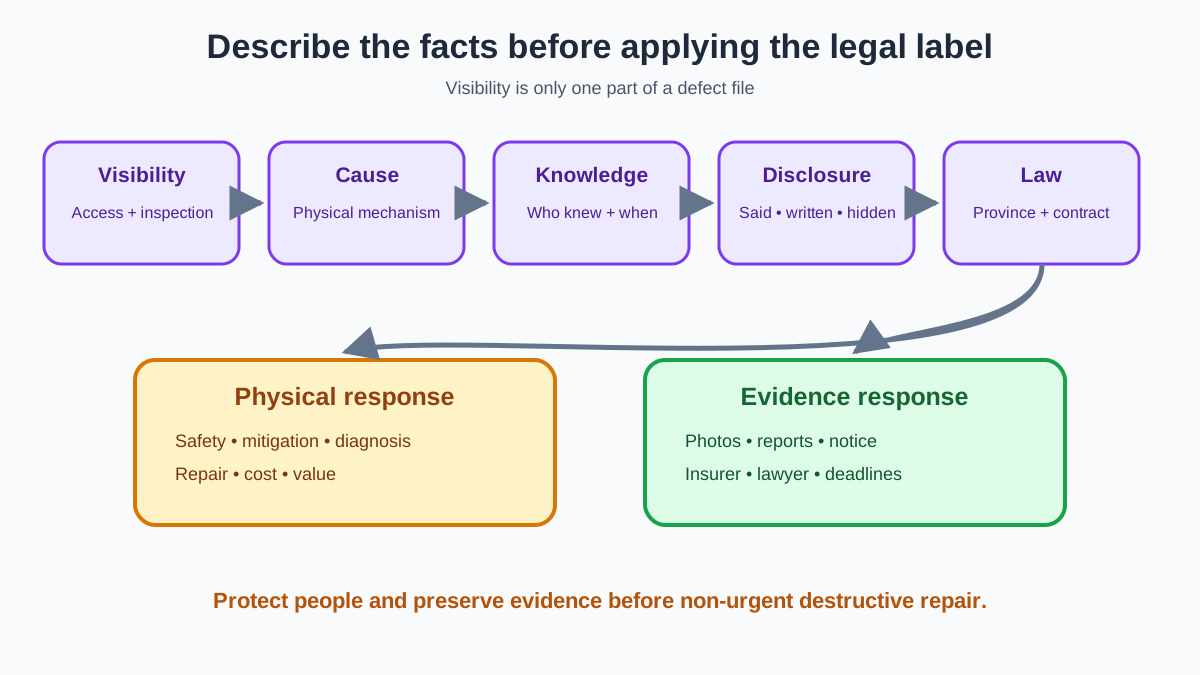
Short answer: classify along six axes
For every condition, record:
- Visibility: what could a reasonable buyer or inspector observe and under what access, season, and conditions?
- Cause: what physical mechanism produced the symptom?
- Knowledge: what did seller, buyer, agents, tenants, contractors, and authorities actually know, and when?
- Disclosure/concealment: what was said, written, repaired, covered, or omitted?
- Materiality: safety, habitability, intended use, repair expense, value, and marketability.
- Contract/law: representations, conditions, exclusions, warranties, notice, limitation, and provincial rules.
The same cracked tile can be a minor visible condition, a clue to slab movement, or a recently covered symptom. Evidence determines which story is supported.
Canada does not have one defect-law rule
Ontario's regulator describes patent and latent defects for agent obligations and says sellers should obtain legal advice because the law is complex. RECO describes a patent defect as detectable through reasonable observation and inquiry and a latent defect as generally not apparent through reasonable inspection, with material safety or habitability implications in its summary.
BCFSA's current consumer guide distinguishes defects discoverable upon reasonable inspection from material latent defects defined under BC real-estate-services rules. Its professional definition includes safety, habitability, intended purpose, major expense, authority notice, and permit issues.
Quebec operates under its Civil Code and legal warranty framework. OACIQ's legal warranty explanation discusses warranty of ownership and quality, declared defects, perceived defects, and contract exclusions in that jurisdiction.
Do not paste an Ontario “buyer beware” summary into a Quebec promise to purchase or use a BC licensee definition as the seller-liability test elsewhere. Retain a lawyer qualified where the property is located.
Patent does not mean harmless
A patent defect can be visible and expensive:
- foundation displacement;
- roof failure;
- rotten deck;
- failed retaining wall;
- missing stairs or guards;
- severe water damage;
- fire-damaged wiring;
- collapsed sewer;
- contaminated soil visible at surface;
- major encroachment shown on survey.
The label concerns discoverability, not cost. Buyers should investigate visible clues during a condition period and price the full cause and repair.
BCFSA's consumer material says patent defects are the buyer's responsibility to discover in its BC context. Contract and local law determine consequences, but no buyer should ignore an obvious defect expecting a later disclosure claim to fund it.
Latent does not mean the seller knew
A concealed defect can exist without seller knowledge. Examples include a hidden plumbing defect, buried tank, concealed rot, subsurface movement, inaccessible wiring connection, or manufacturing problem.
Separate:
- condition existed;
- condition was not reasonably discoverable;
- seller knew or should be treated as knowing under applicable law;
- seller had a duty or warranty;
- statement was false or misleading;
- buyer relied;
- condition caused compensable loss;
- claim was brought in time.
Those are legal and factual elements, not one conclusion. A repair invoice can support knowledge of a past event while also showing a reasonable completed repair.
Concealment changes the evidence analysis
Potential concealment clues include:
- new finish over localized damage;
- furniture or boxes blocking a known area;
- disconnected alarm or pump;
- sealed access panel;
- removed labels or reports;
- repeated cosmetic repairs without cause correction;
- false answer about prior leak or claim;
- instruction preventing ordinary inspection;
- active odour treatment or dehumidification not explained;
- recent demolition before showing.
None proves intent alone. Photograph the clue, ask a neutral written question, and let inspectors and lawyers assess it.
Do not accuse a seller during the inspection or remove finishes without permission. A reasonable fresh paint job is common home preparation.
Reasonable inspection depends on access and conditions
Record what was available:
- occupied, vacant, or heavily furnished;
- snow, rain, dry season, frozen ground, or drought;
- utilities on or off;
- roof safely accessible;
- attic/crawlspace hatch available;
- storage blocking walls;
- tenant access limits;
- finished surfaces concealing structure;
- equipment operating season;
- seller permission for tests;
- inspection time and property size;
- inspector scope and exclusions.
The inspection report should state limitations rather than declare inaccessible areas defect-free. Use the inspection-clause guide to preserve specialist and revisit rights.
If snow covers the foundation and deck, consider an extension, seller representation, seasonal holdback, or other lawyer-drafted response rather than assuming the exterior is sound.
Visible symptoms need a cause tree
Example: basement staining.
Possible causes include:
- plumbing or appliance leak;
- foundation crack;
- window well;
- grading/downspout;
- groundwater/hydrostatic pressure;
- sewer backup;
- condensation;
- prior event already repaired;
- water arriving from neighbouring land;
- construction moisture.
Evidence can include moisture pattern, weather history, plumbing pressure, camera inspection, foundation review, drainage layout, sump operation, repair invoices, claim file, seller timeline, and destructive opening if permitted.
Do not obtain three waterproofing quotes before diagnosing the source. A contractor selling one system may not assess every cause.
Seller knowledge should be documented chronologically
Sellers should build an event log before listing:
| Date | Symptom/event | Who observed | Diagnosis | Work | Recurrence/monitoring |
|---|---|---|---|---|---|
Attach reports, invoices, photographs, permits, insurance claims, authority notices, warranties, and correspondence. Tell the lawyer and real-estate professional about uncertain material issues.
Do not destroy old reports because repairs are complete. A transparent before-and-after file can establish the scope and allow the buyer's expert to verify it.
The property disclosure statement guide shows how to answer from records without turning an observation into a professional guarantee.
Buyer questions should target events, not conclusions
Instead of “Are there latent defects?”, ask:
- Has water entered this area? When and from what source?
- Has this crack changed or been measured?
- Was any wall, floor, ceiling, soil, or finish removed or replaced here?
- Which insurer, contractor, engineer, or authority reviewed it?
- What permit and inspection closed the work?
- Were there claims, notices, disputes, or warranty requests?
- Was the property ever unsafe or uninhabitable?
- Which report recommended further work?
- Has an offer failed after an inspection, and what material fact was learned?
Send questions in writing. Keep the answers and documents with the purchase file.
The seller and agent must follow local disclosure law; the buyer still performs independent diligence.
Materiality needs a real-world impact model
Assess:
- immediate safety and emergency work;
- habitability and relocation;
- intended use disclosed to seller or agent;
- base and adverse repair;
- authority order or permit path;
- lender and insurer acceptance;
- lost area, rent, parking, access, or amenity;
- stigma and buyer pool;
- recurring monitoring and maintenance;
- legal and professional cost;
- resale disclosure.
A $2,000 repair can be material if it makes the only exit unsafe. A $20,000 cosmetic replacement may be visible and priced into the purchase.
Use specialists to estimate physical scope and an appraiser for market effect. Lawyers address legal materiality and remedies.
Seasonality can hide or reveal defects
Some conditions appear only during:
- spring snowmelt;
- wind-driven rain;
- freeze-thaw;
- high groundwater;
- cooling or heating season;
- heavy electrical load;
- wildfire smoke;
- dry-soil settlement;
- septic saturation;
- leaf or ice blockage;
- seasonal road use.
Ask for utility history, weather-linked event dates, seasonal photographs, maintenance, tenant messages, and monitoring. A July inspection cannot prove an ice-dam history false, and a February showing may not test central air.
Possible transaction responses include specialist review, seller representation, historical records, extended condition, seasonal test, price reserve, or a lawyer-drafted holdback. Match the response to lender and insurer requirements.
Do not create an open-ended seasonal promise. Define test, date, evidence, amount, and outside resolution.
Permits and latent-defect analysis can overlap
Concealed work without required approvals can create safety, use, cost, and authority-notice issues. BCFSA's professional guidance includes lack of required local-government permits in its BC material-latent-defect framework.
Use the unpermitted renovation resolution map to separate missing record, unsafe work, prohibited use, and legalization cost. Do not conclude every open permit is a latent defect or every closed permit proves hidden work is sound.
Obtain local authority and legal advice.
Known and disclosed defects still require due diligence
Disclosure tells the buyer a condition exists. It does not establish full scope, price, safety, repair life, warranty, insurance, or future claim allocation.
For a disclosed foundation repair, obtain:
- original condition report;
- engineer design;
- permit and inspection;
- contractor invoice;
- warranty and transfer;
- drainage/grading work;
- monitoring points and results;
- recurrence or new cracks;
- lender/insurer acceptance;
- contract wording.
The buyer may accept, amend price, require cure, retain a condition, or decline under available rights. A receipt acknowledgement is not automatically the same as a release; the lawyer reads the document.
“As is” and warranty exclusions need legal review
Power-of-sale, estate, relocation, foreclosure, corporate, and ordinary sales may contain broad exclusions or limited representations. Quebec warranty exclusions have their own legal framework, and common-law provinces apply different rules.
Before offering, ask the lawyer to explain:
- which warranties or representations are excluded;
- effect of seller knowledge or concealment;
- property disclosure status;
- inspection and access rights;
- title-insurance limits;
- remedies surviving closing;
- burden of proof and litigation risk;
- price and reserve appropriate to the information gap.
Do not translate “as is” as permission to hide known safety defects or as a guarantee the buyer has no possible rights. The words, jurisdiction, and conduct matter.
Lender and insurer must receive material facts
The lender cares about value, marketability, habitability, security, and repairs. The home insurer cares about current condition, prior loss, occupancy, systems, hazard, and planned work.
Send material reports, disclosure, claims, orders, open permits, estimates, and contract amendments through approved channels. A preapproval does not mean the property is accepted.
Do not describe an active defect as repaired because a holdback exists. Use the home-insurance before closing guide and obtain written lender approval.
Inspection discovery before the offer is firm
When an inspection identifies a significant issue:
- preserve the report, photographs, and test limitations;
- obtain specialist diagnosis within the condition period;
- ask seller for history and records;
- notify lender and insurer as required;
- build base, adverse, and urgent cost;
- have the lawyer/real-estate professional apply the exact condition;
- document any extension, amendment, repair, price change, or termination correctly.
Quebec's regulator notes in its inspection guidance that not every minor defect justifies cancellation under common inspection clauses and emphasizes proper written process. Other jurisdictions use other forms and standards.
Do not miss a condition deadline while negotiating informally.
New damage between agreement and closing
A condition that arises after inspection is a timeline issue, not necessarily a pre-existing latent defect. Compare showing, inspection, disclosure, repair records, final visit, weather, occupancy, and move-out evidence.
Use the final walkthrough protocol to document the change. Report it to the lawyer, lender, and insurer before deciding on repair, extension, price, holdback, insurance proceeds, closing, or another remedy.
Do not repair evidence away before parties and insurers can inspect, except urgent safe mitigation advised by professionals.
Post-closing: preserve before repairing
If a serious hidden condition appears after possession:
- protect people and prevent further damage;
- call emergency services or utility when appropriate;
- notify home insurer promptly under policy terms;
- photograph/video the area before disturbance;
- preserve removed material and labels where safe;
- record weather, use, alarms, readings, and discovery time;
- obtain independent technical diagnosis;
- notify the real-estate lawyer immediately;
- preserve seller disclosure, listing, messages, inspection, permits, claims, and closing files;
- do not accuse, threaten, or post conclusions publicly.
Mitigation may be legally and practically necessary. Coordinate documentation with emergency drying, shoring, disconnection, or cleanup rather than delaying safety work.
Send a focused notice, not a public accusation
The lawyer may advise formal written notice to seller, agents, insurer, warranty provider, contractor, or authority. Preserve delivery evidence and meet contractual or statutory content and timing.
A useful technical notice package can contain:
- property and closing date;
- discovery date and circumstances;
- neutral condition description;
- immediate safety and mitigation;
- photographs and initial report;
- requested inspection access;
- evidence-preservation request;
- contact for future communication.
Do not demand a final dollar amount before investigation or state fraud as fact without legal advice. Avoid social media, neighbourhood posts, online reviews, and direct contractor threats while evidence and responsibility are unresolved.
Give potential defendants a reasonable inspection opportunity when the lawyer advises, while still taking urgent steps to prevent damage. Record any removed material and chain of custody.
Use experts with separated roles
The first emergency contractor may be excellent at drying or shoring but not independent on cause or long-term repair. Ask the lawyer and insurer about experts for:
- cause and origin;
- structural or building-envelope diagnosis;
- environmental sampling;
- code/permit review;
- repair design;
- cost estimate;
- appraisal/diminution;
- document chronology.
State what each expert saw before alteration and which records were reviewed. Avoid asking one expert to give legal opinions outside scope.
Competing explanations should be tested against physical evidence. Choose the repair only after urgent protection and enough investigation to avoid destroying the cause.
Ask every expert to identify uncertainty and the next fact that would change the opinion. A report that lists only one conclusion without access limitations, photographs, measurements, testing method, alternative causes, or document sources can be difficult to evaluate.
Keep original digital files and metadata where possible. Label samples and removed components, record who handled them, and store them safely under professional direction. Evidence preservation should never expose occupants to mould, asbestos, sewage, gas, electrical, structural, or fire hazards.
Build a seller-knowledge evidence file
Relevant evidence can include:
- prior repair invoices and recurring service;
- insurance claims and denied claims;
- authority orders and inspections;
- tenant or neighbour complaints;
- earlier listing and disclosure statements;
- prior failed-sale inspection reports actually delivered;
- photographs and renovations;
- emails, texts, calendars, and payments;
- monitoring equipment and consumables;
- expert reports;
- seller statements and amendments.
Lawyers decide what can lawfully be obtained and used. Do not trespass, impersonate, secretly access accounts, or pressure contractors for confidential records.
Knowledge evidence can support or refute a claim. A single invoice labelled “basement” needs context.
Calculate loss without double counting
Possible categories for lawyer and expert review include:
- emergency mitigation;
- investigation and design;
- repair and restoration;
- betterment or code upgrades;
- temporary accommodation;
- lost rent or use;
- diminished value after repair;
- professional and legal cost;
- insurance payment and deductible;
- tax and financing;
- avoidable loss from delayed mitigation.
Keep invoices, time records, bids, photographs, and payment evidence. Do not assume every desired renovation belongs in the defect claim.
An appraiser may need to separate repair cost from remaining market stigma. The lawyer applies recoverability and limitation rules.
Buyer pre-closing checklist
- Disclosure and seller timeline reviewed
- Visible clues followed to likely cause
- Inspection limitations understood
- Specialists used for material systems
- Permits, title, claims, and authority records checked
- Intended use stated where relevant and advised
- Lender and insurer receive material facts
- Base/adverse cost and reserve calculated
- Contract exclusions and acknowledgements reviewed by lawyer
- Final visit compares current condition
Seller pre-listing checklist
- Repair, claim, notice, and event file assembled
- Material concerns reviewed with lawyer and agent
- Required disclosures made accurately and on time
- No defect is hidden or access obstructed intentionally
- Completed repair evidence organized
- Unknown cause described as unknown
- New facts through closing reported
- Property protected during vacancy and move-out
What to do next
- Describe the physical condition without assigning a legal label.
- Document visibility, access, season, and inspection scope.
- Diagnose cause and cost with qualified specialists.
- Reconstruct seller and buyer knowledge chronologically.
- Review disclosure, contract, permits, claims, lender, and insurance evidence.
- Obtain local legal advice before waiving, amending, repairing, or claiming.
- Preserve evidence and mitigate urgent damage.
- Track deadlines and written notices carefully.
Frequently asked questions
What is a latent defect in a Canadian home sale?
Broadly, it is a defect not discoverable through the applicable reasonable inspection standard. Disclosure duties, materiality, warranty, and remedies depend on provincial law and facts.
What is a patent defect?
It is generally a condition discoverable through reasonable observation or inspection. It can still be serious and expensive; buyers should investigate visible clues before becoming firm.
Must a seller disclose every defect?
No single Canada-wide rule answers that. Provincial law, type of defect, seller knowledge, contract, warranties, concealment, and professional rules determine obligations.
Does a home inspection protect against latent defects?
It reduces risk but is visual, time-limited, and scope-limited. Some defects remain concealed or outside access, season, testing, title, permit, and specialist review.
Is fresh paint proof a seller hid a defect?
No. It can be ordinary preparation or relevant evidence depending on location, timing, statements, underlying condition, and other facts. Document and investigate without assuming intent.
Can an “as is” clause eliminate every buyer claim?
Do not assume so. Effect varies with wording, province, seller status, legal warranties, knowledge, concealment, fraud, and other law. Obtain advice before signing.
What should I do if I find a hidden defect after closing?
Protect safety, mitigate further damage, notify insurer, preserve the scene and records, obtain independent technical advice, and contact the real-estate lawyer promptly before non-urgent destructive repair.
How long does a buyer have to make a latent-defect claim?
Limitation and notice periods vary and can depend on discovery, province, contract, defendant, and claim. Contact a local lawyer immediately; do not wait for repair completion.
This article is educational and does not provide legal, inspection, engineering, environmental, mortgage, appraisal, insurance, construction, or tax advice. Defect law differs across Canada. Obtain qualified local legal and technical advice for the actual facts and deadlines.
Advertisement

About David R. Chen, CFA
David R. Chen is a Chartered Financial Analyst and the Senior Housing Economist at BubbleWatch.ca. He brings 12+ years of experience in quantitative real estate analysis and mortgage underwriting. Formerly an analyst at a major Canadian bank, he specializes in modeling payment shock, regional affordability divergence, and private lending risk.
View David's professional bio & credentials →