Home Insurance Before Closing 2026 Tool (Guide & Data)
A pre-closing insurability workflow for matching the address, construction, occupancy, hazards, deductibles, optional water coverage, and lender instructions to a bound policy.
Home Insurance Before Closing: Prove the Property Is Insurable
Home insurance should be arranged before a Canadian home purchase closes because the mortgage lender usually requires proof of property coverage and its interest on the policy. The buyer also needs to know whether the actual address, construction, occupancy, claims history, heating, wiring, water exposure, renovations, and intended use are acceptable to an insurer.
A quote is not always a bound policy. A low online premium based on partial facts is not proof that coverage will begin on the closing date. Buyers should obtain written confirmation of insurer, insured address, effective date, coverage, deductibles, mortgagee or loss-payee details, conditions, and premium before the financing and legal deadlines.
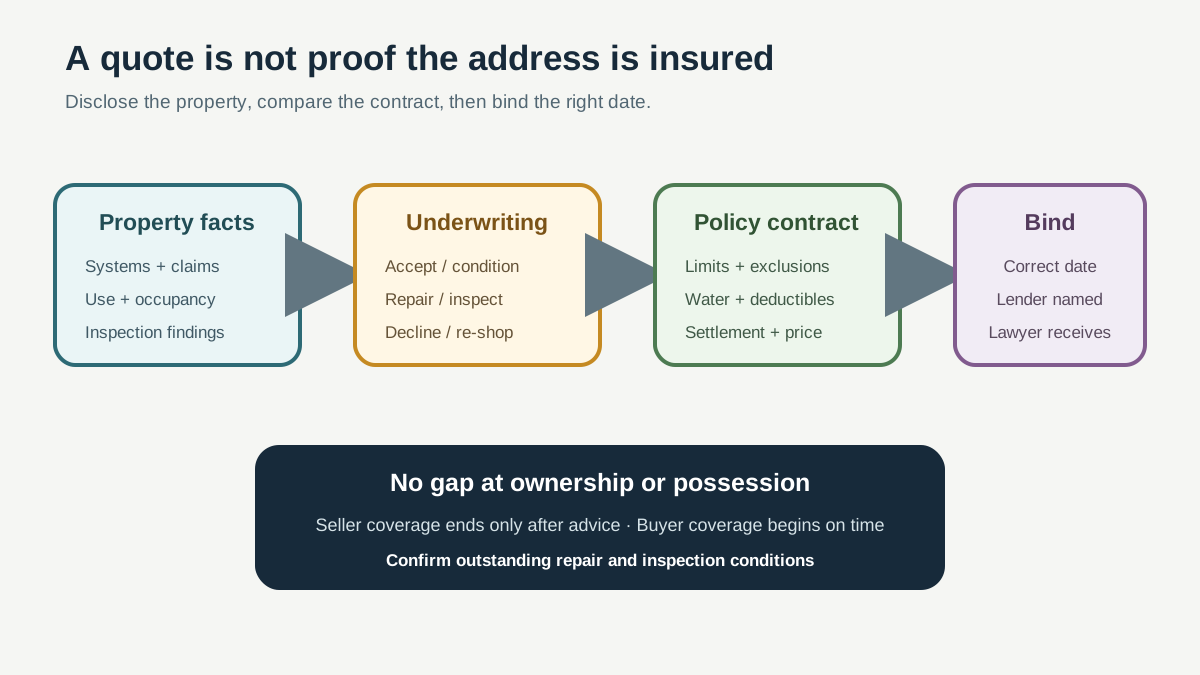
Short answer: complete the insurance file during the condition period
Use this sequence:
- Send the insurer accurate property and occupancy facts.
- Disclose inspection findings, renovations, rental or business use, vacancy, and unusual systems.
- Compare coverage, exclusions, limits, deductibles, optional water and disaster endorsements, and settlement basis - not only price.
- Confirm that the insurer will bind coverage from the contractual closing or possession time.
- Provide the exact lender name and mortgage instructions.
- Send the insurance binder or confirmation to the lawyer and lender before their cutoff.
FCAC's current home-insurance guide says a mortgaged policy usually includes a loss-payee clause for the lender. It also explains that home coverage may include building, possessions, liability, and additional living expenses, while deductibles, exclusions, and settlement terms matter.
Do not confuse property insurance with mortgage default insurance, optional mortgage life or disability insurance, new-home warranty, or title insurance. Each addresses a different risk.
Five insurance products buyers often confuse
| Product | Primary protected interest | Typical trigger |
|---|---|---|
| Home/property insurance | Building, contents, liability, living expense under policy | Covered fire, theft, water, wind, liability, or other insured loss |
| Mortgage loan/default insurance | Mortgage lender | Borrower default on an insured loan |
| Optional mortgage life/creditor insurance | Loan balance or payments under certificate | Insured death, illness, disability, or job loss event |
| Title insurance | Owner or lender title interest | Covered title defect, lien, fraud, or ownership loss |
| New-home warranty | Eligible construction defects under provincial plan | Covered builder or construction deficiency within warranty |
The lender may coordinate mortgage default insurance, but the buyer arranges home insurance. The title-insurance guide explains why a title policy does not cover a leaking roof or fire.
Begin with accurate property facts
Insurers price and accept a risk based on the property presented. Gather evidence rather than guessing.
Basic identity
- legal and municipal address;
- detached, semi, townhouse, condo, strata, co-op, seasonal, or multi-unit form;
- year built and major renovation dates;
- living area, storeys, basement, garage, and outbuildings;
- purchase and possession dates;
- replacement-cost characteristics and construction materials.
Systems
- roof type, age, and known repair history;
- electrical service, panel, branch wiring, and upgrades;
- plumbing supply and drain materials;
- heating fuel, equipment, age, auxiliary heat, and solid-fuel appliances;
- water heater and any rented equipment;
- sump pump, backwater valve, sewer, septic, and well;
- alarm, monitored security, smoke, leak, and shutoff devices.
Use and occupancy
- principal residence, rental, short-term rental, seasonal, or mixed use;
- number of units and occupants;
- tenants, boarders, basement suite, or vacant area;
- home business, customer visits, inventory, or equipment;
- renovation before or after possession;
- expected vacancy between seller move-out and buyer occupancy.
History and environment
- known prior claims and loss details;
- active leaks or unresolved damage;
- wildfire, flood, sewer, coastal, earthquake, or severe-weather exposure;
- oil tank, wood stove, pool, dock, trampoline, or other liability feature;
- proximity to hydrant and fire response where relevant.
If a seller or listing does not provide an answer, tell the broker it is unknown. Do not invent a roof age to complete an instant quote.
Insurance is part of the financing condition
A lender can approve the borrower's income and still refuse to fund without satisfactory property insurance. The insurer can also require repairs, photographs, an inspection, a different deductible, limited coverage, or another carrier.
The financing-condition approval test includes “home insurable” as a property gate. Ask the contract professional whether the financing or insurance condition gives enough time to solve a decline.
Examples that may need extra underwriting include:
- active knob-and-tube wiring or an older electrical panel;
- galvanized plumbing or polybutylene supply;
- old oil tank or unapproved solid-fuel appliance;
- missing roof life or current leakage;
- unrepaired prior claim;
- repeated water loss or high flood exposure;
- vacant or extensively renovated property;
- rental, rooming, short-term rental, or business use;
- remote fire protection or seasonal access;
- heritage, log, modular, or unusual construction.
If older conductors or a newer panel with uncertain downstream circuits are present, give the insurer a circuit-level assessment rather than “electrical updated.” The knob-and-tube and aluminum-wiring purchase guide organizes contractor authorization, authority records, repair scope, certificate, access, and restoration.
An oil-tank question should distinguish active equipment from an abandoned, removed, or leaking system. The fuel-tank buyer guide organizes registration, environmental assessment, removal, cleanup, and closure records so the insurer receives facts rather than “tank gone.” Planned asbestos work and radon mitigation should also be described by qualified scope; use the asbestos due-diligence guide and radon testing plan when those conditions affect occupancy or renovation.
Past sewer backups and foundation movement need equally precise evidence. Use the sewer-lateral inspection workflow to distinguish private pipe condition from municipal surcharge, and the foundation-crack buyer guide to separate structural work, seepage, groundwater, and restoration before asking an insurer to assess the completed risk.
For a prior basement loss, provide the insurer with the basement-flood event and protection file rather than the word “waterproofed.” For an old or partly replaced roof, use the roof-section evidence guide to identify the actual covering, sections, repairs, leaks, and replacement timing.
Attic frost, vermiculite, mould, disconnected exhaust, and unsafe wiring can change the repair sequence even when insulation appears deep. The attic inspection workflow organizes those facts before the buyer describes a planned energy upgrade to the insurer.
For opening-related leakage, give the insurer the actual window and exterior-door evidence file instead of “windows old.” For mechanical systems, use the heating and cooling inspection map to disclose fuel, equipment, rentals, venting, service, and planned correction.
Repeated supply leaks, older pipe materials, water-heater losses, and rental obligations need their own plumbing and water-heater due-diligence file. Keep those facts separate from sewer backup and overland-water questions.
For a fireplace, insert, or wood stove, ask the insurer which inspection level, professional category, form, repairs, and deadline it requires. The solid-fuel buyer inspection map explains why the deliverable is a dated inspection report - not a permanent “WETT certificate.”
An insurance obstacle does not prove the property is unbuyable. It may require a specialist report, repair before or after closing, different insurer, higher premium, reduced option, or contract amendment. For an acreage or private road, give the insurer the rural access, services, heat, hazards, and intended-use file. The buyer needs that answer while protection remains available.
Connect the home inspection to underwriting
The home inspector does not approve insurance, and the insurer does not replace inspection. Share material facts when the application asks for them.
Use the home inspection condition workflow to identify active water, unsafe electrical conditions, old roof, fuel systems, vacancy, or renovations. Then ask the insurance representative:
- Is the property acceptable as observed?
- Is a specialist certificate or repair required?
- Must work be completed before binding or within a stated period?
- Will coverage exclude the known problem until repaired?
- Does the lender accept the proposed policy and deductible?
- What evidence closes the insurer's condition?
Do not hide a finding because the report belongs to the buyer. An inaccurate insurance application can create a coverage problem at the worst time.
Compare policy structure, not only premium
FSRA's Ontario property-insurance question guide tells consumers to ask about covered risks, policy start and duration, replacement cost versus actual cash value, liability, claims, deductibles, exclusions, valuables, storage, overland flood, sewer backup, and risk reduction.
Use a side-by-side table:
| Policy field | Quote A | Quote B | Quote C |
|---|---|---|---|
| Insurer and form | |||
| Building settlement basis | |||
| Contents settlement basis | |||
| Guaranteed replacement feature and conditions | |||
| Personal liability limit | |||
| Additional living expense | |||
| Base deductible | |||
| Water/sewer/flood deductibles | |||
| Sewer backup limit | |||
| Overland water availability | |||
| Earthquake coverage and deductible | |||
| Service line/equipment breakdown | |||
| Valuables limits | |||
| Vacancy/renovation condition | |||
| Annual premium and payment fees |
A lower premium can reflect a higher deductible, lower limit, narrower water coverage, actual-cash-value settlement, or missing endorsement. Ask for the declaration page, wordings, endorsements, and exclusions.
Purchase price is not the building coverage limit
Market value includes land, location, scarcity, zoning, and buyer demand. Building replacement cost estimates the expense to reconstruct insured improvements under policy terms. These numbers can differ sharply.
A $1.2 million urban property may include valuable land and a modest structure. A $700,000 remote custom home may be expensive to rebuild because of access, labour, materials, demolition, and code upgrades.
Do not choose a building limit by copying the purchase price or mortgage. Provide accurate size, finish, construction, and features. Ask:
- Who calculates replacement cost?
- Does the policy include a guaranteed or extended replacement feature?
- Which conditions preserve that feature?
- How often is the estimate updated?
- Are demolition, debris, bylaws, professional fees, and inflation handled?
- What happens if the declared property details are wrong?
FCAC distinguishes replacement value from actual cash value for settlement. Actual cash value deducts depreciation. Read how the policy applies each basis to the building and contents.
Water coverage needs line-by-line questions
“Water damage” is not one event. A policy may treat sudden plumbing escape, sewer backup, overland water, groundwater, seepage, flood, tidal water, frozen pipes, and repeated leakage differently.
The Insurance Bureau of Canada's water and flood guidance says sewer backup is typically outside a standard policy but optional coverage is offered by most insurers. It also says optional overland flood coverage is available from many insurers for many homes, subject to risk, while coastal storm surge and tidal-wave damage are typically not covered.
Ask for written answers:
- Is sudden and accidental escape from indoor plumbing covered?
- Is sewer or drain backup included or optional?
- Is sump-pump failure included?
- Is overland water available for this address?
- What limit and deductible apply to each water event?
- Are below-grade contents limited?
- What seepage, groundwater, repeated-leak, or maintenance exclusions apply?
- Are backwater valve, sump, battery backup, grading, or shutoff discounts available?
Do not rely on a neighbourhood label such as “not in a flood zone.” Surface water, drainage, sewer capacity, and policy availability can change at a specific address.
Condo and strata buyers need two policy layers
The corporation insures common property and other interests defined by statute, declaration, bylaws, and policy. The unit owner needs personal coverage for belongings, liability, living expense, unit improvements, and gaps or assessments covered by the owner's policy.
Obtain the corporation's current certificate and policy summary. Ask about:
- corporation deductible by peril;
- water and flood coverage;
- earthquake coverage where relevant;
- standard unit or original specification;
- owner improvements and betterments;
- unit-owner deductible chargeback rules;
- loss-assessment coverage and limit;
- temporary accommodation;
- locker and parking contents;
- rental or vacancy restrictions.
The Ontario status-certificate review connects the corporation policy, deductibles, bylaws, reserve, and unit exposure. A high corporation deductible can become a household cash risk even when both policies exist. If the corporation assesses owners after a loss, use the special-assessment insurance test to distinguish a potentially covered loss assessment from ordinary capital work.
Rental, home business, and secondary-unit disclosures
Tell the insurer how the property will actually be used. A principal-residence quote may not fit:
- a legal or informal basement suite;
- room rentals or boarders;
- short-term rentals;
- a home office with clients, stock, or equipment;
- a separate workshop or commercial activity;
- a vacant unit awaiting renovation;
- a seasonal property used intermittently.
FCAC warns that home insurance is not business insurance and that undisclosed home-business use can affect coverage. It also tells owners to inform the insurer when sharing or renting part of a home.
The mortgage and municipality need the same truthful occupancy picture. Inconsistent owner-occupied, rental, and business statements across the application, lender file, listing, and insurer can cause approval or claim problems.
Closing date, possession date, and vacancy
The policy effective time should match the buyer's legal and contractual risk. Completion, title transfer, adjustment, and possession dates may differ by province and agreement.
Ask the lawyer and insurer:
- At what date and time does the buyer require coverage?
- Does the seller maintain coverage until legal closing or possession?
- Who bears risk if damage occurs between signing and completion?
- Is the home vacant after seller move-out?
- Can the buyer renovate before possession?
- Is a tenant staying after closing?
- Does a rent-back or delayed possession require a landlord arrangement?
Do not cancel tenant insurance too early. It can cover belongings and liability during the move until the new policy takes over, subject to both policies. The seller should not cancel its policy merely because the purchase is firm; coverage should continue according to legal advice through its risk period.
The binder and lender instructions
Names and dates must match. Obtain from the lender or lawyer:
- full legal lender or mortgagee name;
- address for notices if required;
- loan or reference number;
- required building amount or replacement-cost condition;
- required deductible limits if any;
- closing date and lawyer contact;
- binder delivery deadline.
Then verify the insurance evidence shows:
| Binder item | Confirmed? |
|---|---|
| Named insureds match title plan | |
| Insured address and unit are correct | |
| Effective date/time fits closing | |
| Building and policy form are stated | |
| Lender interest is correctly named | |
| Deductibles meet lender terms | |
| Outstanding underwriting conditions are listed | |
| Representative and insurer contact are shown |
A quote number is not a binder. Ask whether coverage is bound, subject to payment, inspection, photos, alarm, repair, or other condition.
A worked insurance failure scenario
A buyer makes a firm offer on a 1950s house. The listing says the electrical service was updated, but the inspection later identifies active knob-and-tube wiring in part of the attic. The buyer sends an online quote that assumed fully updated copper wiring to the lender.
Three days before closing, the insurer requests an electrical report and declines to bind the quoted form until the wiring is replaced. The lender will not advance without acceptable coverage.
The buyer now needs to coordinate:
- licensed electrical scope and cost;
- seller access before closing;
- contract amendment or holdback;
- insurer acceptance of the repair plan;
- lender acceptance of the binder and any deductible;
- lawyer treatment of the work and closing.
If the buyer had disclosed the inspection result during a financing and insurance condition, the solution could have been negotiated before the deal became firm. Hiding it did not make the risk insurable.
Wildfire, earthquake, and severe-weather questions
Regional hazards need address-specific answers. A wildfire-prone property may face vegetation, roof, access, hydrant, response-distance, or seasonal binding questions. Earthquake coverage is commonly optional where offered and may use a deductible expressed differently from the base policy. Wind, hail, ice, and coastal exposures can have special deductibles, limits, or exclusions.
For a pool or spa, provide the pool-system and enclosure evidence file rather than “pool present.” For significant trees, use the tree and arborist buyer map to document ownership, condition, targets, required work, bylaws, and storm planning.
Ask the representative:
- Is new coverage temporarily restricted when an active wildfire, storm, evacuation alert, or other event is near the property?
- Does the quote include earthquake, and how is its deductible calculated?
- Are landslide, subsidence, storm surge, tidal water, or erosion excluded?
- Does wildfire smoke damage require direct physical loss under the wording?
- Are roof age or material, defensible space, trees, fuel storage, or fire response conditions attached?
- Does rebuilding coverage include increased local construction and debris-removal costs after a regional disaster?
- What additional living expense applies if authorities restrict access but the home is not physically damaged?
Do not infer coverage from a peril name on a summary page. Read the insuring agreement, exclusions, endorsement, deductible, and claim trigger together. The Insurance Bureau of Canada's home coverage overview identifies earthquake, sewer backup, and overland water as examples of optional protection that may be purchased separately.
If the insurer cannot bind because a named event is already underway, a different quote may face the same restriction. Notify the lawyer and lender immediately; do not wait for the closing morning.
Insurance quote checklist before offering firm
Property accepted
- exact address, use, units, and construction disclosed;
- electrical, plumbing, roof, heat, fuel, and water systems described accurately;
- inspection findings and known damage disclosed where asked;
- claims and vacancy history answered;
- intended renovation, rental, and business use accepted.
Coverage understood
- building and contents settlement basis;
- liability and additional living expense;
- all deductibles;
- sewer, overland water, earthquake, and other optional decisions;
- exclusions, special limits, endorsements, and warranties;
- condo corporation gaps where applicable.
Closing operational
- policy bound for the correct effective date;
- premium payment method completed;
- lender named correctly;
- binder delivered to lawyer and lender;
- post-binding inspection or repair conditions diarized;
- tenant or prior-home coverage overlap planned.
After closing: verify and maintain the policy
Read the issued declaration and policy, not only the quote summary. Correct the address, insured names, occupancy, mortgagee, limits, deductibles, endorsements, and effective dates immediately.
Create a home inventory with photos, serial numbers, receipts, and replacement values. Store it outside the home or in secure cloud storage. Update the insurer before:
- major renovation or vacancy;
- adding a rental unit or short-term rental;
- starting a home business;
- installing wood heat, pool, solar, or other material feature;
- changing occupancy or ownership;
- leaving the home unoccupied for a long period;
- removing a protective device required by the policy.
FCAC notes that predictable maintenance-related losses may not be covered and gives frozen pipes during an extended cold-weather absence as an example. Read vacancy, heating, and inspection duties before travel.
Frequently asked questions
Do I need home insurance before closing in Canada?
A mortgage lender usually requires proof of acceptable property insurance before funding. Even a cash buyer needs to assess property, liability, contents, and living-expense risk. Arrange and bind it before the closing deadline.
Is a home insurance quote enough for the lender?
Often not. The lender or lawyer may require a binder or confirmation showing insureds, address, effective date, coverage, lender interest, and deductibles. Confirm the exact evidence and cutoff.
Is home insurance the same as mortgage insurance?
No. Home insurance covers listed property and liability losses. Mortgage default insurance protects the lender if an insured borrower defaults. Optional creditor insurance and title insurance are different again.
Does home insurance cover every kind of water damage?
No. Sudden plumbing escape, sewer backup, overland water, groundwater, seepage, flood, and coastal water can receive different treatment. Ask for limits, deductibles, and exclusions for this address.
Does the policy cover the purchase price?
Not necessarily. Building coverage relates to reconstruction and policy terms, while purchase price includes land and market value. Give accurate building facts and ask how replacement cost is calculated.
What if the insurer finds old wiring or an oil tank?
It may request inspection, repair, replacement, an endorsement, higher premium, limited coverage, or decline. Start during the condition period so the lender, seller, lawyer, and insurer can coordinate a solution.
What insurance does a condo buyer need?
The corporation carries a master policy, while the unit owner usually needs belongings, liability, living expense, improvements, deductible chargeback, and loss-assessment coverage. Review both policies and condo documents.
Should I disclose a basement tenant or home business?
Yes. Tell the insurer, and ensure the lender and municipal/legal advice use the same true occupancy. A standard principal-home policy may not cover all rental or business risks.
When should the seller cancel insurance?
Only after confirming with the lawyer and insurer when the seller's ownership, possession, and risk end. A firm agreement is not itself the closing. Avoid a gap before legal transfer.
What if insurance is declined after the offer is firm?
Contact the lawyer, lender, and licensed insurance representative immediately. Another insurer or repair plan may exist, but the buyer can still face a failed closing if coverage is a funding requirement. Do not conceal the reason for decline.
Method and source note
This guide was updated July 19, 2026. It uses FCAC consumer insurance guidance, Ontario FSRA's property-insurance questions, and Insurance Bureau of Canada water and coverage references. Policies and underwriting rules differ by insurer and can change.
Use a licensed agent or broker in the property's province, disclose accurate facts, read the issued policy, and obtain lender and lawyer confirmation for closing evidence. This article does not interpret a specific policy or claim.
What to read next
- Keep insurance within the property-specific financing approval test.
- Turn inspection clues into insurer questions with the home inspection condition workflow.
- Add premiums, deductibles, and repair reserves to the cash-to-close worksheet.
- For a condo, connect unit coverage to the status-certificate insurance review.
Advertisement

About David R. Chen, CFA
David R. Chen is a Chartered Financial Analyst and the Senior Housing Economist at BubbleWatch.ca. He brings 12+ years of experience in quantitative real estate analysis and mortgage underwriting. Formerly an analyst at a major Canadian bank, he specializes in modeling payment shock, regional affordability divergence, and private lending risk.
View David's professional bio & credentials →