Property Encroachments When Buying a Home in
A measured response to improvements crossing property lines, public land, easements, and rights-of-way, with separate legal, physical, authority, financing, insurance, and transaction decisions.
Property Encroachments When Buying a Home in Canada: Measure the Structure, Right, and Cure
A property encroachment is an improvement or use extending across a legal boundary or into an area where the owner lacks the assumed right. It can point outward from the home being purchased, inward from a neighbour, or into public land, a lane, an easement, a right-of-way, common property, or another protected area.
Severity does not follow size alone. A ten-centimetre eave can affect sale and financing if a neighbour disputes it, while a long fence inside the buyer's parcel may be manageable when documented and corrected. Location, structure, legal rights, operational impact, removal cost, lender acceptance, and resale determine the risk.
Do not settle the issue with a tape measure, seller assurance, or title-insurance slogan. Obtain a licensed surveyor's measurement, the complete title file, authority records, lender and insurer response, and local legal advice.
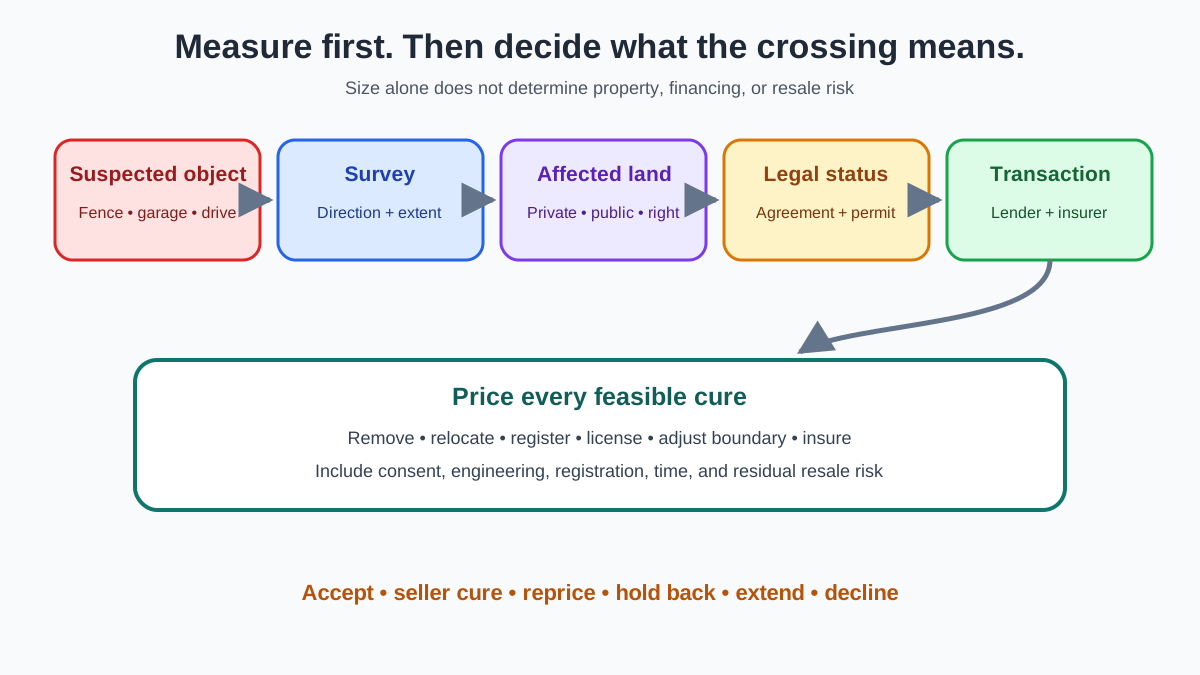
Short answer: classify before negotiating
For each suspected encroachment, record:
- Object/use: fence, garage, eave, deck, shed, wall, driveway, pipe, landscaping, parking, or other use.
- Direction: buyer improvement outward or neighbour/public improvement inward.
- Destination: private parcel, public land, lane, easement, utility strip, common property, or water boundary.
- Measurement: horizontal and, where relevant, vertical extent from a licensed surveyor.
- Right: easement, licence, agreement, consent, permit, court order, adverse claim, or none established.
- Consequence: use, safety, access, repair, liability, value, mortgage, insurance, and future work.
- Cure: remove, relocate, register, license, adjust boundary, obtain authority consent, insure, reprice, or decline.
Keep every option conditional until the people who must approve it have responded.
Start with evidence, not the fence line
A fence, hedge, driveway edge, mowing pattern, retaining wall, or row of trees may not follow the titled boundary. The Association of Ontario Land Surveyors' fence and boundary guidance says a previous fence may not accurately represent the property boundary and recommends a licensed surveyor to locate it.
Collect:
- current title for subject and relevant adjacent land;
- registered plans, easements, rights-of-way, agreements, notices, and covenants;
- existing survey, survey certificate, or Real Property Report;
- current field measurement where needed;
- aerial and listing images used only as context;
- building permits, site plans, variances, and municipal responses;
- seller disclosures and correspondence;
- neighbour agreements or disputes;
- lender, appraisal, and title-insurance requirements.
The property-survey guide shows how to reconcile the parcel, dated plan, and current site.
Create one issue card per object
Do not group “minor encroachments” together. Use a separate card:
| Field | Finding |
|---|---|
| Object | |
| Owner | |
| Built/changed date | |
| Direction and affected land | |
| Surveyed extent | |
| Structural/operational role | |
| Registered/private right | |
| Permit/authority status | |
| Complaint or notice | |
| Lender/insurer response | |
| Cure owner, cost, and time | |
| Residual resale risk |
A detached shed, house foundation, driveway, and municipal retaining wall need different technical and legal responses even when each crosses the same line.
Direction changes the buyer's problem
The seller's improvement crosses outward
The buyer may inherit removal exposure, neighbour claims, restoration cost, inability to repair, insurance limits, lender concern, and a resale disclosure issue. If an essential garage or driveway is affected, the home's utility and value may change.
The neighbour's improvement crosses inward
The buyer may receive less practical yard, blocked access, drainage effects, future claim risk, and a dispute. The buyer also needs advice before removing or accepting the object, because historic conduct and agreements can matter.
The improvement crosses onto public land or a lane
Municipal, provincial, Crown, railway, conservation, or other authority rights can differ from a private-neighbour issue. An encroachment agreement, licence, fee, removal-on-notice clause, indemnity, or refusal may apply.
The improvement sits inside an easement
The object may be within the parcel boundary yet interfere with a utility, access, drainage, or support right. Read the easement instrument audit before treating it as a boundary problem.
The surveyor answers where; the lawyer answers what follows
A licensed land surveyor can research survey evidence, retrace boundaries, measure improvements, and prepare the appropriate plan or report. The lawyer interprets title, agreements, contract rights, legal doctrines, and remedies.
The Alberta Land Surveyors' Association says a Real Property Report shows visible improvements relative to boundaries, including structures crossing into neighbouring lots or public land and registered easements. It cautions owners not to use the RPR themselves to establish a fence boundary because misinterpretation or measurement error is possible.
Ask the surveyor:
- Which boundary evidence controls?
- What is the measured extent and uncertainty?
- Does the object cross at foundation, eave, footing, roof, wall, fence, or use area?
- Is the current document adequate or must it be updated?
- Which plan would support an agreement, boundary change, or registration?
- Does a water or natural boundary require special work?
Ask the lawyer what the measurement means under local law and the purchase agreement.
“Minor” needs a consequence test
Score the encroachment across six dimensions:
| Dimension | Low concern | Higher concern |
|---|---|---|
| Structure | Movable fence panel | House, foundation, garage, retaining wall |
| Function | Decorative feature | Only access, parking, support, drainage |
| Extent | Small, measured | Unknown or material land area |
| Relationship | Documented agreement | Active dispute or hostile owner |
| Cure | Cheap and permitted | Consent, engineering, demolition, registration |
| Transaction | Accepted in writing | Lender/insurer/title objection |
A small foundation crossing can be costly to cure. A larger removable shed may be straightforward. Avoid percentage rules such as “anything under six inches is fine.”
Check structural and safety dependency
For buildings, walls, slopes, drainage, and shared structures, obtain technical advice on:
- whether removal is structurally independent;
- foundation, footing, eave, roof drainage, or fire separation;
- retaining and slope support;
- party wall or shared roof;
- service lines crossing the boundary;
- safe access for repair;
- building-code consequences;
- demolition, shoring, restoration, and permit cost;
- damage to neighbouring improvements.
A lawyer cannot price underpinning, and a contractor cannot grant land rights. Coordinate the scopes.
Authority compliance is separate from private rights
A municipality may assess setbacks, permits, public-land occupation, road allowance, lane, or utility concerns. Its approval does not necessarily settle a neighbour's title right, and a private agreement does not necessarily legalize a zoning violation.
Obtain:
- permit and approved site plan;
- final inspection or occupancy record where relevant;
- zoning/setback review;
- variance or minor-variance decision;
- encroachment agreement or licence;
- road, lane, utility, or public-works consent;
- fees, insurance, indemnity, and removal conditions;
- renewal, assignment, and transfer terms.
Read a municipal compliance letter closely. It may identify only apparent compliance with selected bylaws and exclude title, building-code, or hidden work.
Common encroachment patterns
Fence or hedge
Confirm the legal line, fence ownership, maintenance, adverse-use history, pool enclosure, gate/access, and whether moving it changes usable area. Do not pull it down before legal advice.
Garage, house, or addition
Measure foundation, wall, eave, roof, gutter, footing, and required maintenance access. Review permit plans, fire separation, lender, insurer, neighbour agreement, and realistic removal or registration.
Driveway or parking
Confirm the paved area, travelled path, curb cut, registered access, turning, snow storage, parking rights, and public-road connection. A car fitting today does not create a legal route.
Deck, porch, steps, or shed
Check attachment, structure, permit, setback, easement interference, and relocation cost. A movable appearance does not prove a cheap cure if services or foundations are involved.
Retaining wall
Identify wall ownership, line location, soil support, drainage, tiebacks, repair access, engineering condition, and failure consequence. Removal can destabilize both parcels.
Eaves and gutters
Measure the overhead projection and drainage. An agreement may need access for repair and rules preventing water discharge onto adjacent land.
Pool and equipment
Review shell, deck, fence, equipment, drainage, utility corridors, safety bylaws, and demolition/restoration. A pool crossing a utility strip can create access and removal risk.
Agreements must cover operation, not merely permission
A neighbour may agree to tolerate an improvement through a licence, encroachment agreement, easement, boundary adjustment, or other local instrument. The correct form depends on intent and law.
Have the lawyer address:
- exact surveyed area and structure;
- purpose and duration;
- whether it binds successors;
- payment or annual fee;
- repair and access;
- damage, liability, indemnity, and insurance;
- taxes and utilities;
- alteration or replacement;
- termination and removal;
- restoration standard;
- lender and charge-holder consent;
- registration and priority;
- dispute and legal cost;
- sale and assignment.
A one-page letter saying “the garage can stay” may fail to address rebuilding after fire, roof access, future buyers, or mortgage priority.
Boundary adjustment is a conveyance, not a drawing edit
Moving the legal line can require survey plans, neighbour agreement, planning or subdivision consent, lawyer transfers, lender discharges or postponements, tax, registration, and municipal updates. The result may affect setbacks, lot area, servicing, zoning, mortgage security, and other easements.
Before relying on it, obtain:
- surveyor's proposed parcel geometry;
- planning authority feedback;
- title and lender consent requirements for both parcels;
- appraisal if security value changes;
- tax and transfer-cost advice;
- legal and registration fees;
- construction/restoration work;
- written neighbour commitment;
- realistic completion schedule.
Do not waive conditions because both neighbours verbally support a “lot-line adjustment.”
Removal needs a complete scope
Price:
- survey layout and permit;
- utility locate and disconnect;
- engineering and shoring;
- demolition or relocation;
- waste and hazardous materials;
- neighbour protection;
- grading, drainage, paving, landscape, fence, and building-envelope restoration;
- temporary access or accommodation;
- authority inspection;
- legal release or title cleanup;
- contingency and tax.
Confirm who owns the object and has authority to remove it. A seller cannot promise to cut back a neighbour's structure.
Use a holdback only when the lawyer confirms enforceability, amount, release conditions, deadline, dispute process, and whether closing with the issue is acceptable to the lender and insurer.
Lender, appraiser, and title-insurer response
BCFSA's 2025 legal update explains that lenders may seek assurance that easements and encroachments do not materially harm mortgage security. It says buyers should fully disclose known encroachments to lenders and title insurers and notes possible survey, legal-opinion, policy, and endorsement requirements.
Send the reviewer:
- current survey and measurement;
- title and relevant instruments;
- photos and structure description;
- permit/authority status;
- agreement, licence, or consent;
- dispute or notice;
- proposed cure and timing;
- purchase-contract treatment;
- lawyer's opinion if requested.
Do not ask only whether “title insurance is available.” Ask what the lender requires, what the owner's policy covers, what is excluded, the limit and deductible, whether removal or diminished value is covered, and what happens after repair or replacement.
The title-insurance guide provides a policy comparison.
Quantify appraisal and resale effects
The value effect can come from lost land, impaired structure, reduced parking, maintenance difficulty, stigma, financing friction, or cure cost. Ask an appraiser to distinguish:
- value as currently encumbered or disputed;
- value after a documented agreement;
- value after physical removal and restoration;
- market reaction time and buyer pool;
- effect on highest and best permitted use;
- comparable sales with similar features;
- cost that does not translate dollar-for-dollar into value.
Do not set the price adjustment equal to a contractor quote alone. A $15,000 relocation can still leave a narrower driveway or smaller garage, while a $40,000 legal and survey process may preserve a feature worth more.
Estimate transaction friction too:
- longer condition period;
- survey and professional fees;
- lender or insurer options lost;
- future disclosure and buyer conditions;
- renewal of a licence or annual fee;
- monitoring, repair access, and neighbour coordination;
- probability-weighted refusal or litigation.
The decision model should show a base cure, adverse cure, and no-consent case.
Use probability-weighted scenarios without pretending precision
Build three cases:
| Case | Assumption | Direct cost | Value effect | Time | Probability basis |
|---|---|---|---|---|---|
| Agreement succeeds | Holder signs registrable terms | Written indication | |||
| Physical cure | Structure relocated/removed | Engineer/quotes | |||
| No voluntary cure | Dispute, sale, or decline | Lawyer/appraiser advice |
Do not assign a 95% success rate because a neighbour sounded agreeable. Use written positions, authority requirements, lender consents, and professional assessments.
If the purchase works only in the best case, the buyer is speculating on a legal project. Reduce the price and contractual exposure or decline.
Respond to an active boundary dispute carefully
An active dispute can include demand letters, survey challenges, blocked access, fence work, police calls, municipal orders, insurance claims, mediation, or litigation. Obtain the complete chronology and documents from the seller's lawyer.
The buyer should ask counsel about:
- parties and claims;
- court or tribunal file;
- injunction or order;
- deadlines and limitation issues;
- expert reports;
- legal cost incurred and expected;
- insurance defence or coverage;
- settlement offers and confidentiality;
- whether obligations or proceedings continue after sale;
- lender and title-insurer eligibility;
- purchase agreement assignment, indemnity, holdback, and termination.
Do not contact the opposing neighbour or party independently during an active legal matter. A casual statement can affect negotiations or evidence.
A price discount does not make an injunction disappear. The buyer needs to know whether the transaction transfers the problem, resolves it before closing, or cannot proceed under acceptable financing.
Consider tax and registration cost before changing the line
A boundary adjustment, easement, licence payment, transfer, or disposition of part of land can create land-transfer, sales-tax, income-tax, property-tax, legal, survey, and registration questions. Results depend on province, ownership, use, amount, and structure.
Ask advisers to identify:
- consideration paid for land or rights;
- transfer/registration tax or fee;
- capital gain and adjusted cost base allocation;
- GST/HST where relevant;
- municipal assessment changes;
- lender appraisal and security change;
- reporting and document retention.
Do not promise the neighbour a net amount before understanding who bears tax and transaction cost.
Purchase-contract protection
The agreement should allocate title, document, access, investigation, cure, and closing risk under local advice.
Potential subjects include:
- buyer satisfaction with title, survey, and encroachments;
- seller delivery of plans, permits, agreements, and notices;
- access for surveyor, engineer, contractor, and authority;
- seller representations about disputes and changes;
- lender and title-insurer acceptance;
- seller cure with objective completion evidence;
- neighbour/authority agreement and registration;
- price reduction or holdback;
- updated title and survey before closing;
- termination or extension rights;
- survival of representations.
Do not use an inspection condition as the sole path for a title and boundary defect without legal advice. Keep the financing condition open until the lender reviews the actual issue.
Seller preparation before listing
A seller who knows about an encroachment should not wait for the buyer's lender to find it. Collect:
- current title and survey evidence;
- permit and authority file;
- neighbour agreements;
- insurance correspondence;
- dispute and notice record;
- surveyor and lawyer assessment;
- cure bids and timeline;
- lender discharge/consent requirements if title changes.
Decide with the lawyer what must be disclosed and how the agreement should address it. Repairing, registering, or pricing the issue before listing can reduce closing risk, but do not alter a boundary object unilaterally.
A worked garage example
A 1986 survey appears to show a detached garage close to the side boundary. A new survey measures the concrete foundation 0.18 metres over the neighbour's parcel for 4.2 metres, with the eave extending farther. The garage contains the home's only enclosed parking.
The neighbour knew about the building but no registered agreement is found. The municipality has an old permit file that does not clearly show final location. The buyer's lender asks for the lawyer's report and title-insurer approval.
The buyer should not assign a token cost based on 18 centimetres. The team must assess structural removal, parking value, neighbour willingness, agreement or boundary-adjustment approval, lender consent, policy exclusion, seller cure, and resale disclosure.
A suitable decision could be a seller-completed registered agreement before closing, a fully priced removal with lender acceptance, a material price change, or withdrawal. The facts decide; the measurement starts the analysis.
An encroachment resolution ledger
| Workstream | Owner | Evidence required | Deadline | Closed? |
|---|---|---|---|---|
| Survey measurement | Surveyor | Signed/current plan | ||
| Title/right analysis | Lawyer | Written report | ||
| Permit/compliance | Authority | File/response | ||
| Structural scope | Engineer/contractor | Report/quote | ||
| Neighbour/holder | Lawyer | Executed consent | ||
| Lender | Mortgage professional | Written acceptance | ||
| Owner title insurance | Lawyer/insurer | Policy/endorsement | ||
| Contract cure | Parties/lawyers | Registered/completed proof |
Do not mark a row complete because a request was sent. Record the accepting decision and remaining condition.
What to do next
- Photograph the suspected object without trespassing or altering it.
- Obtain current title, instruments, old plans, permits, and correspondence.
- Retain a licensed surveyor for the necessary measurement.
- Have the lawyer classify ownership, rights, contract impact, and remedies.
- Obtain structural, drainage, or construction advice where the object is functional.
- Get written authority, neighbour, lender, and insurer responses.
- Price cure, time, transaction cost, and residual resale impact.
- Accept, cure, reprice, hold back, extend, or terminate only under legal advice.
Frequently asked questions
What counts as a property encroachment?
It can be a structure or use crossing a boundary or occupying land or a protected right without the assumed authorization. A surveyor locates it; a lawyer determines the legal consequence.
Is a fence encroachment serious?
It depends on location, land area, history, pool or access function, neighbour position, legal claims, and cure. Do not infer the boundary from the fence itself.
Can I make a neighbour remove an encroachment after buying?
Remedies depend on local law, title, agreements, history, conduct, and court discretion. Obtain advice before buying and do not remove or damage another person's property yourself.
Can title insurance cover an encroachment?
Some policies or endorsements cover specified unknown or accepted risks, subject to terms and exclusions. A known encroachment must be disclosed, and coverage does not guarantee permission to rebuild or expand.
What is an encroachment agreement?
It is a legal arrangement that may permit a defined improvement to occupy another parcel or public land under stated conditions. Duration, registration, fees, repair, liability, transfer, and removal terms matter.
Does a municipal permit legalize an encroachment onto a neighbour?
Not necessarily. Permit and zoning approval do not usually convey a neighbour's land right. Resolve the private title layer separately.
Who should pay to fix an encroachment before closing?
Responsibility follows the purchase agreement, title obligations, disclosure, negotiation, and law. Define seller work, proof, timing, holdback, lender approval, and buyer remedies precisely.
Should I buy a house with an encroachment?
Only after the extent, right, use impact, cure, lender and insurance treatment, cost, and resale risk are documented. Some are manageable; others impair essential access, buildings, or marketability.
This article is educational and does not provide legal, surveying, engineering, planning, construction, mortgage, appraisal, insurance, or tax advice. Encroachment law and remedies vary by province and facts. Retain qualified local professionals before committing to a transaction or altering property.
Advertisement

About David R. Chen, CFA
David R. Chen is a Chartered Financial Analyst and the Senior Housing Economist at BubbleWatch.ca. He brings 12+ years of experience in quantitative real estate analysis and mortgage underwriting. Formerly an analyst at a major Canadian bank, he specializes in modeling payment shock, regional affordability divergence, and private lending risk.
View David's professional bio & credentials →