GTA Condo Market: The 2026 Cap Rate Reset
Toronto's condo market is facing a structural 'Cap Rate Reset' in 2026. With inventory hitting 76 months and carrying costs exceeding rental income by $1,500/mo, the era of effortless appreciation is over.
GTA Condo Market: The 2026 Cap Rate Reset
Short Answer: Toronto
Toronto's skyline is no longer a symbol of growth - it's a ledger of over-leverage. As we enter the second quarter of 2026, the Greater Toronto Area (GTA) condo market is undergoing what analysts call a "Structural De-rating." For a decade, investors ignored yields because appreciation was 10%+ per year. That math has now inverted.
In 2026, the Toronto condo is being audited by the reality of 5% interest rates and a supply wave that has reached terminal velocity. This forensic report breaks down why the "Cap Rate Reset" is the only thing that matters for your portfolio this year.
1. The Inventory Tsunami: 76 Months of Static Supply
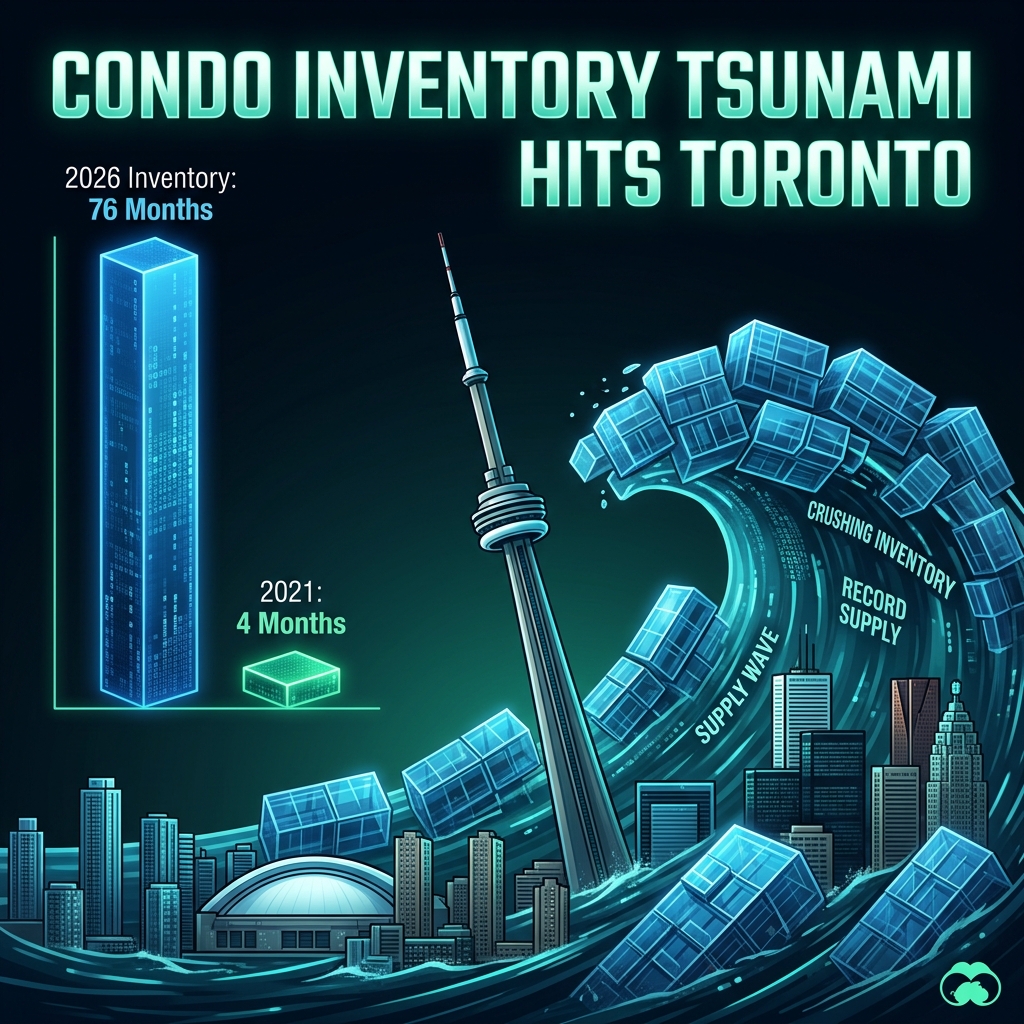
The most shocking statistic of 2026 is the inventory level. In a healthy market, Toronto typically clears its inventory in 4-6 months. We are currently sitting on 76 months of supply.
- The Logjam: Over 20,500 units are currently sitting unsold or in the "Pre-con Default" pipeline.
- The Appraisal Gap: New completions are being appraised at $1,100/sqft, while buyers signed at $1,450/sqft in 2021.
- The Result: A liquidity trap. Sellers cannot lower prices enough to move inventory because they would have to bring cash to the table to clear their mortgages.
2. The Negative-Carry Death Spiral
For the modern Toronto landlord, 2026 is the year of the "Monthly Bleed." A standard one-bedroom unit in the downtown core now costs approximately $4,100 per month to carry (mortgage, soaring condo fees, and property tax). That same unit rents for $2,550.
- The Gap: -$1,550 per month.
- The Impact: Investors are losing over $18,000 annually in cash flow.
- The Strategy: Smart money is exiting now at a loss rather than funding the deficit for the next five years.
3. The 2026 Cap Rate Reality
In a high-interest environment, real estate must compete with "Risk-Free" government bonds. If a 10-year GIC pays 4.5%, a Toronto condo yielding 2.8% (gross) is an irrational asset.
The Reset Point: For Toronto condos to become "Investable" again based on yield, prices must either fall by another 25%, or rents must rise by 40%. Given that rent-growth has hit a ceiling due to wage stagnation, the "Price Floor" is much lower than most sellers are willing to admit.
Strategic Advice: The 2026 Pivot
And that's why it matters: the "Greater Fool" has left the market. If you are a buyer in 2026, you are no longer competing with FOMO; you are competing with bankruptcy and default.
- For Buyers: Wait for the "Forced Liquidation" phase in Q3 2026. Look for "Assignment Sales" where the original deposit is being forfeited.
- For Investors: If your "Negative Carry" is more than $1,000/mo, perform a forensic audit of your equity. It may be time to harvest the loss and pivot to higher-yield Prairie nodes.
- For Sellers: The 2021 peak is not coming back this decade. If you must sell, price at the "Replacement Cost" minus 10% to find the last remaining liquidity.
The 2026 GTA Condo Market is a lesson in thermodynamics: what went up on the heat of cheap debt is coming down on the cold reality of capital costs.
Outbound References:
- TRREB: 2026 Market Data Portal
- StatCan: GTA Rental Market Trends 2026
- Bank of Canada: Monetary Policy Report April 2026
About the Editorial Team
This analysis was conducted by our independent research desk. We utilize verified market data and specialized methodology to provide objective, expert insights. Our strict editorial policy ensures no undue influence from sponsors or external parties.

About David R. Chen, CFA
David R. Chen is a Chartered Financial Analyst and the Senior Housing Economist at BubbleWatch.ca. He brings 12+ years of experience in quantitative real estate analysis and mortgage underwriting. Formerly an analyst at a major Canadian bank, he specializes in modeling payment shock, regional affordability divergence, and private lending risk.
View David's professional bio & credentials →