Co-Borrower vs Guarantor in Canada 2026: Who Signs What
A decision framework for families considering an added mortgage signer, covering lender terminology, full repayment exposure, ownership, household qualification, future credit, independent advice, and a workable release plan.
Co-Borrowers, Co-Signers, and Guarantors on Canadian Mortgages: Liability, Title, and Exit
Adding a parent, partner, sibling, or friend to a mortgage may bring more accepted income or credit strength into an application. It also puts another person behind a large secured debt, can affect that person's borrowing capacity, and may create ownership, tax, estate, relationship, and exit problems.
The labels co-borrower, co-signer, guarantor, covenantor, and co-owner are sometimes used differently across lenders and provinces. Do not decide from the label. Read the mortgage commitment, credit agreement, guarantee, title direction, and independent legal advice certificate to see who owes what and who owns what.
Start with the worst reasonable scenario: the occupant stops paying while the property value is down and the added signer needs a mortgage of their own. If the structure still makes sense, document how it will operate and end.
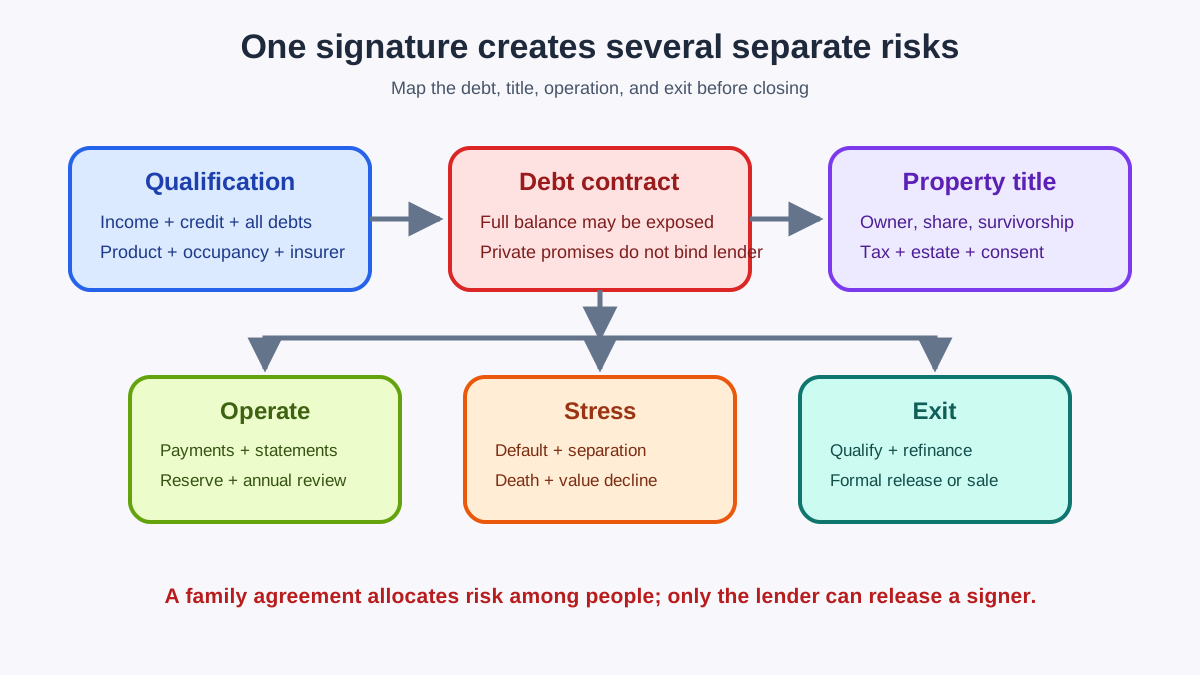
Short answer: five separate decisions are hiding inside one signature
Answer all five before adding a signer:
- Qualification: whose income, assets, credit, debts, and housing costs enter the application?
- Debt liability: can the lender demand the full unpaid amount from the added person, and when?
- Ownership: is that person on title, with what share and form of ownership?
- Operation: who pays, receives statements, approves changes, funds repairs, and claims expenses?
- Exit: what event, date, valuation, refinance, sale, or release ends the arrangement?
The Financial Consumer Agency of Canada's current joint-borrower guidance says a person who signs a mortgage or other credit agreement with others becomes equally responsible for repaying the unpaid balance. A private promise that one person will make every payment does not remove the lender's contractual rights.
Compare roles by documents, not family vocabulary
Use this as an issue list, then replace it with the lender and lawyer's exact explanation:
| Role used in conversation | Usually signs debt? | Usually on title? | Income/debt assessed? | Main risk |
|---|---|---|---|---|
| Primary borrower | Yes | Often | Yes | Full debt and property risk |
| Co-borrower/co-applicant | Yes | Often, but verify | Yes | Full debt plus ownership issues |
| Co-signer | Yes | Varies | Usually | Full debt despite no occupancy |
| Guarantor | Guarantee | Often no | Usually | Liability under guarantee terms |
| Co-owner only | Maybe | Yes | If lender requires | Property risk and lender consent |
| Gift donor | No, if true gift only | No from gift alone | Donor capacity may be reviewed | Permanent loss of gift |
Some institutions use “co-signer” as another name for joint borrower. Some distinguish a guarantor whose obligation is documented in a separate guarantee. The timing and scope of enforcement can depend on that wording and applicable law.
Ask the lawyer to mark the clauses that define principal debtor, guarantor, joint and several liability, continuing guarantee, indemnity, lender amendments, enforcement cost, waiver, and release. Do not rely on a sales explanation that the lender will “go after the child first.”
Full liability can exceed the family member's contribution
Ontario's official co-ownership financing guide explains joint and several liability: the financial institution can make a full claim against any one participant, who would then have to seek compensation from the others. Mortgage documents and provincial law govern the actual transaction, but the risk lesson travels well.
Suppose a parent contributes no cash, owns 1% of title, and signs a $650,000 mortgage solely to help qualification. That 1% title entry does not normally cap the debt exposure at 1% or $6,500. The contract may expose the parent to the full unpaid mortgage, interest, enforcement expenses, and a shortfall after sale.
The parent's recourse against the occupant is only as useful as the occupant's assets and the family agreement. If the occupant defaulted because of unemployment, insolvency, illness, or separation, collecting under that agreement may be difficult.
Qualification imports the added person's whole financial file
Adding income does not mean adding income alone. The lender assesses the person's accepted income, credit, mortgages, guarantees, vehicle payments, lines of credit, cards, support, property tax, condo fees, and other obligations under its policies.
Prepare a before-and-after table:
| Input | Occupant only | With added signer | Change |
|---|---|---|---|
| Accepted gross income | |||
| Qualifying housing cost | |||
| Other recognized debt | |||
| GDS | |||
| TDS | |||
| Down payment | |||
| Product/rate/insurance |
Use the GDS and TDS guide to reproduce the lender's figures. If the added signer contributes $3,000 of accepted monthly income but imports $2,100 of housing and debt obligations, the improvement may be small.
Ask whether every borrower must occupy the property, whether a non-occupying borrower is eligible under the insurer and product, and whether their existing property changes loan treatment.
Co-borrowing can reduce future borrowing capacity
The mortgage can appear in the added signer's credit and liability profile. When that person later applies for a loan, refinance, rental mortgage, or home purchase, the next lender may include the payment or require strong evidence that someone else has paid it consistently.
Do not promise that “the bank ignores it after twelve months.” Policies differ and can change. Ask the added person's own mortgage professional to model a planned future purchase with and without the proposed liability.
Test:
- next mortgage renewal date;
- expected balance then;
- current and stress-test payment;
- added person's income and existing home costs;
- proof of occupant payments;
- lender method for contingent or jointly owed debt;
- ability to refinance the original loan without the added signer.
A family arrangement that solves today's approval can block the helper's downsizing, move, investment, or separation financing later.
Title and mortgage are different layers
Title records legal ownership. The mortgage records security and repayment obligations. A person can be involved in one layer without receiving the economic result the family assumes from the other.
Ontario's official co-ownership arrangements guide describes individual co-owners as holding title as joint tenants or tenants in common. It notes that a joint tenant's share generally passes to surviving joint tenants, while a tenant-in-common share becomes part of the deceased owner's estate.
Other provinces have their own land-title, property, family, and estate rules. Ask the closing lawyer to explain:
- registered owners and percentage or undivided interests;
- joint tenancy versus tenancy in common;
- beneficial ownership if different from registered title;
- survivorship;
- consent needed to sell, mortgage, refinance, or transfer;
- creditor, family-law, incapacity, and estate consequences;
- land-transfer or registration tax on entry and exit.
Do not add a parent to 1% title as a “technicality” without tax and estate advice. A small share can still require signatures and create a disposition when transferred.
A guarantor without title still needs a property-risk file
A person may receive no ownership while supporting debt secured by the home. That imbalance makes due diligence more important.
The guarantor or non-owning signer should independently review:
- purchase agreement and amendments;
- appraisal or value risk;
- inspection and material defects;
- condominium, strata, rural, leasehold, or title documents;
- mortgage amount, rate, term, amortization, prepayment rights, and default terms;
- down-payment source;
- occupant's stable after-tax budget;
- insurance and loss-payee arrangements;
- family agreement and exit trigger.
Do not waive property and financing conditions because the helper's income makes the ratio pass. The financing-condition guide treats borrower approval, property approval, appraisal, and lender conditions as separate gates.
Each signer should receive disclosure and independent advice
FCAC says each joint borrower at a federally regulated institution has the right to receive information about interest and other costs and the same ongoing statements. Borrowers can consent to another borrower receiving disclosure, but giving up separate delivery can hide missed payments or changed terms from the helper.
The added signer should request direct statements, arrears notices, renewal offers, amendments, insurance notices where applicable, and online access permitted by the lender. Set a family rule that any late or returned payment is reported immediately.
Independent legal advice means the added person receives advice from a lawyer acting for that person's interests, free of pressure and with enough time to decline. Ask the lawyer to explain:
- maximum possible liability;
- whether liability is primary, secondary, limited, or continuing;
- lender rights to amend, renew, extend, or refinance;
- enforcement and legal costs;
- title rights or absence of title;
- release process;
- family agreement limits;
- estate and incapacity effects.
Signing in the closing rush after the buyer has waived conditions undermines a real choice.
Build an operating agreement before closing
Ontario recommends a legal co-ownership agreement and lists ownership, decisions, use, mortgage, taxes, expenses, repairs, insurance, and exit among its subjects. A family deal needs the same clarity even if only one person occupies the home.
Include advice on:
Contributions
- initial down payment and closing costs;
- monthly mortgage, tax, utilities, insurance, and fees;
- maintenance reserve and major repairs;
- special assessments;
- emergency advances;
- whether unequal payments change ownership or create a loan.
Decisions
- lender selection, term, fixed/variable choice, and renewal;
- refinancing or secured line of credit;
- renovation, rental, roommates, or business use;
- insurance claims;
- sale timing and listing decisions;
- offers below an agreed value.
Records
- dedicated payment account;
- monthly statements sent to all signers;
- annual balance and expense report;
- receipts for capital work;
- tax documents;
- notices and default escalation.
Default
- cure period after a missed contribution;
- right to advance funds and reimbursement terms;
- sale or buyout trigger;
- dispute resolution;
- legal-cost allocation;
- prohibition on undisclosed new liens.
A private agreement does not override the mortgagee's rights. Its purpose is to allocate responsibilities and remedies among family members.
Fund a payment buffer
Ontario's guide suggests co-owners consider a joint account holding the next three months of mortgage payments. The appropriate reserve depends on the family's income risk, property costs, and access rules.
Define:
- target balance;
- who funds it and in what shares;
- permitted withdrawals;
- dual approval threshold;
- replenishment deadline;
- statement access;
- treatment on release or sale.
The reserve should be separate from property-tax instalments, condo assessments, insurance deductibles, and repair funds. A $10,000 account is not a three-month buffer if $8,000 is already committed to a roof.
Run a missed-payment drill
The arrangement should work on a bad Friday afternoon, not only in a lawyer's conference room. Write the sequence for a returned mortgage debit:
- lender notice goes directly to every signer;
- account holder confirms the cause and exact cure amount;
- reserve account funds the cure before the lender deadline;
- occupant replenishes the reserve under the agreement;
- all parties record fees, credit effects, and any insurance notice;
- a second event triggers budget review, sale discussion, or another agreed remedy.
Keep current lender contact information, mortgage number, payment account, property-insurance policy, lawyer, and family contacts in the shared file. A guarantor who learns about months of arrears only after a demand has lost valuable response time.
Stress three longer cases in dollars:
| Event | Duration | Cash needed | Funding source | Exit trigger |
|---|---|---|---|---|
| Occupant job loss | 6 months | Benefits + reserve | ||
| Disability | 12 months | Insurance + reserve | ||
| Renewal payment increase | Term end | Monthly income | ||
| Special assessment/major repair | 90 days | Property reserve | ||
| Forced sale in weak market | 6 months | Carrying reserve |
If the helper cannot fund the modeled shortfall without borrowing or selling retirement assets, the mortgage amount needs to fall or the arrangement should stop.
Control renewal and amendment risk
Renewal can change rate, payment, term, prepayment rights, and the family's release opportunity. Six to nine months before maturity, obtain the balance, payout information, credit files, updated income, property value range, and competing options.
Decide who can accept a renewal offer and whether every borrower or guarantor must sign. Do not allow an auto-renewal or hurried acceptance to extend an unwanted obligation without reviewing the release plan.
Any request for additional borrowing, a secured line, extended amortization, payment deferral, or title change should require written notice to every participant and lender approval. A helpful signer who agreed to one purchase mortgage did not necessarily agree within the family to finance renovations or consolidate consumer debt.
Track the formal mortgage balance against the release milestone each year. If income or principal reduction is behind plan, adjust spending, accelerate a permitted prepayment, lower the expected refinance amount, or prepare the sale path before the hard date.
Design the release before signing
Lenders generally do not remove a borrower because the family asks. The remaining borrower may need to qualify alone, provide current documents, meet property and loan-to-value rules, and complete legal registration. The lender may require a refinance, new product, appraisal, or fee.
Write a release plan with:
- target date or mortgage balance;
- income and credit milestones for the occupant;
- maximum purchase price now;
- required principal reduction;
- annual qualification review;
- lender contact and application lead time;
- appraisal and legal cost owner;
- alternative buyout or sale if release fails;
- hard outside date.
Example milestones might be two years of stable accepted income, no consumer debt, six months of reserves, and a mortgage balance below an agreed amount. These are family targets, not promises that a future lender will approve.
Avoid an open-ended statement that the helper will be removed “when rates improve.” No one controls rates, policy, property value, employment, or renewal offers.
Test the exit price and transaction cost
If refinance fails, sale may be the only clean release. Estimate net proceeds under adverse conditions:
sale price − mortgage payout − prepayment charge − selling cost − legal cost − repairs/credits − tax = net equity
Review the mortgage prepayment penalty guide before selecting a term. A five-year contract can make an early family exit expensive.
Decide how net equity or a shortfall is allocated. Contributions, title percentages, beneficial ownership, and private agreements may point in different directions, so obtain legal and tax advice.
Separation, death, disability, and insolvency are core scenarios
Ask what happens if any signer:
- separates or divorces;
- dies;
- loses capacity;
- becomes unemployed or disabled;
- files insolvency;
- has a creditor judgment;
- needs long-term care;
- moves to another country;
- disagrees about sale;
- stops communicating.
Coordinate wills, powers of attorney, beneficiary designations, life and disability insurance, title form, and co-ownership agreement. Insurance needs an amount, insured person, policy owner, beneficiary, premium payer, term, and review date; “we have life insurance at work” is not a plan.
Estate representatives can face mortgage payments, property decisions, and family claims while probate or administration proceeds. Keep documents accessible to all necessary parties.
Tax treatment needs its own review
The Canada Revenue Agency's current principal-residence guidance says a qualifying property can be owned alone or jointly and generally only one home per family can be designated for a year. Ownership, occupancy, family unit, rental use, and disposition facts affect the exemption.
An added owner who does not occupy the property should ask about:
- beneficial versus registered ownership;
- adjusted cost base and sale proceeds;
- principal-residence eligibility and family designations;
- change of use or rental income;
- transfer tax on entering or leaving title;
- deemed disposition or attribution issues;
- reporting a sale or transfer;
- estate consequences.
Do not promise a tax-free exit because the occupant calls the property a home. Obtain advice before title is registered and before any later transfer.
Gift, loan, or smaller home may be cleaner
Compare the added-signer structure with alternatives:
| Alternative | Benefit | Cost/risk |
|---|---|---|
| True gift | No helper mortgage liability | Permanent loss of funds |
| Disclosed family loan | Terms can be documented | Adds debt; lender must accept |
| Larger buyer savings period | Cleaner ownership | Delayed purchase |
| Lower price | Lower debt and cash need | Different property/location |
| Shared ownership | Aligns capital and equity | Complex operation and exit |
| Rent longer | Preserves flexibility | Market and rent uncertainty |
The gifted down-payment guide shows how a true non-repayable gift is documented. The right answer is the structure whose legal substance matches the family's money and risk, not the one with the easiest label.
Red flags that should stop the signing
- The helper has not seen the mortgage commitment or purchase agreement.
- Someone says liability is limited to a title percentage without a marked contract clause.
- The helper needs repayment or removal to fund near-term retirement or housing.
- The occupant can pay only under an optimistic income or rate forecast.
- No one has calculated the helper's future borrowing position.
- Independent advice is scheduled after conditions are waived.
- The family disagrees about ownership or sale proceeds.
- There is no release date, sale trigger, or refinance fallback.
- A lender has not approved the exact occupancy and title structure.
- Tax or estate consequences are being dismissed as paperwork.
Pause the transaction until the lender and advisers resolve the issue in writing.
What to do next
- Obtain a term sheet naming every proposed borrower, guarantor, owner, and occupant.
- Reproduce qualification with all parties' accepted income and debt.
- Ask each person's future lender to model the new liability.
- Have the closing lawyer map debt documents against title.
- Give every added signer independent legal and tax advice.
- Draft the operating, default, reserve, and exit agreement.
- Set measurable release milestones and a hard fallback date.
- Keep direct statements, annual reviews, and emergency reserves active until formal release.
Frequently asked questions
Is a mortgage co-signer responsible for the whole mortgage in Canada?
Often the contract makes joint borrowers equally responsible, and joint and several terms may let the lender pursue one signer for the full amount. The exact exposure follows the signed mortgage, guarantee, and applicable law; have a lawyer explain it before signing.
Is a co-signer automatically an owner?
No universal rule makes the concepts identical. Check registered title, beneficial-ownership documents, lender requirements, and provincial law. A person can face debt liability without receiving the ownership interest the family expects.
What is the difference between a co-borrower and a guarantor?
The lender's documents may make a co-borrower a direct debtor and a guarantor liable under a guarantee, but terminology and enforcement terms vary. Compare the actual clauses, not a generic definition.
Can a co-signer be removed later?
Only through a lender-approved release and required legal steps. The remaining borrower may have to qualify alone, refinance, reduce the balance, or sell; a private agreement cannot force the lender to release someone.
Does co-signing affect my ability to buy another home?
It can. A future lender may count the mortgage payment or liability when assessing your application. Obtain a scenario from your own mortgage professional before signing.
Should a parent go on title with an adult child?
That decision can affect control, survivorship, tax, estate, creditors, family law, transfer costs, and release. Mortgage approval alone is not a reason to select a title structure; obtain independent legal and tax advice.
Does a private co-ownership agreement protect the lender?
It mainly governs rights and duties among the family or co-owners. It does not normally reduce rights granted to the lender in the mortgage unless the lender expressly agrees.
What records should a non-occupying signer receive?
Request the credit agreement, mortgage commitment, statements, arrears notices, renewal and amendment documents, property insurance evidence, annual balance, payment-account records, and any material property or title notice permitted by the lender and law.
This article is educational and does not provide mortgage, legal, tax, estate, insurance, accounting, or financial advice. Terms and laws vary by lender, document, province, and borrower. Each signer should obtain independent advice on the current transaction before becoming bound.
Advertisement

About David R. Chen, CFA
David R. Chen is a Chartered Financial Analyst and the Senior Housing Economist at BubbleWatch.ca. He brings 12+ years of experience in quantitative real estate analysis and mortgage underwriting. Formerly an analyst at a major Canadian bank, he specializes in modeling payment shock, regional affordability divergence, and private lending risk.
View David's professional bio & credentials →