Lead Paint and Lead Service Pipes When Buying an
A buyer's two-track lead investigation covering painted materials and renovation dust on one side, and tap water, service-line ownership, internal plumbing, sampling protocols, replacement, and follow-up on the other.
Lead Paint and Lead Service Pipes When Buying an Older Home in Canada
Lead in an older home can come from paint and renovation dust, drinking-water service lines, solder, fixtures, household plumbing, soil, and past activities. These sources need different sampling, professionals, controls, and repair plans.
For buyers, the building year is a screening clue rather than a result. Health Canada says pre-1960 homes probably contain lead-based paint, while later exterior or lower-lead layers may also matter. Municipal water leaves the treatment plant without necessarily describing lead contributed by the service line and plumbing before water reaches the tap.
Run two evidence tracks: painted-material condition and renovation disturbance; drinking-water source, sampling protocol, pipe ownership, and full-line replacement. Do not scrape paint or cut a service pipe during a showing.
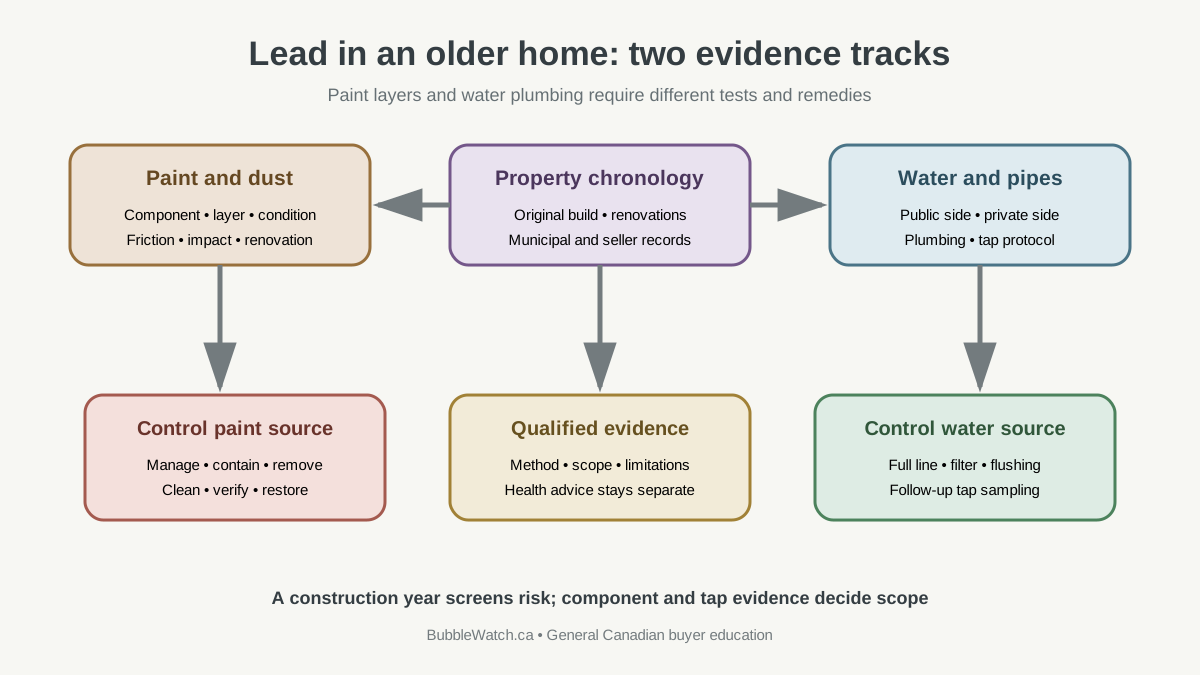
Short answer: separate paint from drinking water
Paint and dust
Map painted layers and friction, impact, chewable, damaged, and renovation surfaces. Use qualified testing and plan controls before sanding, cutting, demolition, window replacement, or other disturbance.
Drinking water
Identify public and private service-line material, internal plumbing, solder, fixtures, water use, and municipal corrosion-control context. Test at the tap under the protocol provided by the responsible authority or laboratory.
Then price source control, removal or management, cleanup, restoration, full service-line coordination, filters or interim measures, and follow-up separately.
Why age alone cannot close the file
Health Canada's current lead-based paint guidance says homes built before 1960 probably contain lead-based paint. It says exteriors of homes built from 1960 to 1990 may contain it and interior paint may contain smaller amounts.
Those dates guide investigation; they do not identify every layer. A 1940 house may have original paint below later coatings, replacement windows beside old trim, a modern addition, and exterior components from several projects.
Water infrastructure has its own timeline. Toronto says its possible lead sources include service pipes in homes built before the mid-1950s, solder used before 1990, older fixtures, and internal pipes. Another municipality's construction dates and records can differ.
Build a chronology for original construction, additions, paint, windows, doors, stairs, exterior work, plumbing, water-service replacement, municipal street work, and renovations.
Health context without diagnosing occupants
Health Canada states there is no known safe level of lead exposure. Infants, children, pregnant people, and fetuses are especially susceptible, while lead can harm people of all ages.
The buyer's property investigation does not diagnose poisoning. Medical concerns and blood testing belong with healthcare and public-health professionals. The building file identifies possible sources, conditions, and controls.
Do not use a family member's lack of symptoms to clear the house. Lead exposure may not produce an obvious property warning.
Build a painted-material register
Map every material likely to be disturbed or touched frequently:
| ID | Room/exterior | Component/layer | Condition | Friction/impact/chew | Planned work | Test/action |
|---|---|---|---|---|---|---|
Include:
- windows, sashes, jambs, stools, and wells;
- doors, frames, gates, and cabinets;
- stairs, railings, balusters, and porches;
- baseboards, trim, walls, ceilings, and floors;
- radiators, pipes, metalwork, and built-ins;
- siding, soffits, fascia, fencing, decks, and outbuildings;
- painted toys, furniture, and removable chattels only when in scope;
- soil beside painted exteriors or former workshops where professional review identifies a concern.
Peeling is important, but intact material can become a dust source during planned renovation. Mark the buyer's first-year projects on the same register.
Test paint for a defined decision
Health Canada says paint chips can be sent to a laboratory or a contractor with suitable X-ray equipment can assess painted surfaces. Before sampling, establish seller permission, safe methods, locations, repair of test points, chain of custody, laboratory capability, and report interpretation.
A chip result applies to the submitted layers and location. A portable X-ray fluorescence survey can cover many components without removing large chips, but the operator needs training, calibration, quality control, and a written protocol.
Ask the professional to state:
- components and sides tested;
- distinct paint histories treated separately;
- method, instrument, calibration, and limitations;
- positive, negative, inconclusive, and untested classifications;
- units and action basis;
- condition and disturbance implications;
- areas hidden by wallpaper, panels, cabinets, or newer finishes;
- recommended management or work controls.
Do not use a retail swab as a whole-home clearance unless a qualified professional explains its appropriate role and limitations.
Intact paint and renovation paint are different decisions
Health Canada says leaving lead-based paint alone can be safer than removing it when it is intact, not chipping, and outside children's reach. Covering or enclosing intact material can be an option.
The decision changes at friction, impact, chewable, peeling, or renovation surfaces. Windows and doors can generate dust through repeated movement. Sanding, scraping, heat guns, open flame, drilling, sawing, and demolition can spread contaminated dust or fumes.
Health Canada specifically warns against sanders, heat guns, and blowlamps for removing lead-based paint. A buyer should not turn that consumer warning into a large-project work plan; retain qualified professionals and follow provincial occupational, environmental, waste, and contractor rules.
Scope the renovation, not an abstract whole house
Mark:
- windows and doors to replace;
- walls, ceilings, trim, floors, and stairs to disturb;
- electrical, plumbing, HVAC, insulation, and structural routes;
- exterior preparation and soil protection;
- occupied areas and sensitive occupants;
- contents, ventilation, and access paths;
- asbestos or other hazardous materials in the same assembly;
- waste and final cleaning.
Use the asbestos scope workflow for overlapping older materials. One controlled opening may involve lead paint, asbestos compound, mould, wiring, and insulation.
Normalize paint-management and abatement bids
Compare the same material register and project drawings. Ask for:
- components, sides, layers, and quantities;
- management, enclosure, removal, or replacement method;
- work-area isolation and pressure controls;
- occupant and contents protection;
- worker qualifications and safety plan;
- dust suppression, tools, and daily cleaning;
- waste classification, packaging, transport, and disposal;
- independent visual, dust, or other verification under the project protocol;
- failure response and recleaning;
- reconstruction, caulking, painting, hardware, and operation;
- exterior soil and neighbour protection;
- taxes, schedule, accommodation, and warranty.
A window quote can exclude interior trim, exterior paint, wall repair, hazardous-material controls, and finish restoration. Add the full building boundary.
Map the water service from main to tap
Create a water-path ledger:
| Segment/component | Owner | Material/evidence | Replacement date | Sampling relevance | Action |
|---|---|---|---|---|---|
| Municipal main to property line | |||||
| Private service to building | |||||
| Entry and meter | |||||
| Internal distribution | |||||
| Solder/fittings/fixtures | |||||
| Drinking-water tap |
Ask the municipality for public-side material, private-side records, replacement programs, planned street work, corrosion-control information, and sampling instructions. Have a licensed plumber inspect the visible private entry and internal system.
A copper pipe at the meter does not prove the buried service is copper along its entire length. A replaced public half does not establish private-half replacement.
Understand the Canadian drinking-water guideline
Health Canada's technical document for lead in drinking water sets a maximum acceptable concentration of 0.005 mg/L, equal to 5 micrograms per litre, for total lead in a tap sample collected under the appropriate building protocol.
The guideline says lead often enters from service lines, solder, fittings, and other distribution or plumbing components. Treatment at the plant cannot alone control every contribution at the tap.
Keep the result in original units and compare it under public-health or water-authority advice. Do not confuse milligrams and micrograms.
Sampling protocol changes the meaning of a result
Lead can vary with stagnation time, flow, temperature, pipe contact, particulate release, recent flushing, construction, and sampling volume. A random daytime sample, 30-minute stagnation sample, first draw, and sequential profile answer different questions.
Health Canada's current corrosion sampling guidance describes tiered and profile approaches for utilities and investigations. It recommends follow-up monitoring after full or partial lead-service replacement until levels stabilize.
For a purchase test, obtain the current municipal, public-health, accredited-laboratory, or qualified-professional instructions. Record:
- exact tap and aerator condition;
- date, time, and sampler;
- prior water use and stagnation;
- flushing or no-flushing instruction;
- sample volume and sequence;
- cold versus hot water;
- preservation and chain of custody;
- laboratory and detection limit;
- result, units, and interpretation;
- household and plumbing conditions at collection.
A buyer should not compare results collected under different protocols as if they were repeated identical measurements.
Identify public and private ownership
Toronto's current lead and drinking-water guidance separates City and resident portions and recommends coordinating replacement of both. It also offers record checks, testing, and replacement programs subject to current eligibility.
Other municipalities have different boundaries, programs, loans, grants, street schedules, and contractor rules. Ask:
- which portion is lead or unknown;
- ownership and cost allocation;
- application and consent timing;
- approved contractor or permit requirements;
- meter, curb stop, road, sidewalk, and boulevard work;
- interior connection and restoration;
- full versus partial replacement plan;
- post-replacement flushing and sampling;
- program funds, liens, loans, or repayment obligations;
- transfer of an application at sale.
Do not count a grant or municipal replacement until eligibility, timing, and ownership are confirmed in writing.
Prefer full-line coordination over a false half-solution
Health Canada's technical guidance identifies full service-line removal as the best municipal approach to reduce exposure. Partial replacement can disturb deposits and leave a lead segment, so follow-up sampling is important.
If only one side can be completed, ask the water authority and qualified plumber about immediate precautions, final connection, material compatibility, flushing, filter use, and monitoring. Preserve the location and material of the remaining side.
Do not advertise “lead pipe replaced” when the evidence covers only the public or private segment. State the endpoints.
Interim exposure-reduction measures
Public-health and municipal advice may include flushing after stagnation, using cold water for drinking and cooking, cleaning aerators, and using a treatment device certified for lead reduction. Households with infants or pregnant people should obtain current health-authority advice promptly.
A filter is a managed interim control, not proof the service line is absent. Record certification, cartridge life, capacity, installation, maintenance, replacement schedule, and which taps are protected.
Prepare a household operating sheet showing which tap supplies drinking and infant formula, how long to flush after stagnation under local advice, the next cartridge date, how used filters are handled, and who checks follow-up results. Give the sheet to tenants, caregivers, and other regular occupants.
If the home will be vacant between closing and occupancy, ask the water authority how prolonged stagnation changes flushing and sampling. Do not collect a “typical use” sample from a plumbing system that has sat unused for weeks without telling the laboratory.
During service replacement, protect open pipe ends and indoor finishes from excavation debris. Follow municipal and plumber directions before returning the water to use. Document disinfection or other commissioning steps required locally.
Boiling water does not remove lead and can concentrate dissolved contaminants as water evaporates. Follow the responsible authority's advice instead of improvised remedies.
Price the full service replacement
Include:
- record search, inspection, locating, and sampling;
- municipal fees and program timing;
- plumber and excavator;
- trench or trenchless access where approved;
- utility locates and road or sidewalk requirements;
- meter, valve, internal connection, and electrical bonding implications;
- driveway, walk, landscaping, wall, and floor restoration;
- temporary water and occupancy;
- flushing, filter, and post-work sampling;
- hidden conditions and winter constraints;
- taxes and financing carry.
Normalize quotes against the same public and private endpoints. A price for the front yard may exclude the municipal side and basement restoration.
Soil and household dust
Paint deterioration, exterior preparation, hobbies, workshops, and past land uses can contribute lead to dust or soil. Do not assume every urban yard is contaminated or that a single surface soil sample clears the property.
If professional review identifies a plausible concern, define the decision: children's play area, vegetable garden, renovation dust, exterior work, or broader environmental history. Use a qualified environmental professional to design sampling, interpret background and standards, and recommend controls.
Keep indoor cleaning and exterior source work coordinated so contaminated soil or dust is not tracked back into remediated rooms.
Design post-work verification before renovation starts
The verification plan should match the disturbance. For paint work, define visual acceptance, dust control, cleaning sequence, areas sampled if dust testing is part of the professional protocol, laboratory method, acceptance basis, failed-result response, and authorization to reoccupy.
Record baseline rooms and surfaces so the verifier knows the work zone, adjacent zone, and pathways used by workers and waste. Include stairs, halls, entrances, HVAC grilles, exterior soil, and rooms where contents were stored.
Do not let reconstruction cover the work before required inspection and cleaning are accepted. Keep final photographs, component register, laboratory reports, waste records, contractor declaration, and a list of lead-containing material intentionally left in place.
For water work, verification needs different evidence:
- photographs and measured endpoints of removed public and private pipe;
- new pipe material and connection;
- permits, inspections, and municipal completion;
- flushing instructions completed;
- filters maintained during the advised period;
- follow-up samples collected under the current protocol;
- results in original units;
- remaining lead-containing internal plumbing identified;
- household precautions updated by the responsible authority.
A successful paint dust check does not clear drinking water. A low tap result does not clear window renovation dust. Preserve both tracks through closing.
Condos, rentals, and multi-unit buildings
The corporation or landlord may control the water service, risers, common corridors, windows, exterior paint, balconies, or mechanical rooms, while the owner controls unit finishes and fixtures. Establish boundaries before testing or quoting.
Request:
- public and private service-line records for the building;
- suite and common plumbing replacements;
- municipal sampling and corrosion-control notices;
- unit-specific and common-area paint or hazardous-material surveys;
- window, door, railing, riser, and corridor projects;
- renovation rules and contractor requirements;
- claims, health orders, and remediation records where applicable;
- reserve projects and special assessments;
- responsibility for temporary water, filters, access, and restoration.
A result from one suite tap does not characterize every riser or fixture. A common-area paint survey does not automatically cover the unit's earlier layers. Ask the qualified professional and water authority for an appropriate building-specific scope.
Rental buyers should also review provincial tenancy duties and existing occupant notices before planning work. Lead-safe access, relocation, rent, notice, and repair obligations require local legal advice.
Insurance, lending, and contract evidence
Tell the insurer about active renovation, damaged paint, water-service work, vacancy, and claims. Ask about contractor requirements, exclusions, occupancy, and proof after work. A health concern does not imply a standard property policy pays for preventive replacement.
Tell the lender about major work, delayed occupancy, municipal loans or liens, and any appraisal assumption. Verify financing for the buyer's share outside the down payment and closing reserve.
Local counsel may need to address:
- access for paint, water, plumbing, and environmental assessment;
- controlled sampling and restoration;
- delivery of municipal, laboratory, contractor, and claim records;
- public and private service segments;
- seller work and objective completion evidence;
- full-line coordination and program funds;
- interim filters, flushing, and follow-up sampling;
- lead-safe renovation, cleaning, verification, and reconstruction;
- concealed layers and expanded scope;
- deadline, price change, extension, termination, or holdback.
Avoid “remove all lead.” Define source, component, area, method, endpoints, and evidence.
Worked example: copper at the meter, lead under the yard
A 1948 house has copper entering the water meter, and the listing says “copper plumbing.” Municipal records show the public service is lead and the private material is unknown. A plumber finds a short copper transition near the foundation.
The buyer obtains municipal testing under the current protocol, a private-line locate, and coordinated replacement options. The paint survey separately finds lead layers at original windows scheduled for replacement.
The transaction budget now includes both service segments, basement and landscape restoration, follow-up water sampling, window containment, dust verification, and finish work. One copper pipe no longer stands in for the entire property.
Buyer checklist
Paint and dust
- Painted-material and renovation register completed
- Friction, impact, damaged, and chewable surfaces identified
- Qualified test method and limitations documented
- Hazard controls, waste, verification, and restoration priced
- Asbestos and other overlapping materials reviewed
Water
- Public and private service materials checked
- Internal plumbing, solder, fittings, and fixtures reviewed
- Sampling followed current authority protocol
- Results retained in original units
- Full-line replacement and municipal program checked
- Interim controls and follow-up monitoring defined
Transaction
- Insurer and lender received accurate work plan
- Program funding is not assumed before approval
- Contract identifies exact components and endpoints
- Sensitive-occupant health advice obtained separately
- Post-work paint and water evidence listed
- Future records remain with the property
Frequently asked questions
Does a pre-1960 home always have lead paint?
Health Canada says it probably contains lead-based paint, but material-specific testing establishes the actual components and layers. Do not clear or condemn the whole house by date alone.
Is intact lead paint safe to leave?
Health Canada says leaving it alone can be safer than removal when it is intact and outside children's reach. Friction, impact, damage, and planned renovation can change the management decision.
Does copper at the meter prove there is no lead service line?
No. A short copper replacement or transition can connect to buried lead. Check municipal records, the full route, and qualified inspection.
Can a quick flushed water sample clear the house?
Sampling meaning depends on protocol. Follow the current authority or laboratory instructions and preserve stagnation, volume, sequence, tap, and use conditions.
Will boiling remove lead from drinking water?
No. Follow public-health advice for certified treatment, flushing, cold-water use, sampling, and source replacement.
Is replacing only the private half enough?
It removes one source segment but can leave the other. Coordinate full replacement where possible and follow authority guidance for flushing and monitoring after partial or full work.
What to read next
If renovation will disturb older walls, windows, flooring, or mechanical systems, use the asbestos-testing and renovation-scope guide before destructive access. For private-water properties, use the well-water testing workflow because municipal lead-service assumptions do not apply to the well, pump, treatment, and private distribution system.
This article provides general Canadian home-purchase information, not medical, public-health, environmental, plumbing, laboratory, legal, insurance, lending, or remediation advice. Guidelines, sampling, ownership, and programs vary by jurisdiction and property. Use current official guidance and qualified local professionals.
Advertisement

About David R. Chen, CFA
David R. Chen is a Chartered Financial Analyst and the Senior Housing Economist at BubbleWatch.ca. He brings 12+ years of experience in quantitative real estate analysis and mortgage underwriting. Formerly an analyst at a major Canadian bank, he specializes in modeling payment shock, regional affordability divergence, and private lending risk.
View David's professional bio & credentials →