Underground and Above-Ground Fuel Tanks When
A province-aware buyer workflow for finding active, abandoned, or removed fuel tanks, testing for escaped petroleum, reading closure evidence, and containing open-ended soil, groundwater, neighbour, lender, and insurance risk.
Underground and Above-Ground Fuel Tanks When Buying a Home in Canada
A residential heating-oil tank can be operating, unused, abandoned, removed, or forgotten. It may be indoors, outdoors, above ground, partly buried, or underground. The tank itself is only one part of the buyer's risk: fill and vent pipes, supply lines, contaminated soil, groundwater, vapour, drainage, a private well, neighbouring land, and incomplete regulatory files can matter more than the metal shell.
Rules are provincial, territorial, and sometimes municipal. Ontario's fuel-safety process differs from British Columbia's contaminated-sites framework, and neither should be copied into a national purchase clause without local legal and environmental advice.
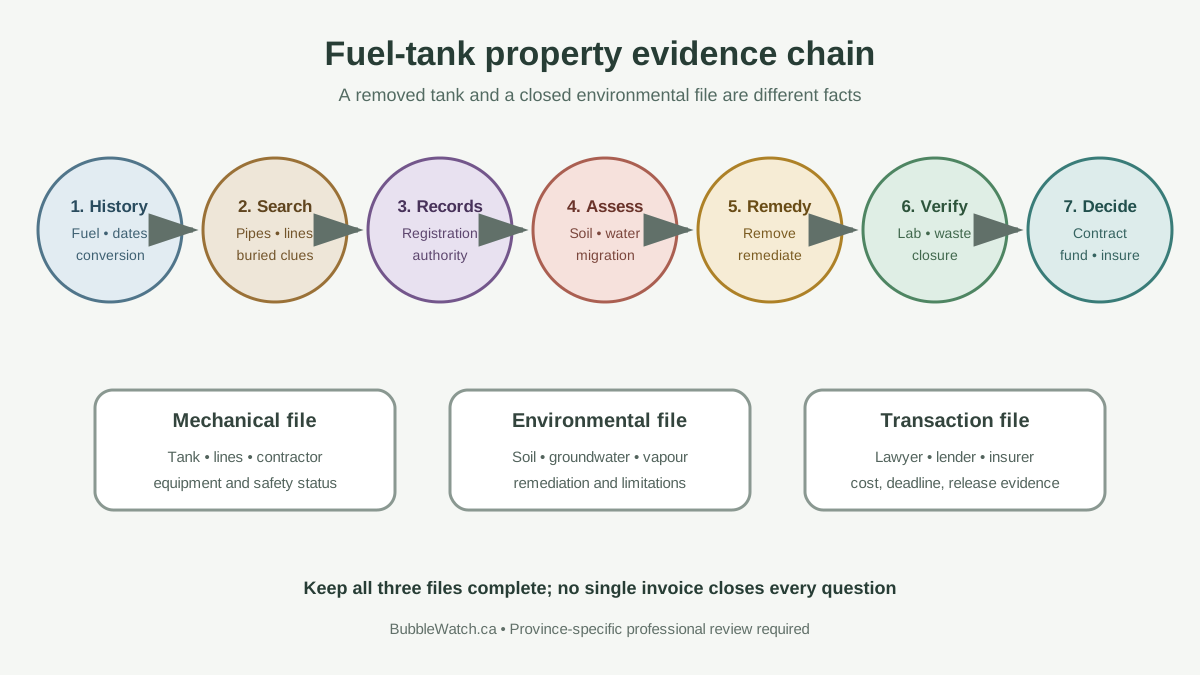
The buyer needs a traceable evidence chain from historical property use to current physical conditions and official status. “Tank removed” is a starting statement, not proof that the soil was assessed, contamination was remediated, a regulator accepted the file, or an insurer will cover the property.
Short answer: identify, investigate, close, verify
Use four gates:
- Identify: establish every known or suspected tank, line, product, location, and operating period.
- Investigate: use qualified tank and environmental professionals to determine condition and test for escaped petroleum.
- Close: complete required decommissioning, removal, reporting, assessment, and remediation under local rules.
- Verify: obtain final professional and authority records, then confirm lender, insurer, and lawyer acceptance.
Do not move from a rusty fill pipe directly to a cleanup estimate. It is a clue that should trigger controlled investigation. Do not move from a removal invoice directly to “clean.” It may document metal removal without defining environmental conditions.
Why the downside can extend beyond the tank
Petroleum can move through soil, utility trenches, fractured rock, drains, and groundwater. A small leak can remain unnoticed, while a delivery into an abandoned fill line can cause a sudden release.
The cost boundary may include:
- emergency spill response;
- tank contents, pumping, cleaning, and removal;
- soil and groundwater investigation;
- excavation, shoring, haulage, and disposal;
- treatment, monitoring, and confirmatory sampling;
- building, driveway, deck, landscaping, or utility restoration;
- private-well testing or alternate water;
- consultant, laboratory, legal, and authority work;
- neighbouring property investigation and claims;
- temporary accommodation and delayed closing;
- lender and insurance consequences.
In its current residential heating-oil tank fact sheet, British Columbia warns prospective purchasers that buying a home with a tank can create potential cleanup liability. The province recommends physical inspection, purchase conditions, environmental estimates, and qualified-professional reporting.
Build a fuel-use chronology
Start before the site visit. Ask when the home used oil, what replaced it, and if other products or commercial uses occurred.
| Period | Heating/fuel system | Tank and line location | Supplier/contractor | Conversion/removal record | Environmental record |
|---|---|---|---|---|---|
Sources can include:
- seller records and prior disclosures;
- purchase agreements, appraisals, and inspection reports;
- fuel-delivery, service, and equipment invoices;
- conversion permits and utility connection dates;
- fire, safety, environment, and municipal files;
- tank registration or facility records where applicable;
- aerial photographs, insurance records, and historical directories;
- contractor removal and disposal records;
- environmental reports, laboratory data, and correspondence;
- neighbour or former-owner information treated as a lead, not proof.
Map additions, garages, driveways, decks, gardens, and grading changes. A buried tank can sit beneath a later improvement.
Inspect for clues without excavating
A qualified inspector or contractor may look for:
- capped, cut, or open fill and vent pipes;
- pairs of wall penetrations or patched masonry;
- small-diameter fuel lines near a furnace or boiler;
- former tank pads, cradles, straps, or vent routes;
- depressions, disturbed soil, or unusual pavement patches;
- petroleum odour, staining, dead vegetation, or oily water;
- unexplained foundation openings or capped basement lines;
- abandoned heating equipment or labels;
- discrepancies between the current system and historical records;
- evidence of above-ground tank corrosion, impact, instability, or leaking fittings.
None of these observations alone proves a tank or release. Odours and vegetation changes have other causes. A clean surface does not exclude a buried system.
Do not probe, drill, pull a pipe, open a tank, or excavate during a viewing. Intrusive work requires owner permission, utility locates, safety controls, qualified contractors, and a plan for any release discovered.
Define every tank separately
Create an inventory:
| Tank ID | Product | Above/underground | Active status | Size/age | Registration | Leak evidence | Removal/closure |
|---|---|---|---|---|---|---|---|
Record connected fill, vent, supply, return, transfer, and overflow components. A basement tank replacement does not prove an older buried tank was removed. A propane tank does not explain a former oil fill.
Ask if the tank is owned, rented, supplier-provided, or subject to a service agreement. Confirm chattel and rental treatment using the fixtures-and-chattels guide.
Province-specific rules must drive the file
Ontario's Technical Standards and Safety Authority says in its current fuel tank frequently asked questions that an unused underground fuel-oil tank must be removed, subject to a variance process for abandonment in place. It directs owners to TSSA-registered petroleum contractors and requires environmental reporting for removal or site closure under its process.
TSSA's Environmental Services guidance describes investigation and management of petroleum releases under Ontario's fuel codes and states that underground tanks must be removed within two years of disuse unless an approved variance applies. Buyers should verify the current rule and file directly for the specific property.
British Columbia's fact sheet links heating-oil tanks to the Environmental Management Act, Contaminated Sites Regulation, BC Fire Code, and spill duties. It recommends that a qualified environmental professional investigate during removal and prepare a report addressing ministry standards through endorsed methods.
Other provinces and territories use their own safety, environment, fire, waste, spill, and contaminated-site systems. Municipal permits and bylaws may add requirements. Ask a local environmental lawyer or qualified professional which authorities and records govern the subject property.
Separate mechanical condition from environmental condition
A fuel technician can assess tank installation, equipment, lines, and safety within their authorization. An environmental professional evaluates soil, groundwater, vapour, migration, standards, and remediation. A building inspector observes accessible conditions within an inspection scope.
One report rarely replaces the others. Use a responsibility table:
| Question | Likely lead professional |
|---|---|
| Is the active tank and line installed safely? | Qualified fuel contractor/authority |
| Is a buried object present? | Qualified locator/contractor with safe methods |
| Did petroleum escape and where did it move? | Qualified environmental professional |
| Does contamination meet applicable standards? | Qualified environmental professional/authority |
| What contract remedy protects the buyer? | Local real-estate/environmental lawyer |
| Will the home be financed and insured? | Lender and insurer, in writing |
Check credentials, registrations, insurance, independence, and exact scope. A removal contractor's clean-looking excavation is not a substitute for defensible environmental sampling.
Plan investigation before opening the ground
The environmental professional should develop a conceptual site model: tank and line locations, likely release points, soil and geology, groundwater direction, buildings, utilities, drains, wells, surface water, and neighbouring receptors.
The work plan can then define:
- utility locates and safe access;
- geophysical or other tank-locating methods;
- test pits or drilling, if justified;
- soil, groundwater, vapour, or water sampling;
- laboratory parameters and quality controls;
- comparison standards based on land use and pathways;
- stockpile, water, odour, and waste management;
- spill reporting and authority communication;
- escalation if product or off-site migration is found;
- reinstatement and final reporting.
A buyer should not prescribe sample count from an online checklist. The number and placement must follow the site model and local rules.
Read removal evidence critically
Request the complete closure package:
- tank identity, size, construction, and exact location;
- registration and owner/operator details where applicable;
- product removal, cleaning, and disposal;
- contractor qualification and registration;
- permits, notices, and authority correspondence;
- excavation photographs and plans;
- tank and piping condition, holes, corrosion, and observations;
- field screening and laboratory sample locations;
- laboratory reports and quality-control information;
- contaminated soil or water quantities and destinations;
- remedial work and confirmatory results;
- remaining contamination or monitoring;
- imported backfill and restoration;
- professional conclusions, limitations, and reliance language;
- authority closure, acknowledgement, or continuing requirements.
An invoice saying “remove oil tank” may confirm a service was billed. It may not show that the surrounding soil was tested or that a second tank is absent.
Understand what “closure” means
Closure can refer to a contractor finishing its job, an environmental consultant issuing a report, a safety authority closing an equipment file, or an environment regulator issuing or acknowledging a specific instrument. Those are not interchangeable.
Ask the lawyer and environmental professional:
- Which legal and technical standard applied at the time?
- What work was completed and what remained?
- Did the authority review, accept, acknowledge, or merely receive the submission?
- Are there ongoing monitoring, access, reporting, land-use, or notification duties?
- Can the buyer and lender rely on the report?
- Could current standards or intended use require more work?
Do not market a property as remediated without wording supported by the actual instrument and current professional advice.
Price contamination with scenarios
A single allowance can hide a wide range. Ask for staged scenarios:
| Scenario | Evidence | Work boundary | Cost/timing basis |
|---|---|---|---|
| Tank located, no release indicated | Valid investigation and confirmatory data | Removal/closure and restoration | Contractor and consultant quotes |
| Limited soil impact | Delineated on-site soil | Excavation, disposal, confirmation | Quantity and disposal assumptions |
| Groundwater or building impact | Monitoring and pathway evidence | Treatment, vapour/water controls, monitoring | Professional remedial plan |
| Off-site migration | Neighbour access and delineation | Multi-property work, legal coordination | High-uncertainty scenario |
| Evidence incomplete | Missing location, samples, or authority status | Further investigation first | Investigation budget plus contingency |
Include taxes, professional time, laboratory turnaround, utility and structural work, driveway or landscaping replacement, winter constraints, financing carry, and temporary housing.
The lowest removal quote is not a ceiling on environmental liability. Do not treat a price reduction as risk removal unless the buyer can finance, insure, manage, and legally complete the work.
Insurance questions before conditions expire
Use the home-insurance-before-closing workflow and disclose accurate facts to the insurer. Ask in writing about:
- active above-ground or underground tanks;
- age, construction, location, and inspection;
- abandoned or removed tanks;
- known or suspected release;
- environmental impairment exclusions;
- oil-escape coverage and limits;
- third-party or off-site damage;
- tank replacement requirements;
- vacancy during investigation or remediation;
- contractor and risk-control requirements;
- evidence needed before binding or renewal.
A standard property policy may exclude or limit pollution-related costs. Do not assume seller coverage transfers, or that a claim can be opened after the buyer learns of a pre-existing condition.
Lender and appraisal questions
Provide the lender or mortgage broker with accurate tank and environmental information. A lender may require removal, a report, insurance, appraisal revision, holdback, or completion before funding. Requirements vary by institution and file.
If the appraisal assumes no environmental issue, correct the record. If cleanup continues after closing, ask if mortgage terms permit the condition and if the buyer has enough cash beyond the down payment and closing costs.
Environmental uncertainty can also affect resale liquidity. A future buyer's lender may ask for evidence the current buyer failed to obtain.
Contract terms need objective evidence
A local lawyer should draft conditions and covenants for the province and evidence. Possible topics include:
- access for named tank, environmental, and legal professionals;
- owner permission for locating, sampling, excavation, and restoration;
- delivery of all historical and authority records;
- seller representations limited to supportable facts;
- buyer approval of reports and regulator status;
- tank removal by a properly registered or qualified contractor;
- environmental assessment and remediation to a defined standard;
- spill reporting, waste, laboratory, and final documents;
- treatment of off-site impact and additional tanks;
- termination, price change, extension, or completion remedy;
- responsibility for excess cost and delay;
- survival of representations and access after closing;
- lawyer-held funds and objective release conditions.
Avoid “remove tank before closing” as the only condition. It leaves soil, groundwater, reporting, remediation, documents, timing, and unexpected discoveries undefined.
The closing-holdback control map explains why a holdback requires a holder, amount, permitted use, release evidence, deadline, dispute process, and treatment of shortfall. An uncertain contamination file can exceed any fixed amount, so local counsel must assess if closing is appropriate at all.
Seller preparation
A seller who knows or suspects a tank should assemble records early and avoid casual claims. Obtain professional advice before disturbing the site.
Prepare:
- fuel-use chronology;
- tank and line inventory;
- current service and inspection reports;
- registration and authority correspondence;
- conversion, removal, and waste records;
- environmental reports and raw laboratory appendices;
- remediation and confirmatory evidence;
- insurance claims and repair records;
- survey or plan showing locations;
- disclosure updates when facts change.
Use the property-disclosure evidence ledger to state observation, document, and limitation separately. “No tank visible” is not the same as “qualified search found no buried tank.”
Rural and waterfront properties
Rural buyers should add private wells, septic systems, ditches, rock, drainage, outbuildings, farm fuel, generators, and long contractor travel. Test well water when the qualified environmental professional or authority identifies a plausible pathway.
Waterfront and shallow-groundwater settings can change migration and access. Conservation, shoreline, excavation, and soil-disposal constraints may affect the remedy.
Combine this investigation with the rural-property due-diligence plan. A septic inspection does not investigate petroleum, and a potable-water result does not clear soil.
Final walkthrough
If the contract relies on completed work, confirm visible site condition without entering excavations or controlled zones. Collect promised reports and verify that:
- active equipment and included tanks match the agreement;
- abandoned fill and vent lines were addressed as specified;
- excavations are safely closed and restoration status is documented;
- no new odour, staining, damage, or authority notice is apparent;
- final environmental, waste, contractor, and authority records arrived;
- monitoring wells, access points, or ongoing duties are identified;
- keys, alarms, manuals, and service contacts are delivered.
The walkthrough does not validate soil chemistry. Report missing evidence to the lawyer before closing rather than relying on a verbal promise that paperwork will follow.
Worked example: removal invoice without environmental evidence
A 1950s home converted from oil to gas in 1998. The seller provides a one-page invoice for “remove old tank,” but it has no drawing, tank size, photographs, sample table, or authority reference. A capped pipe remains beside the driveway.
The buyer's professional review finds the invoice could relate to an indoor replacement tank, while historical photographs suggest a buried tank near the driveway. With written access, a qualified locator identifies a buried object and the environmental consultant develops an investigation plan.
The buyer does not treat the old invoice as clearance or demand an arbitrary credit. The buyer uses the new evidence, insurer and lender responses, professional scenarios, and lawyer-reviewed condition to choose among seller completion, a changed price or closing, and ending the transaction under its terms.
Buyer checklist
Identify
- Fuel-use and conversion chronology complete
- Every tank and connected line inventoried
- Seller, supplier, permit, and authority records requested
- Physical clues mapped by a qualified person
- Outbuildings and former uses included
Investigate and close
- Correct provincial and municipal rules identified
- Tank contractor and environmental roles separated
- Conceptual site model and work plan reviewed
- Soil, groundwater, vapour, and well pathways considered
- Removal, waste, remediation, and confirmation documented
- Authority status and ongoing duties verified
Transaction
- Property-specific cost scenarios obtained
- Insurer and lender answered in writing
- Report reliance and limitations reviewed
- Contract evidence and deadlines are objective
- Excess cost, delay, and off-site impact addressed
- Final records required before release or closing
Request authority records with exact identifiers
A general municipal property search may not reach fuel-safety or environmental files. Use the civic address, legal description, parcel identifier, current and former owner names, tank registration number, facility name, contractor, and approximate event date when permitted by the authority's process.
Ask which office holds:
- registrations, licences, variances, orders, and inspection events;
- spill notifications and incident numbers;
- environmental assessment submissions and review letters;
- contaminated-site instruments or public registry entries;
- building, demolition, conversion, and excavation permits;
- fire-department or fuel-supplier records available to the owner;
- waste or soil movement records maintained under local rules.
Record the search date, database or office, identifiers used, response, exclusions, retention limits, and any consent required from the seller. “No record found” can mean no matching record under those search terms, not proof no tank or spill existed.
Give all responses to the environmental professional and lawyer. They can identify missing agencies, inconsistent dates, or an instrument that has a narrower scope than its title suggests. Repeat time-sensitive registry checks before closing if the contract or professional advises it.
Frequently asked questions
Does a fill pipe prove an underground tank exists?
No. It is a physical clue requiring qualified investigation. It may connect to a present tank, a removed system, or another installation, and pulling it without a plan can create damage or release risk.
Is an above-ground basement tank safer for a buyer?
It is easier to see, but it can still leak through the tank, filter, valve, line, or overfill. Its installation, condition, protection, service, insurance, and environmental history still require review.
Does a tank-removal certificate prove clean soil?
Only the complete package shows what was assessed. Check professional scope, sample locations, laboratory data, remedial work, remaining impacts, authority status, and reliance language.
Who pays for cleanup after the purchase?
Liability depends on provincial law, past and current parties, facts, contracts, insurance, and available exemptions or claims. British Columbia warns that a purchaser may become potentially liable. Obtain local environmental legal advice before accepting the risk.
Can a buyer insure around an unknown tank?
Do not assume so. Ask the insurer to assess the disclosed facts and proposed work in writing. Pollution, pre-existing conditions, underground equipment, and oil escape can be excluded or limited.
Should a buyer accept a price reduction instead of seller cleanup?
Only after understanding legal responsibility, investigation uncertainty, funding, insurance, contractor availability, off-site exposure, and the likely ceiling. A discount transfers work and risk; it does not close the environmental file.
What to do next
Create the fuel chronology and tank inventory before the offer becomes firm. Request original removal and environmental files, then have qualified local professionals test those records against the physical property and current authority status.
If evidence is missing, budget investigation before remediation and ask the insurer and lender for written decisions. Use a local lawyer to convert the chosen path into measurable access, work, reporting, cost, and release terms. Do not let a tank invoice carry more meaning than its scope supports.
This article provides general Canadian home-purchase information, not environmental, engineering, legal, insurance, lending, fire-safety, or contracting advice. Fuel, contaminated-site, spill, waste, and property rules vary by province, territory, municipality, and facts. Use current authority guidance and qualified local professionals.
Advertisement

About David R. Chen, CFA
David R. Chen is a Chartered Financial Analyst and the Senior Housing Economist at BubbleWatch.ca. He brings 12+ years of experience in quantitative real estate analysis and mortgage underwriting. Formerly an analyst at a major Canadian bank, he specializes in modeling payment shock, regional affordability divergence, and private lending risk.
View David's professional bio & credentials →