Home Maintenance Budget Canada 2026 Tool (Analysis)
A condition-based reserve method that turns inspections, component ages, seasonal tasks, contractor quotes, and insurance deductibles into a usable first-year and long-run maintenance budget.
Home Maintenance Budget Canada: Build a Reserve From the House, Not a Rule of Thumb
A useful Canadian home maintenance budget has three separate parts: routine work due this year, a monthly reserve for components that will eventually wear out, and liquid cash for failures that cannot wait. The often-repeated advice to save one per cent of a home's value is only a rough prompt. It does not know whether the home has a new roof, a failing sewer lateral, a condo corporation that maintains the exterior, or valuable land attached to a modest building.
Start with evidence from the property. Record each major component, its observed condition, known installation date, warning signs, maintenance interval, replacement responsibility, and a current local quote where the amount could affect the purchase decision. Convert only the supported future costs into monthly contributions, then keep the emergency layer accessible.
!Home maintenance reserve map separating routine care, component reserves, and emergency cash
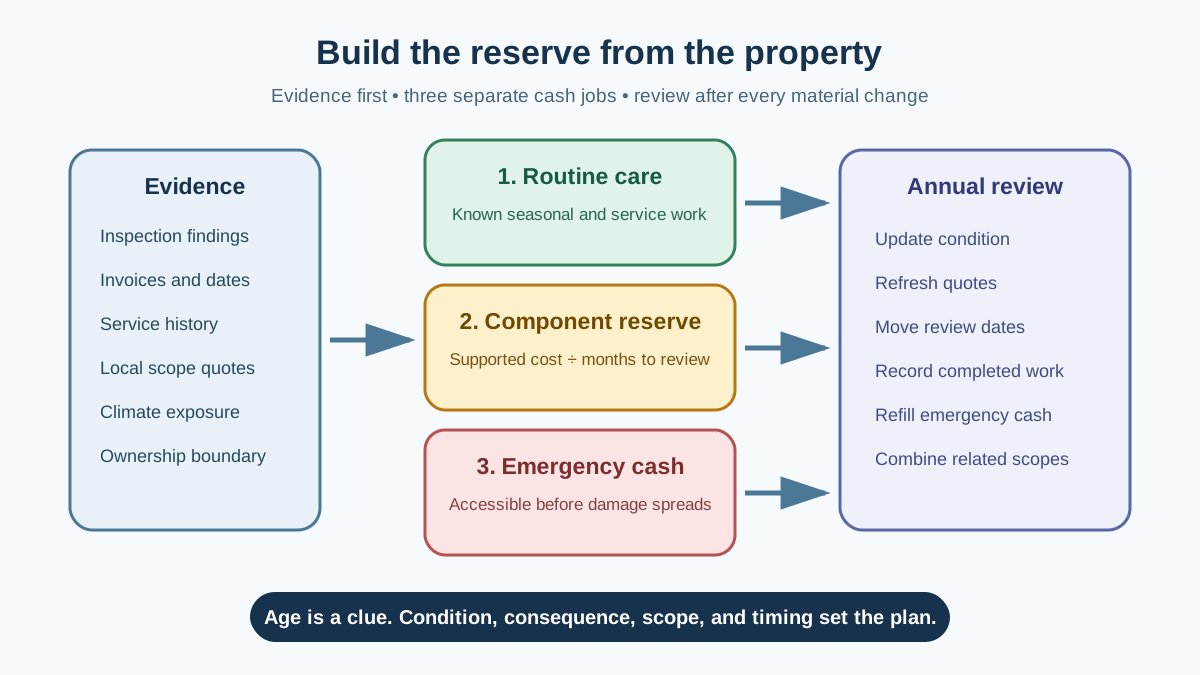
Short answer: use three buckets
Build the budget in this order:
- Routine care: recurring filters, cleaning, inspections, servicing, minor materials, snow, drainage, and seasonal work.
- Component reserve: planned contributions for roof, heating and cooling, water heater, exterior, windows, plumbing, electrical, appliances, driveway, and other owned systems.
- Emergency liquidity: immediately available money for an active leak, loss of heat, sewer backup, electrical hazard, fallen tree, failed pump, or insurance deductible.
The reserve contribution for one component is:
Supported future cost minus money already reserved, divided by the months until the planning date.
That planning date is not a promise that the component will fail. It is a review date based on its age, condition, service history, climate exposure, and professional evidence. Update the number after every inspection, repair, quote, or change in ownership responsibility.
Why the one-per-cent rule can mislead
One per cent of a $1.4 million Vancouver property is $14,000 a year. One per cent of a $450,000 Prairie house is $4,500. The first home may be a small, recently rebuilt structure on expensive land, while the second may be a larger detached house with an aging roof and furnace.
Purchase price blends land, location, zoning, scarcity, market sentiment, and the structure. Maintenance mostly follows the physical assets and their condition. The same percentage cannot describe both houses.
The rule also hides timing. A household may face little work for four years and then need a roof, water heater, and driveway repair in the same season. Saving an average amount does not help if the reserve has not accumulated before the cluster arrives.
Use a percentage only as a reasonableness check after building the component list. If the condition-based result is materially higher or lower, investigate why instead of forcing it to match a slogan.
Maintenance, repair, replacement, renovation, and loss are different
Clear labels stop one budget from absorbing every home expense.
| Cost type | Example | Planning treatment |
|---|---|---|
| Preventive maintenance | Furnace service, gutter clearing, caulking review | Annual operating budget |
| Minor repair | Replace a failed valve or damaged flashing | Repair allowance or emergency cash |
| Capital replacement | Roof covering or heating equipment | Component reserve |
| Optional renovation | New layout or finishes while serviceable | Separate project savings |
| Insured loss | Covered fire or sudden water event | Deductible, exclusions, limits, and claim process |
| Utility use | Gas, electricity, water | Monthly operating budget |
A new kitchen chosen for style is not ordinary maintenance. Replacing a leaking supply line is. A furnace damaged by a covered insured event may involve a claim, while one that reaches the end of its serviceable life is usually the owner's cost under the policy terms.
The home-insurance-before-closing guide explains why coverage, deductibles, exclusions, and maintenance obligations must be read separately.
Build a home component register
Create one row for every material system the household owns. Do this during due diligence if possible, then update it after possession.
| Field | What to record |
|---|---|
| Component | Roof covering, furnace, sump pump, balcony, appliance |
| Ownership | Household, condo corporation, shared agreement, rented equipment |
| Installed or last replaced | Invoice date, permit, label, seller record, or “unknown” |
| Current condition | Normal, monitor, repair, investigate, urgent |
| Evidence | Inspection page, photo, service report, quote, warranty |
| Next action | Clean, test, service, repair, obtain specialist view, replace |
| Review date | Month to reassess condition and pricing |
| Planning amount | Current quote or documented range, including tax and related work |
| Existing reserve | Money already dedicated to this component |
| Monthly contribution | Remaining amount divided by months to review date |
Do not turn a generic “expected life” chart into a forecast. Installation quality, material, usage, maintenance, ventilation, water, freeze-thaw cycles, salt, wind, hail, wildfire smoke, and prior repairs can change performance.
Ask the inspector or specialist for observed condition and urgency. Ask contractors for scope-specific quotes. Keep model, serial, warranty, permit, invoice, and service records with photos.
The first-year budget is usually different
The first year often includes a backlog the seller did not address, plus setup work that will not recur annually. Treat it as a transition plan.
Common first-year lines include:
- rekeying, access control, smoke and carbon-monoxide alarms;
- urgent inspection findings and specialist follow-up;
- dryer-vent, chimney, drain, septic, well, or HVAC service where history is missing;
- grading, downspout, sump, gutter, or caulking corrections before wet weather;
- tree work or exterior hazards;
- replacement of unknown filters, hoses, shutoffs, or safety devices;
- tools and supplies the household does not own;
- insurer or lender conditions;
- a larger initial emergency reserve.
Do not spend the entire cash cushion on furniture in the first month. The cash-to-close worksheet keeps the down payment, adjustments, transaction costs, move costs, and post-closing buffer visible before the offer becomes firm.
Use the inspection as an evidence transfer
A general inspection is a visual assessment within a stated scope. It does not price every repair, expose concealed conditions, certify code compliance, or guarantee component life.
Use the report to populate the register:
- Copy every material defect and limitation into a tracking sheet.
- Separate safety and active-damage items from monitor items.
- Identify recommended specialists and obtain advice within the condition period where possible.
- Ask for invoices, permits, warranties, and service history.
- Get quotes for items that could change the offer, financing, insurance, or first-year liquidity.
- Photograph conditions at inspection and confirm them at the final walkthrough.
The home inspection condition process shows how to preserve time for specialist escalation and a documented decision. A sentence such as “roof near end of life” should lead to questions about covering type, layers, flashing, decking, ventilation, drainage, access, removal, disposal, tax, and related repair - not an unsupported national average.
A seasonal Canadian maintenance calendar
The old CMHC Home Maintenance Schedule recommends regular checks such as exterior deterioration, caulking, weatherstripping, dryer duct lint, plumbing traps, and garage-door hardware. The exact work depends on the home and local conditions.
Spring: find winter damage and move water away
- inspect roof, flashing, eaves, soffits, siding, masonry, decks, and railings from safe locations;
- clear drainage paths and confirm downspouts discharge safely;
- test sump pumps, alarms, backup power, and accessible shutoffs;
- examine the basement and attic for moisture evidence;
- service cooling equipment as recommended by its manufacturer or technician;
- inspect fences, walks, driveway, grading, and trees after freeze-thaw cycles;
- open exterior water carefully and check for leaks.
Summer: complete exterior work in suitable weather
- repair paint, stain, sealant, screens, and weather seals where needed;
- address drainage, grading, roof, chimney, masonry, or foundation recommendations;
- clean and inspect ventilation paths;
- service well, septic, irrigation, pool, or rural systems under applicable guidance;
- collect quotes for fall heating work before demand peaks;
- update exterior photos and the component register.
Fall: prepare for heating and freezing
- service heating and solid-fuel equipment as applicable;
- replace or clean filters to manufacturer instructions;
- inspect chimneys, vents, combustion-air paths, alarms, and fire extinguishers;
- clear gutters and surface drains after leaf fall;
- shut down and drain vulnerable exterior water lines;
- confirm snow-removal, roof-snow, ice, and emergency plans;
- test backup heat or power arrangements safely.
Winter: monitor rather than ignore
- watch for ice dams, unusual condensation, frozen lines, roof loading, and blocked vents;
- keep exterior combustion and dryer vents clear where safe;
- check for leaks after thaws or severe storms;
- maintain indoor humidity appropriate to the building and weather;
- document drafts or cold surfaces for later diagnosis;
- review the next year's reserve contributions and quotes.
Never climb a wet, icy, steep, or snow-covered roof to complete a checklist. Use a qualified service provider where access, electricity, fuel, structure, hazardous material, or height creates risk.
Plan the building as a system
Replacing one item can affect another. Natural Resources Canada's renovation planning guidance explains that the envelope, ventilation, heating and cooling, environment, and occupants interact.
Air sealing can change ventilation needs. A larger heating appliance does not repair heat loss through the envelope. New roof covering may expose decking, flashing, ventilation, insulation, drainage, or structural work that belongs in the scope.
An EnerGuide evaluation can provide a rating, building details, heat-loss information, and a personalized Renovation Upgrade Report. NRCan also states that an energy evaluation is not a home inspection and does not verify code compliance.
For detailed energy-cost and retrofit planning, use EnergyBS's Canadian home energy resources. Keep efficiency upgrades in the same project map as maintenance so the household does not replace a component twice or create a moisture, ventilation, or combustion problem.
Prioritize with a consequence matrix
Age alone is not priority. Rank each item on four questions:
| Question | Low | Medium | High |
|---|---|---|---|
| Failure consequence | Cosmetic inconvenience | Loss of service | Safety, water, structure, uninhabitable condition |
| Warning time | Months or years | Days or weeks | Little or none |
| Damage spread | Isolated | Affects nearby finishes | Can damage multiple systems or units |
| Replacement flexibility | Many providers and seasons | Some constraints | Emergency availability, weather, permit, specialty trade |
Water management, electrical hazards, combustion safety, structure, and loss of heat in cold weather often deserve earlier action than cosmetic work. This is a planning screen, not a technical diagnosis.
Ask the relevant professional what happens if the work waits three months, one year, or three years. Record the answer and the condition that would trigger earlier action.
Worked example: a 1950s Toronto detached home
Assume a buyer's inspection identifies newer shingles with no active leak, an older but operating boiler, localized masonry deterioration, one slow drain, and evidence that grading should be corrected. The home also has older windows that function but are not especially efficient.
The buyer should not multiply the purchase price by one per cent and declare the analysis finished. A better first-year plan could be:
| Evidence | First action | Budget treatment |
|---|---|---|
| Grading directs water toward wall | Obtain drainage scope before closing | First-year repair |
| Local masonry deterioration | Masonry assessment and quote | First-year or near-term project |
| Boiler service history missing | Inspection and combustion service | First-year routine plus reserve update |
| Slow drain | Diagnose before assuming a simple clog | Repair allowance; escalate if lateral concern |
| Windows serviceable | Repair seals/hardware; measure comfort and energy | Monitor, then planned project |
| Roof observed in normal condition | Keep invoice, inspect seasonally | Long-run reserve |
If the grading quote is $4,800 and the accepted masonry scope is $7,200, those amounts belong in transition cash or negotiated purchase economics. If a boiler specialist provides two viable timing cases, the household can reserve toward the conservative review date and update after each service.
The numbers are example assumptions, not market quotes. A real budget requires current local scope and tax.
Worked example: a 2000s Calgary house
Assume the home has asphalt shingles with visible hail repairs, a functioning furnace, air conditioning, a deck, and no documented sump backup. The inspection finds no active water entry but recommends reviewing roof history and site drainage.
The household's climate and insurance file matter. It should obtain the roof claim and repair record, ask the insurer how the existing condition affects coverage and deductible, get a roofing opinion where warranted, test drainage during suitable conditions, and document mechanical service.
The reserve should separate:
- routine furnace, cooling, humidifier, exterior, and drainage work;
- a roof planning amount based on the actual assembly and quote;
- deck repair based on observed structure and finish;
- emergency cash for loss of heat or water control;
- the applicable home-insurance deductible.
A roof that looks acceptable during a dry visual inspection may still need records and specialist review after past hail. Conversely, regional hail exposure does not prove this roof is damaged.
Worked example: a Vancouver condo
The unit owner does not usually reserve to replace the entire tower roof independently. The corporation's depreciation report, reserve fund, budget, insurance, minutes, bylaws, and planned projects shape that exposure.
The household still owns or may be responsible for appliances, fixtures, betterments, interior finishes, deductibles, chargebacks, and portions defined by the governing documents. It should build two views:
- Direct unit reserve: owned components and policy deductibles.
- Corporation exposure: expected fee increases, special assessment scenarios, deductible chargebacks, and disruptions.
Do not count the monthly condo fee as proof that every future replacement is fully funded. Review the relevant documents with qualified professionals. For Ontario buyers, the status-certificate review map shows the same corporation-versus-unit logic.
Emergency cash needs a different rule
A component reserve can sit in a dedicated savings structure, but an emergency needs timely access. Size the liquid layer around consequences and household capacity.
Consider:
- largest insurance deductible that could realistically apply;
- temporary accommodation or travel not promptly reimbursed;
- emergency plumbing, heating, electrical, tree, or water-control callout;
- rural well, septic, fuel, access, or generator exposure, with the private-well testing plan and septic operating and replacement map carried into the reserve;
- condo chargeback or urgent special assessment;
- income disruption at the same time as a repair;
- credit availability without assuming it will remain available.
Insurance is not a maintenance fund, and a line of credit is not cash already saved. A claim can be denied, limited, depreciated, delayed, or below the deductible under the contract.
Keep invoices and evidence. If an emergency happens, protect people first, stop damage where safe, contact the appropriate professional, follow insurer notice requirements, and document before discarding damaged material unless safety demands otherwise.
Get quotes that can be compared
Three prices are not comparable if they describe different work. Ask each provider for:
- observed problem and proposed scope;
- materials, model, efficiency, and warranty;
- removal, disposal, access, protection, and cleanup;
- permits, engineering, inspection, and utility work;
- included restoration and excluded damage;
- tax and payment schedule;
- start window and expected duration;
- change-order process;
- licence, insurance, and references where relevant.
Beware of a low number that omits decking, electrical, crane, abatement, permit, drainage, drywall, painting, or commissioning. Also avoid assuming the highest quote is automatically the best.
For large work, verify current local requirements and contract terms. Never pay a planning deposit merely to make a budget line feel precise.
Keep the reserve from becoming renovation money
Label accounts or spreadsheet balances by purpose. A household that repeatedly spends the roof reserve on finishes will eventually face the roof without the reserve.
Use a monthly review:
- Transfer routine and component amounts automatically.
- Record completed work against the correct bucket.
- Add new inspection or service evidence.
- Update quote dates and planning horizons.
- Refill emergency cash after use.
- Remove a line only after responsibility or risk is genuinely gone.
If cash flow cannot fund every line, prioritize safety and damage prevention, extend cosmetic work, seek multiple scopes, and reconsider the ownership budget. Do not hide the shortfall with an unrealistically long component life.
Maintenance questions before making an offer
Ask the seller or agent for available evidence, subject to local rules and professional advice:
- installation dates and invoices for roof, heating, cooling, water heater, windows, electrical, plumbing, and drainage;
- permits and final inspections for renovations;
- service contracts, rented equipment, leases, and buyout terms;
- warranties and transfer requirements;
- insurance claims or repaired damage disclosures as applicable;
- well, septic, sewer, chimney, fireplace, fuel, pool, and rural-system records;
- condo or strata responsibility documents;
- seasonal maintenance and known recurring issues;
- utility history, without treating occupant use as a building guarantee.
Missing records are not proof of failure, but they increase uncertainty. Price that uncertainty through inspection, specialist work, conservative cash, contract protection, or a decision not to proceed.
A 30-minute annual reserve review
Once a year, walk through the register with these prompts:
- What changed condition this year?
- Which quote is now stale?
- Which component moved inside a two-year window?
- Did insurance deductibles, exclusions, or requirements change?
- Did a repair create a related project?
- Is the reserve balance still assigned correctly?
- Are emergency contacts and shutoff instructions current?
- Which work should be combined to avoid duplicate access or restoration?
- Has the household's income or liquidity changed?
CMHC's current household budget worksheet includes property tax, insurance, utilities, and other housing expenses. Add routine maintenance, component reserves, and emergency replenishment explicitly so they do not disappear inside “leftover” cash.
Frequently asked questions
How much should I budget annually for home maintenance in Canada?
There is no reliable national amount for every property. Build the figure from routine tasks, current component condition, ownership responsibility, local quotes, months to each review date, and a separate emergency layer. Use a percentage of value only as a secondary check.
Is the one-per-cent maintenance rule enough?
It may be too high or too low because purchase price includes land and market factors while maintenance follows the physical property. It also hides clusters of replacements. A component schedule exposes timing and evidence.
Should a new home have a maintenance reserve?
Yes. New construction still needs routine maintenance, warranty documentation, deductibles, landscaping, drainage, filters, sealants, appliances, and eventual replacements. Warranty coverage has scope, deadlines, exclusions, and claim procedures.
Are condo fees a substitute for maintenance savings?
No. Fees support corporation expenses and reserves under its budget, but the owner may still face unit repairs, insurance deductibles, chargebacks, fee increases, or special assessments. Review the governing and financial documents.
Should I replace a component at a generic age?
Not automatically. Use age with observed condition, service history, manufacturer information, climate, specialist advice, failure consequence, and current scope. Replace urgent or unsafe items promptly; monitor serviceable items under a documented plan.
Where should maintenance savings be kept?
Match access to timing and risk. Emergency money should be readily available. Funds for later planned work can use an appropriate low-risk savings structure, considering deposit protection, tax, access, and the possibility that work arrives early. Obtain financial advice for your circumstances.
Does an EnerGuide evaluation replace a home inspection?
No. NRCan states that an energy evaluation assesses energy performance and recommends efficiency improvements; it is not a home inspection and does not verify building-code compliance.
What if the inspection report gives no repair costs?
That is normal. Use the report to identify scope and specialist needs, then obtain current local quotes before waiving protection where the amount is material. Do not ask the inspector's generic estimate to substitute for a contractor's defined scope.
What to read next
- Use the inspection condition without losing the specialist window
- Calculate cash to close and preserve a post-closing buffer
- Confirm the property is insurable before the lender's deadline
- Compare renovation and relocation with full transaction costs
Method and sources
This guide was updated July 19, 2026. It uses CMHC homeowner budgeting and seasonal-maintenance resources, Natural Resources Canada home-system and EnerGuide guidance, and BubbleWatch's inspection, insurance, and transaction-cost workflows. The worked amounts are labeled assumptions; homeowners should obtain property-specific inspection, legal, insurance, tax, energy, and contractor advice.
Advertisement

About David R. Chen, CFA
David R. Chen is a Chartered Financial Analyst and the Senior Housing Economist at BubbleWatch.ca. He brings 12+ years of experience in quantitative real estate analysis and mortgage underwriting. Formerly an analyst at a major Canadian bank, he specializes in modeling payment shock, regional affordability divergence, and private lending risk.
View David's professional bio & credentials →