Home Inspection Condition in Canada 2026 Tool
A property-specific inspection workflow that separates a visual home inspection from sewer, septic, well, radon, structural, electrical, environmental, and legal checks.
Home Inspection Condition in Canada: Scope the Property, Then Decide
A home inspection condition gives a buyer time to obtain and assess an inspection before becoming unconditionally bound, according to the signed clause. The inspection is usually a visual, non-invasive review of accessible systems and components. It reduces uncertainty; it does not certify that every hidden defect, code issue, environmental hazard, future failure, or legal problem has been found.
The home inspection checklist for Canadian buyers covers inspector selection, records, property access, system review, limitation triage, specialist questions, complete quotes, insurer review, and the closing handoff. Use this clause guide to preserve the legal time and permission that workflow needs.
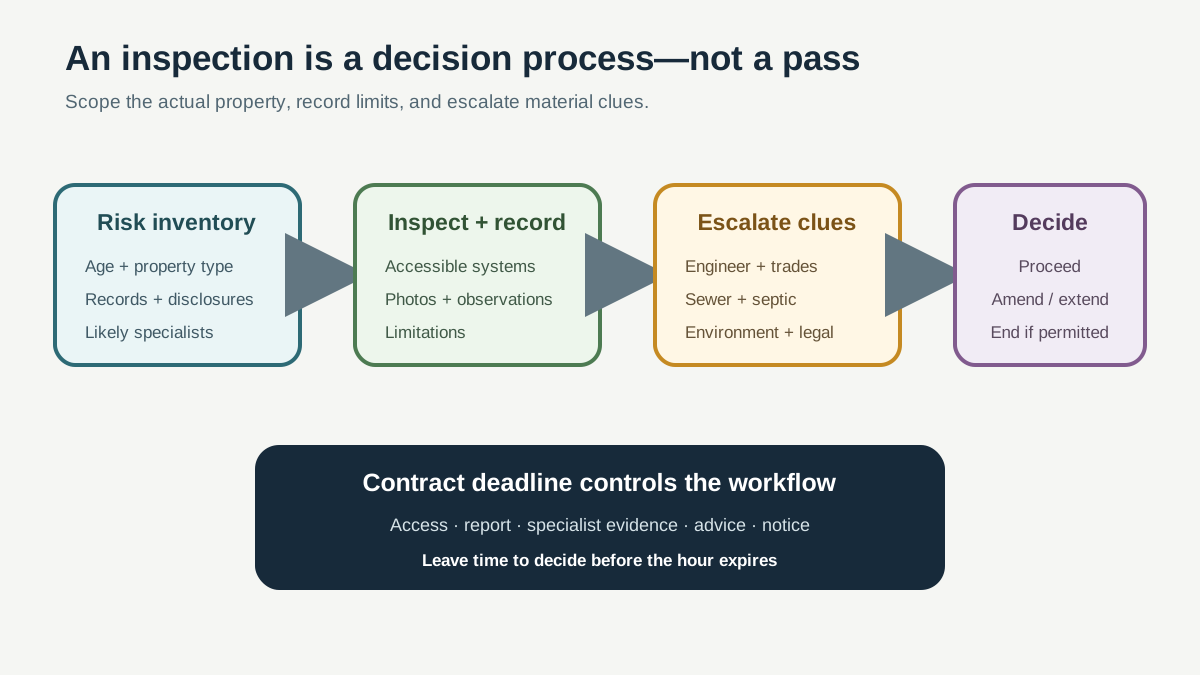
The useful question is not “Did the house pass?” A responsible inspection produces observations, limitations, safety concerns, repair priorities, specialist referrals, and questions for the seller. The buyer then decides whether the home's condition fits the price, financing, insurance, timeline, and repair capacity.
Short answer: match the condition to the property's risk
Before signing the offer, complete five tasks:
- Identify the property's likely risk systems from age, type, location, disclosures, renovations, and listing observations.
- Hire an inspector whose written scope covers the accessible major systems and states exclusions.
- Add specialist access and enough time for issues such as sewer, septic, well, structure, electrical, environmental, or fireplace review.
- Have the lawyer explain the inspection clause, decision standard, notice process, and deadline.
- Reserve time to read the report, obtain repair advice, and decide before the contractual hour.
RECO's current home-inspection guidance says an experienced inspector commonly examines electrical, roof, plumbing, heating and cooling, foundation, and septic systems. It also warns that a seller disclosure and agent's visible observations do not replace an inspection because the seller may not know a defect and underlying problems may exist.
CMHC similarly lists a satisfactory home inspection as a condition buyers may include in an offer to purchase. Contract wording and provincial law determine the actual protection.
What a standard inspection can and cannot do
Ask the inspector to provide the agreement and standards of practice before the appointment. The Canadian Association of Home & Property Inspectors publishes national inspector standards and a code of ethics. Membership, certification, licensing, and regulation vary across Canada, so verify the rules where the property sits.
Common visual scope
Subject to accessibility and the contract, a home inspection may review:
- roof covering, flashings, drainage, and visible roof structure;
- exterior cladding, grading, decks, porches, windows, and doors;
- visible foundation, structure, basement, and crawlspace;
- plumbing supply, drainage, fixtures, water heater, and visible leaks;
- electrical service, panel, representative devices, and visible wiring concerns;
- heating and cooling equipment and distribution;
- insulation and ventilation in accessible areas;
- interior walls, ceilings, floors, stairs, and installed components;
- fireplaces or solid-fuel appliances only where included in scope;
- built-in appliances only where agreed.
Common limitations
A standard inspection may not:
- open walls, lift flooring, or excavate foundations;
- move heavy furniture or stored belongings;
- walk an unsafe, wet, snow-covered, steep, or inaccessible roof;
- inspect a blocked attic or crawlspace fully;
- determine code compliance or permit history;
- calculate remaining service life with certainty;
- test every outlet, valve, appliance, or concealed pipe;
- identify every mould, asbestos, lead, radon, or contamination issue;
- scope a buried sewer or inspect a septic tank without extra service;
- provide engineering, electrical, environmental, or legal opinions;
- guarantee that a system will not fail after closing.
Limitations are not fine-print clutter. If the attic hatch is sealed, the seller's belongings block the foundation, or winter conditions cover the roof and grading, the buyer loses evidence. The clause should give enough access and time to decide what to do about incomplete inspection.
Build a property-risk inventory before choosing scope
Older urban house
Consider buried sewer material and condition, older electrical service, knob-and-tube or aluminum branch wiring, galvanized supply, foundation movement, prior additions, underground oil tanks, asbestos-containing materials, lead, shared driveways, and aging roofs.
A sewer camera is a separate inspection, not an automatic part of every home inspection. It may be valuable where tree roots, old clay or cast-iron pipe, repeated backups, long laterals, additions over the route, or neighbourhood history raise risk. Obtain a local quote and ask for a recorded video, pipe material, access point, observed defects, and limitations.
Newer house
New does not mean defect-free. Review grading, drainage, roofing and flashing, window installation, attic ventilation, insulation, HVAC commissioning, unfinished warranty items, and permits. Use the builder warranty and pre-delivery process as additional tools, not substitutes for independent inspection.
Avoid unsupported assumptions about a particular construction year. Labour or material shortages alone do not prove a defect. Inspect the actual property and review its records.
Rural or exurban property
The scope may need well water quality and flow, septic records and specialist inspection, private-road access and maintenance, propane or oil systems, wood-burning equipment, drainage, outbuildings, shoreline or flood exposure, and environmental questions. Use the rural property due-diligence map to assign title, land-use, service, hazard, lender, and insurance work outside the general inspection.
A septic specialist may locate the tank and field, review use and maintenance, inspect accessible components, and perform tests appropriate to local practice. The septic purchase inspection guide also checks approved capacity and future replacement space. A general inspector may only comment on visible conditions. Ask what was actually tested, then use buyer-controlled well-water quality and quantity testing for the private supply.
Condo or strata unit
An inspector can review the accessible unit interior and, depending on building type and access, some exclusive or exterior elements. The corporation owns or controls many shared systems. Pair the physical inspection with legal and financial document review.
For an Ontario resale, the status-certificate review covers reserve plans, insurance, special assessments, litigation, common expenses, and unit obligations. The unit can look clean while the corporation faces a major building repair.
Renovated or converted property
Ask for permits, final inspection records, drawings, contractor invoices, warranties, electrical certificates, and occupancy or use evidence. A home inspector may identify clues, but permit and legal-use questions require the municipality, lawyer, or qualified specialist.
Start with the seller's property disclosure evidence ledger, then reconstruct any unpermitted renovation or open permit work by work. The separate latent-versus-patent defect framework helps preserve visibility, knowledge, cause, and materiality without asking the inspector for a legal conclusion.
Choose the inspector before the offer clock starts
A short condition period is wasted if the buyer begins searching after acceptance.
Interview inspectors using these questions:
- Which standard of practice and code of ethics do you follow?
- Are home inspectors licensed in this province, and what credential do you hold?
- What training and experience match this property type?
- Do you carry errors-and-omissions and general liability insurance?
- Can I see a recent sample report?
- Which systems are included and excluded?
- Will you enter the attic and crawlspace if safe and accessible?
- Do you walk roofs, use a camera pole, or inspect from ground depending on conditions?
- Is thermal imaging included, and what are its limits?
- Which specialist services do you provide directly?
- Can the buyer attend and ask questions?
- When is the written report delivered?
- What does the inspection agreement limit?
Do not select solely from the referral closest to the transaction. Independence, scope, clarity, and relevant experience matter more than a promise to finish fast.
Thermal imaging can show surface-temperature patterns that support further investigation. It does not see through walls, prove moisture by itself, or replace a moisture meter and building-envelope analysis. Ask how observations will be confirmed.
Drafting and scheduling the inspection condition
Do not copy a generic clause without advice. Ask the lawyer or licensed real-estate professional, within their role, to make the condition fit the desired scope and province.
Important fields include:
- who benefits from the condition;
- which inspections, tests, and reports are contemplated;
- who pays;
- seller's obligation to provide reasonable access;
- access for specialists and reinspection;
- condition deadline with date, time, and time zone;
- buyer's decision standard;
- notice required to fulfill, waive, or end the agreement;
- treatment of damage caused by testing;
- whether the seller may continue marketing or trigger another deadline.
BCFSA's public clause library illustrates several inspection approaches, including buyer satisfaction and a structure based on cumulative repair cost plus effect on use or value. These are BC industry resources, not clauses to paste into another jurisdiction. They show why “subject to inspection” is incomplete without a decision rule and process.
The buyer may have a duty to act honestly, in good faith, or with reasonable efforts under the contract and law. An inspection condition is not a free option to leave because a different house appeared.
A realistic inspection-period calendar
Before offering
- read the listing and disclosures;
- review age and property type;
- reserve an inspector and backup;
- identify specialist availability;
- ask the insurer and lender about property concerns;
- have clause wording reviewed.
Day 0: acceptance
Confirm access immediately. Send the inspector the listing, seller disclosure, renovation information, prior inspection, floor plan, and buyer concerns. Book specialists whose work is likely rather than waiting for the general report's final page.
Day 1 or 2: general inspection
Attend if permitted. Let the inspector work through the sequence without distraction, then ask for a systems tour and priority summary. Photograph labels and keep notes, but use the inspector's report as the formal record.
Day 2 or 3: escalation
Send electrical concerns to a licensed electrician, structural movement to an engineer, chimney questions to a qualified specialist, and environmental clues to the relevant professional. Obtain scope and written opinion rather than a verbal repair guess.
For knob-and-tube, aluminum branch circuits, newer panels connected to older conductors, and undocumented additions, use the older-wiring buyer evidence map. It connects circuit tracing and authority records to the insurer's actual repair and certificate requirements.
Underground and structural questions need their own deliverables. The sewer camera inspection guide maps video distance to the property boundary and repair scope. The foundation-crack decision map separates movement evidence from drainage and water-entry work before the buyer requests quotes.
Indoor health and combustion concerns also need question-specific evidence. The mould inspection workflow starts with moisture rather than a generic air “pass.” The lead paint and service-pipe guide separates material disturbance from tap-water sampling. The fireplace and wood-stove inspection guide explains inspection depth, chimney limitations, and insurer reports.
Decision day
Read the full report and limitations. Separate safety, active damage, near-term capital, maintenance, cosmetic work, and unknowns. Transfer the material items into a condition-based home maintenance reserve so near-term repairs and eventual replacements do not disappear after the offer decision. Obtain advice on contract options before delivering notice.
Leave a buffer. A report delivered at 4:45 p.m. for a 5 p.m. deadline cannot support a careful decision.
How to read the report
Build a triage table:
| Finding | Evidence | Consequence | Next professional | Decision status |
|---|---|---|---|---|
| Active leak | Moisture, staining, source observation | Ongoing damage and repair | Roofer/plumber/envelope specialist | Open |
| Unsafe electrical condition | Panel/wiring observation | Safety, insurance, lender concern | Licensed electrician | Open |
| Foundation crack | Location, width, displacement, moisture | Cosmetic, water, or structural uncertainty | Engineer/foundation specialist | Open |
| Old furnace | Age and operation at inspection | Budgeted replacement, not automatic failure | HVAC quote | Price item |
| Blocked attic | Limitation | Roof/insulation evidence missing | Access/reinspection | Open |
Inspectors often use words such as monitor, repair, replace, service, improve, or further evaluate. Ask what urgency and evidence support the recommendation. “Near end of typical life” is a budget warning, not proof of immediate failure.
Do not total every report item using internet prices. Repair cost depends on local labour, access, finish restoration, permits, taxes, related damage, and chosen scope. Use local written quotes for decision-critical items.
Radon cannot be cleared by a rushed condition-period test
Radon levels vary over time. Health Canada's current home-testing guidance recommends a long-term test for at least three months. Its June 2026 measurement guide describes a long-term test as more than 91 days and says 3 to 12 months gives a better annual estimate.
A two-day inspection-period measurement cannot establish the annual average under that guidance. Buyers can:
- request any prior long-term test and verify device, placement, dates, and report;
- negotiate a contract term or holdback with legal advice where feasible;
- budget for post-possession long-term testing;
- use a C-NRPP-certified measurement or mitigation professional;
- understand that a short screening result is not equivalent to the recommended long-term test.
Health Canada uses 200 Bq/m³ as the Canadian guideline and advises action to reduce levels at or above it. Do not represent a home as “radon-free.” Test results apply to the measurement conditions and period.
Use the dedicated radon home-purchase evidence plan to audit a seller's report, connect condition dates to the 91-day minimum, scope mitigation, and preserve post-possession verification. Suspect materials and former heating-oil systems need different professionals: follow the asbestos renovation-scope workflow and fuel-tank environmental evidence chain before authorizing intrusive work.
Seller-provided inspections and pre-offer inspections
A seller inspection can improve information, especially in competition, but the buyer should review:
- who hired and instructed the inspector;
- inspection date and weather;
- standard and scope;
- agreement limitations and who may rely on it;
- changes, leaks, damage, or repairs since the report;
- whether all pages, photos, and attachments are present;
- whether the inspector will discuss findings with the buyer;
- which areas were inaccessible.
The buyer may still want an independent inspection. If a full condition will not be accepted, ask whether the seller will allow a pre-offer inspection. This shifts the expense earlier and may be rushed, but it provides more evidence than a blind offer.
Pre-offer access must be confirmed in writing. The buyer should know what happens if testing damages property and whether specialist access is permitted.
“As is” does not mean “no inspection”
An “as is” term may limit seller promises or signal that the seller will not repair defects. Its legal meaning depends on the agreement and law. It does not prevent a buyer from requesting inspection access unless the contract or seller does so.
Inspection remains useful because it answers whether the buyer can accept the condition and price. A power-of-sale, estate, rental, vacant, or renovation property may carry fewer seller representations precisely because the seller knows less.
Ask the lawyer how “as is,” seller knowledge, disclosure duties, representations, requisitions, and inspection conditions interact. Do not assume title insurance covers physical defects; the title-insurance policy guide explains the boundary.
Negotiating after findings
The contract determines available choices. Common outcomes include:
- proceed without change;
- request a price amendment;
- request a seller repair with defined scope and evidence;
- negotiate a holdback administered by lawyers;
- extend the condition for specialist review;
- end the agreement under the condition where permitted.
Price reduction
This leaves the buyer in control of repair after closing but does not create repair cash dollar-for-dollar. A lower purchase price may reduce the mortgage only proportionally. The buyer still needs liquid funds.
Seller repair
“Fix the roof” is ambiguous. Specify contractor qualifications, permit, materials, scope, completion date, invoice, transferable warranty, access, and reinspection. Cosmetic repair can conceal rather than solve damage.
Holdback
A lawyer-held amount can support completion of defined work after closing, but amount, release conditions, deadline, contractor access, tax, lien, and dispute process need drafting. The lender must accept the arrangement.
Do not demand a credit for every maintenance note. Focus negotiation on facts that materially change safety, use, near-term cash, insurance, financing, or value relative to what was represented and priced.
Inspection findings and mortgage approval
Share material facts with the lender and insurer when required. A serious issue can affect property acceptance, insurance, loan amount, repair-before-funding requirements, or appraisal.
Do not waive financing simply because the inspection condition remains open, or waive inspection because a lender approved. The two conditions protect different risks. Use the property-specific financing approval test and align both deadlines.
Suppose an inspection finds active foundation water entry. The buyer receives a $24,000 drainage and repair quote, but the lender requires the source repaired before funding and the insurer will not bind coverage until evidence is supplied. A $24,000 price reduction alone may not solve the closing. The contract response must address repair timing, inspection, insurer, lender, and cash.
The final walkthrough is not another inspection condition
A walkthrough near closing checks whether the property is in the agreed state, included items remain, contracted repairs appear completed, and no material new damage is visible. It normally does not reopen a satisfied inspection condition.
Bring the agreement, repair amendment, inspection priority list, photos, and invoices. Check:
- agreed inclusions and fixtures;
- visible repair completion;
- new water, fire, freeze, or move-out damage;
- major systems operating where appropriate;
- seller belongings and debris removal;
- property vacancy and insurance issues;
- keys, remotes, manuals, and warranties.
Report problems to the lawyer immediately. Do not unilaterally withhold closing funds or negotiate directly at the door without advice.
A property-specific specialist matrix
| Clue | Specialist or evidence to consider |
|---|---|
| Sloped floor, displaced crack, bowed wall | Structural engineer |
| Federal panel, overheated wiring, ungrounded circuits | Licensed electrician |
| Repeated drain backup, mature trees, old lateral | Sewer camera/plumber |
| Well or septic | Water lab, well technician, septic professional |
| Fireplace or wood stove | Qualified chimney/solid-fuel professional |
| Suspected asbestos, mould, fuel tank, contamination | Appropriate environmental professional |
| Stucco or complex cladding water clues | Building-envelope specialist |
| Unpermitted addition or unit | Municipality and lawyer; technical specialist as needed |
| Flat roof or active leak | Qualified roofer/envelope professional |
| Rural access or boundary clue | Lawyer and surveyor; title evidence |
The table directs questions; it does not diagnose. Ask the general inspector which observation triggered escalation and provide that information to the specialist.
For a boundary or access clue, move beyond the inspection scope: compare title and current improvements with the property-survey buyer audit, obtain the full easement/right-of-way instrument, and have a surveyor and lawyer classify a suspected property encroachment.
Buyer inspection decision worksheet
| Category | Known amount | Uncertain amount | Deadline | Decision effect |
|---|---|---|---|---|
| Immediate safety | ||||
| Active water or structural | ||||
| Insurance/lender requirement | ||||
| First-year capital | ||||
| Three-to-five-year capital | ||||
| Specialist reports pending | ||||
| Inaccessible systems |
Add the first-year amount to the cash-to-close and reserve plan. A buyer who can fund the down payment but not the roof, deductible, or drainage repair has not completed the affordability test.
Frequently asked questions
What is a home inspection condition?
It is a negotiated offer term that gives the buyer a defined inspection and decision process before becoming firm, according to the clause. It should state the deadline, benefit, scope or standard, access, and notice requirements.
Does a home inspection find every problem?
No. It is usually visual and non-invasive, with access and scope limits. Hidden defects, future failures, code, permits, environmental hazards, buried services, and legal matters may require other evidence or specialists.
How long should an inspection condition be?
Long enough to schedule the inspector, obtain access, receive the report, complete likely specialist work, obtain advice, and deliver notice before the deadline. Property complexity and local availability decide; there is no safe universal number.
Should I attend the inspection?
Usually, if the inspector and seller permit it. Attendance helps the buyer see systems, understand maintenance, and ask questions. Let the inspector complete the process and read the written report afterward.
Is thermal imaging enough to find hidden moisture?
No. It shows surface-temperature patterns that can have several causes. Findings should be interpreted and, where appropriate, checked with moisture measurements and building evidence.
Can a short radon test clear the house?
It cannot establish the recommended long-term annual exposure. Health Canada recommends at least three months, with its current technical guidance describing more than 91 days. Plan a contract or post-possession strategy with qualified advice.
Should every buyer get a sewer scope?
Not automatically. It is a separate service that becomes more useful with old pipe, mature trees, backup history, long laterals, additions, or neighbourhood evidence. Ask about access and obtain a recorded report.
Can I cancel because I dislike the inspection?
Do not assume so. The clause and law may require good faith, reasonable efforts, a defined adverse effect, or a decision tied to inspection. Ask the lawyer before delivering notice.
Is the seller required to fix inspection findings?
Not unless the contract or later amendment requires it. The buyer may request repair, price, holdback, extension, or termination where the condition permits; the seller may accept, reject, or counter.
Does a seller inspection replace my own?
It provides evidence but may have a different client, reliance limit, date, scope, access, and incentives. Review the full agreement and report and decide whether independent inspection or specialist work is needed.
Method and source note
This article was materially rewritten July 19, 2026. It relies on current consumer guidance from CMHC and RECO, CAHPI's published standards resources, BCFSA's clause materials, and Health Canada's radon measurement guidance. It removes unsupported claims and universal repair-cost estimates from the earlier version.
Inspection regulation and contract law vary by province. Use a qualified inspector, specialists appropriate to the finding, and a lawyer or notary for the signed offer and legal consequences.
What to read next
- Coordinate the inspection deadline with the financing-condition approval test.
- Separate owner protection from physical defects with the title-insurance policy map.
- Put immediate repairs into the cash-to-close and reserve worksheet.
- Use the home-buyer readiness sequence before the offer clock starts.

About David R. Chen, CFA
David R. Chen is a Chartered Financial Analyst and the Senior Housing Economist at BubbleWatch.ca. He brings 12+ years of experience in quantitative real estate analysis and mortgage underwriting. Formerly an analyst at a major Canadian bank, he specializes in modeling payment shock, regional affordability divergence, and private lending risk.
View David's professional bio & credentials →