Septic System Inspection When Buying a Canadian
A specialist septic due-diligence method that connects design and permit records, accessible components, tank and field performance, household loading, site constraints, wells, and a realistic repair or replacement path.
Septic System Inspection When Buying a Canadian Home: Test Performance and Replacement Space
A septic purchase review should answer more than “the tank was pumped.” The buyer needs to identify the approved system, locate its components, compare current use with design capacity, inspect accessible condition and operation, review maintenance and failure evidence, protect the well and environment, and determine whether repair or replacement is feasible on the site.
Rules and qualified-person requirements vary by province and local authority. Put records, access, specialist inspection, water testing, and follow-up inside a condition long enough to obtain a meaningful result.
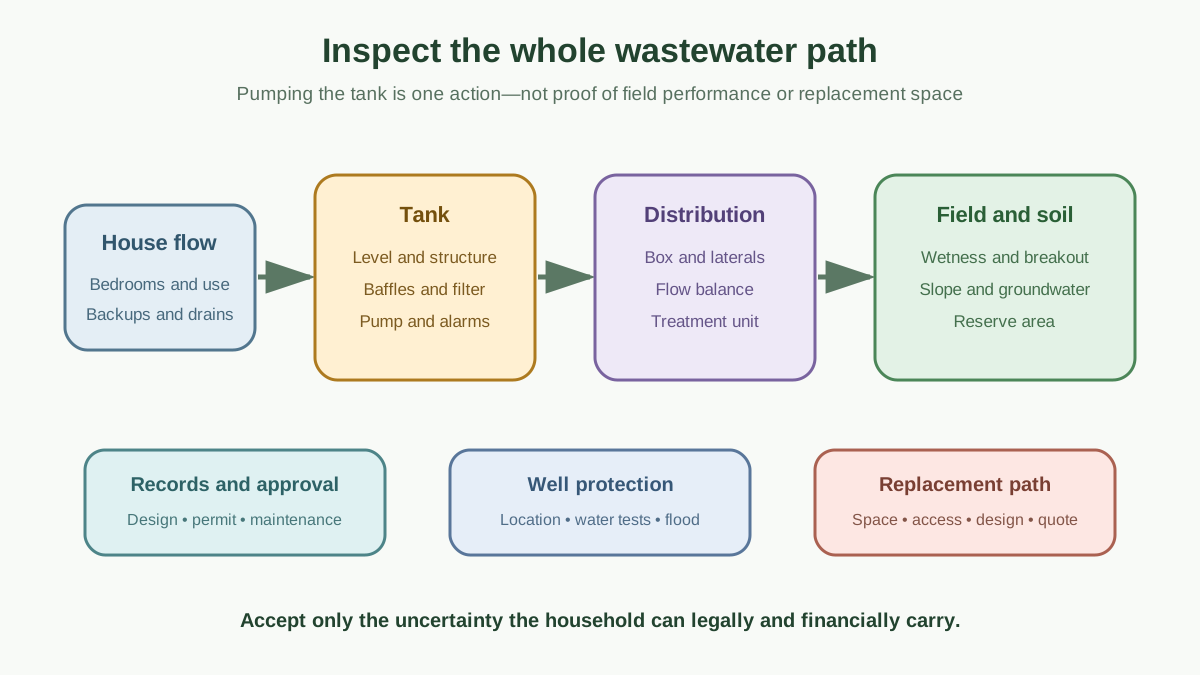
Short answer: inspect the whole wastewater path
Use this order:
- Identify every building, fixture, and use connected to the system.
- Obtain permit, design, installation, alteration, pumping, repair, and inspection records.
- Locate tank, treatment components, pumps, alarms, distribution, field, reserve area, outlet, and access.
- Hire a person qualified for the jurisdiction and intended inspection scope.
- Assess accessible tank, liquid levels, baffles, effluent filter, pumps, controls, distribution, field, and warning signs.
- Compare design capacity with bedrooms, units, occupants, fixtures, business, and proposed additions.
- Review setbacks, soil, slope, groundwater, flood, well, access, and replacement feasibility.
- Obtain written findings, limitations, corrective scope, and current quotes before waiving the condition.
Nova Scotia's real-estate regulator recommends a septic inspection before a purchase is finalized and identifies licensed installers, sewage haulers, or professional engineers as possible inspectors under its provincial system. Buyers elsewhere must verify local qualifications.
Understand what system is actually present
“Septic” can describe different onsite wastewater systems. A property may use:
- conventional tank and gravity distribution field;
- pump chamber and pressure distribution;
- raised bed, mound, or other engineered field;
- aerobic or advanced treatment unit;
- holding tank requiring frequent hauling;
- cesspool, pit, greywater arrangement, or older system with uncertain status;
- shared system serving multiple homes;
- seasonal system or multiple systems on one parcel;
- connection to a small private communal utility.
Each has different components, maintenance, power, alarms, sampling, approvals, and failure modes. Do not let a listing description substitute for the record and site.
Ontario's SepticSmart resource explains that most rural residential systems with daily design flow up to 10,000 litres fall under Part 8 of the Ontario Building Code. Alberta's private sewage standards page points to its current adopted Standard of Practice. These examples show why a national checklist cannot determine local compliance.
Collect records from both seller and authority
Ask for:
- original permit, design, site plan, and final approval;
- designer, installer, engineer, or qualified-person details;
- system type, design flow, bedrooms, units, and occupancy assumptions;
- tank material, size, compartments, and installation date;
- field size, location, distribution method, and reserve area;
- pumps, floats, controls, alarms, treatment unit, and electrical work;
- pumping dates, hauler receipts, sludge/scum observations, and effluent-filter service;
- maintenance contract and treatment-unit reports;
- repairs, backups, ponding, odour, alarm, overflow, or complaint history;
- inspection orders, reinspection program results, violations, or permits;
- shared agreement, easements, access, and cost allocation;
- well location and water-test history;
- renovation, extra bedroom, secondary unit, hot tub, business, or fixture changes.
Compare seller records with the authority's file. Missing or illegible old records do not prove failure, but they increase uncertainty about location, approval, capacity, and replacement.
A pumping receipt is not a performance inspection
Pumping removes accumulated solids and can make tank components more visible. It does not by itself establish field condition, soil acceptance, hydraulic capacity, legal status, or remaining life.
A receipt may show date and volume removed but not:
- tank cracks, leakage, baffles, or effluent filter after cleaning;
- inflow or groundwater intrusion;
- pump, float, control, or alarm operation;
- distribution-box level or line distribution;
- field saturation, biomat, breakout, or ponding;
- whether the house is connected as represented;
- whether design capacity fits current use;
- whether a replacement system can be approved.
Coordinate pumping with the inspector if empty-tank observation is part of the agreed scope. Pumping immediately before a buyer visit without documentation can also remove evidence the specialist wanted to observe.
Define the inspection scope in writing
Ask the inspector what is included, excluded, opened, tested, measured, and restored. A robust scope may include, where safe and lawful:
| System area | Possible evidence |
|---|---|
| Records | Permit/design compared with observed layout and use |
| Tank | Material, access, liquid level, leakage signs, baffles, filter, condition |
| Inlet/outlet | Flow, obstruction, connection, elevation observations |
| Pump chamber | Pump, floats, controls, alarms, cycle evidence |
| Distribution | Box condition/level, laterals, pressure components where accessible |
| Treatment field | Vegetation, odour, wetness, breakout, grading, traffic, setbacks |
| House plumbing | Backup evidence, abnormal flow, sump or foundation connections |
| Site | Well, water, slope, flood, soil, access, reserve/replacement area |
| Operation | Maintenance history, loading, power, consumables, service contract |
Some inspections use cameras, probes, dye, hydraulic loading, pump testing, excavation, or other methods. Each has limitations and may require owner consent, suitable weather, qualified operators, and restoration.
Do not demand an aggressive loading test without professional design. Adding water can stress a marginal system or create discharge. Let the qualified inspector choose and explain the method.
Inspect the tank without creating a safety hazard
Septic tanks contain toxic gases, pathogens, unstable lids, electrical equipment, and fall hazards. No buyer should enter a tank or lean over an unsafe opening.
A qualified inspector may assess accessible features such as:
- lid, riser, seal, structural condition, and safe access;
- tank material and apparent configuration;
- normal or abnormal liquid level before pumping;
- inlet and outlet baffles or tees;
- effluent filter condition;
- signs of leakage into or out of the tank;
- roots, corrosion, cracks, displacement, or deterioration;
- sludge and scum observations under the method;
- pump chamber, floats, controls, alarm, wiring, and check valves;
- backflow or abnormal inflow while fixtures operate.
One observation cannot guarantee hidden structure. Concrete, steel, fibreglass, polyethylene, and site conditions can create different inspection limits.
The treatment field is the expensive uncertainty
The field receives effluent and relies on soil and system design to treat and disperse it. It is mostly underground, so the inspector assembles evidence rather than seeing every surface.
Warning evidence may include:
- sewage odour;
- wet, spongy, unusually green, or ponded areas;
- effluent breakout;
- slow drains or backups not explained by indoor plumbing;
- abnormal tank level or return flow;
- distribution imbalance;
- damaged laterals or box;
- vehicle, building, deck, pool, tree, or hardscape over the field;
- erosion, slope failure, flood, or surface drainage;
- repeated pumping used to manage capacity;
- recent landscaping that obscures prior symptoms.
Absence of surface symptoms on a dry summer day does not prove year-round performance. Ask about snowmelt, wet seasons, high groundwater, heavy rain, guest loading, power outages, and winter freezing.
Capacity follows approved design and actual loading
Bedrooms are often used as a design proxy for potential occupancy, but local rules and calculations control. A seller living alone can place far less load on a system designed - or perhaps undersized - for a family.
Compare:
- approved design flow and bedroom count;
- current legal bedrooms and units;
- actual occupants and water-use pattern;
- high-volume fixtures, water softener discharge, laundry, food waste, or business use;
- proposed secondary suite, addition, short-term rental, daycare, salon, or home office;
- seasonal-to-full-time conversion;
- municipal or authority requirements triggered by renovation.
Ontario's second-unit guidance notes that a septic upgrade may be required so the system can safely treat added sewage flow. Never promise an extra bedroom or rental unit until planning, building, septic, well, lender, insurer, and legal requirements are confirmed.
Locate the well and septic together
Improperly functioning wastewater can affect groundwater and a private well. Alberta's private-sewage owner guidance warns that poor use or maintenance may contaminate the owner's well and local groundwater.
Give the septic specialist the well location, construction record, water results, drainage observations, and flood history. Give the well specialist the septic layout and findings.
The well-water testing workflow includes current microbial and chemical samples, source and treated points, quantity, and equipment. A clean sample today does not approve a failing septic field, and a normal-looking field does not prove potable water.
Replacement feasibility belongs in due diligence
The largest risk may be that an old system cannot be replaced in roughly the same place or configuration under current site conditions. Ask the local authority and qualified designer what evidence is needed to determine feasibility.
Constraints can include:
- small parcel or unusual shape;
- well, watercourse, lake, wetland, ditch, property line, building, or road setbacks;
- steep slope, rock, poor soil, high groundwater, or flood exposure;
- no protected reserve area;
- decks, pools, additions, parking, trees, utilities, or landscaping over usable land;
- access for excavation and pumping;
- shared or off-parcel components without easements;
- conservation, environmental, shoreline, agricultural, or zoning controls;
- required advanced treatment, raised bed, holding tank, or municipal connection;
- proposed future expansion consuming the replacement area.
An inspector can identify concern, but a designer, engineer, authority, or qualified installer may be needed for a replacement concept. A verbal “there is lots of land” is not a permit.
Price the full corrective scope
Do not use a single national septic replacement average. Cost follows design, soil investigation, engineering, access, excavation, tank and field type, pumps, treatment, electrical, decommissioning, landscaping, tax, and local labour.
Request itemized quotes or planning allowances for:
- investigation, design, permit, and authority fees;
- tank pumping, cleaning, repair, or replacement;
- baffles, effluent filter, risers, lids, and safety hardware;
- pump, floats, alarms, controls, and electrical work;
- distribution box and laterals;
- treatment unit and maintenance contract;
- soil, fill, raised bed, or engineered field;
- old-system abandonment;
- tree, fence, deck, driveway, or landscape removal/restoration;
- temporary sanitation and access;
- well protection or water retesting;
- contingency for concealed conditions.
Put accepted near-term work and later replacement into the home maintenance reserve. Do not call a future five-figure project “annual maintenance” and bury it in the grocery budget.
Advanced treatment and holding tanks change operations
An advanced unit may require continuous power, pumps, blowers, media, alarms, sampling, and a service contract. A holding tank stores wastewater for haul-out rather than treating it on-site.
Confirm:
- approved design and operating certificate;
- service provider availability;
- inspection and sampling frequency;
- alarm and power-failure response;
- annual electricity, consumables, and contract cost;
- haul frequency and current local price for a holding tank;
- truck access in winter and road restrictions;
- legal discharge and receipt records;
- effect of household size and water conservation;
- backup plan during service interruption.
Do not estimate holding-tank annual cost from one seller bill without matching occupants and water use. Do not silence an alarm to make the property quiet for a showing.
Shared systems need legal and operating evidence
If the tank, field, treatment plant, pipe, or access serves another parcel, have the lawyer review title and agreement.
Ask:
- Who owns each component and the land beneath it?
- Which registered easements allow access, repair, replacement, and utilities?
- Who decides on service and capital work?
- How are ordinary and emergency costs divided?
- What design capacity is allocated to each property?
- What happens after added occupancy or a new unit?
- Who receives alarms, inspection reports, and authority notices?
- What insurance and liability terms apply?
- What is the remedy for non-payment or denial of access?
- Can a replacement remain on the same parcel?
An informal cost-sharing practice is not the same as an enforceable right to enter a neighbour's land with an excavator.
Write an inspection condition that fits laboratory and authority time
Use a lawyer or qualified contract professional. Consider whether the clause needs:
- seller delivery of records by a date;
- authority file search;
- access for locator, inspector, pumper, well sampler, designer, and lender;
- consent to open lids or perform agreed testing;
- safe operation of water, power, pumps, and treatment;
- restoration of disturbed surfaces;
- buyer review of written findings and limitations;
- time for water laboratory results and repeat sampling;
- specialist design or replacement-feasibility opinion;
- buyer's satisfaction and contractual options;
- allocation of cost and any negotiated work;
- final walkthrough verification.
The home-inspection condition guide explains why specialist deadlines should be mapped before the offer. A general inspector's note to “have septic checked” is only useful if time remains.
Grade the result by evidence, not “pass” or “fail”
Septic systems do not carry a universal transaction pass mark. Ask the inspector to separate observations, tests, professional opinions, unknowns, and authority questions.
Use four evidence grades:
| Grade | Meaning | Buyer response |
|---|---|---|
| Confirmed | Record and observed system align; tested item performs within scope | Keep report and maintenance plan |
| Monitor | Serviceable observation with a stated review or maintenance need | Fund and schedule the action |
| Investigate | Material limit, mismatch, warning sign, or missing evidence | Obtain specialist/authority follow-up before waiver |
| Correct | Identified defect, unsafe access, non-operation, or required work | Define legal scope, price, timing, and responsibility |
A report should state weather, occupancy, recent pumping, water use, accessible components, methods, and limitations. If the field was snow-covered, the tank could not be opened, the pump was off, the home was vacant, or the authority file was unavailable, the missing evidence remains missing.
Ask the inspector these closing questions:
- Which conclusions are direct observations and which are inferences?
- What parts could not be located, opened, or tested?
- Could recent pumping, low occupancy, drought, frost, or landscaping mask behaviour?
- Which issue needs a designer, engineer, installer, pumper, electrician, well professional, lawyer, or authority?
- Is any continued use likely to spread damage or create a health/environment concern?
- What evidence would change the current opinion?
- What maintenance is due immediately after closing?
Avoid asking for a guaranteed remaining life. Soil-based treatment performance does not follow a fixed appliance warranty calendar. The useful output is a documented current condition, known limitations, operational needs, and a feasible response to failure.
If the inspector offers repair work, disclose and evaluate that commercial relationship. Obtain another scope where the recommendation is material. A low replacement estimate without design and site review should remain a placeholder, not a purchase-budget fact.
Worked rural purchase file
Assume a 1970s home has an older concrete tank, gravity field, drilled well, and a basement room marketed as a bedroom. The seller has pumping receipts but no system design. The field surface looks dry in August.
The buyer's file should separate:
| Question | Evidence | Possible escalation |
|---|---|---|
| Approved capacity | Authority file, original design | Designer review of current bedrooms/use |
| Tank condition | Pump-coordinated specialist inspection | Repair/replacement quote |
| Field performance | Site observations and agreed method | Soil/design or seasonal uncertainty plan |
| Well protection | Layout plus water tests | Well/septic specialist coordination |
| Extra bedroom | Legal status and design flow | Planning/building/septic advice |
| Replacement space | Survey, setbacks, site constraints | Concept and authority consultation |
The dry surface does not settle wet-season performance. Pumping receipts do not settle field condition. The marketed bedroom does not settle approved wastewater capacity.
The buyer can proceed only after choosing how to handle each uncertainty: satisfactory evidence, price and reserve, a contract amendment, seller work under lender-approved terms, or exit under the condition.
Owner operating plan after closing
Create a system map and keep it with records. Mark lids and components without driving stakes into buried infrastructure.
Schedule under manufacturer, authority, and professional guidance:
- tank level/pumping review based on actual accumulation and local advice;
- effluent-filter cleaning;
- pump, float, alarm, control, and backup check;
- advanced-treatment service and sampling;
- field surface and drainage observation;
- water testing;
- record of occupants, unusual loading, repairs, and service;
- inspection after flood, backup, alarm, damage, or change in operation.
Protect the field from vehicles, structures, excavation, excessive irrigation, and deep-rooted planting as advised. Keep roof, foundation, and surface water away where the approved design requires.
Use only products and disposal practices compatible with the system and authority guidance. “Septic-safe” marketing does not prove a product improves system performance.
Common septic-purchase mistakes
- treating a pumping receipt as a field inspection;
- inspecting only the tank;
- failing to locate every component;
- assuming a dry lawn proves normal operation;
- ignoring wet-season or high-groundwater conditions;
- matching capacity to current seller occupancy instead of approved potential use;
- overlooking an added bedroom or secondary unit;
- testing the well without mapping septic risk;
- assuming a large lot has replacement space;
- missing shared access or off-parcel components;
- accepting a repair quote without permit, design, and restoration;
- waiving the condition before records or laboratory results arrive.
Frequently asked questions
Is pumping a septic tank the same as inspecting it?
No. Pumping removes solids and may support inspection, but it does not by itself assess field performance, capacity, legal status, distribution, replacement feasibility, or the well.
Who should inspect a septic system in Canada?
Qualifications vary by province and local authority. Verify who may inspect, design, install, pump, or engineer the system where the property is located, and define the scope in writing.
Can a regular home inspector inspect septic?
Only within their qualifications and stated scope. A general home inspection may identify visible warning signs but often recommends a separate septic specialist. Confirm licensing and insurance where applicable.
How can a buyer know the field is failing?
No single sign settles it. Specialists combine records, tank levels, flow, distribution, surface evidence, household history, site conditions, and suitable test methods. Hidden and seasonal limitations remain possible.
Does a clean well-water result prove the septic works?
No. It describes specified contaminants in one sample. The septic system still needs its own performance, records, capacity, and site review.
Can I add a bedroom to a septic property?
Only after confirming planning, building, wastewater capacity, well, lender, insurer, and other approvals. Added design flow may require a septic upgrade.
What if no permit record exists?
Ask the authority and lawyer what that means in the jurisdiction. A specialist may locate and assess the system, but missing approval can affect legality, financing, insurance, renovation, and replacement.
How much does septic replacement cost?
There is no reliable Canada-wide figure. Obtain site-specific design and quotes that include investigation, permit, tank, field, treatment, access, electrical, decommissioning, restoration, tax, and contingency.
What to read next
- Test private-well quality, quantity, equipment, and treatment
- Audit the full rural property before relying on acreage appeal
- Preserve time for specialist inspection in the offer
- Fund routine septic work and eventual capital separately
Method and sources
This guide was updated July 19, 2026. It uses current official Ontario and Alberta onsite-wastewater resources, Nova Scotia real-estate inspection guidance, Health Canada well-water principles, and a jurisdiction-first approach. System approval and inspection requirements are local. Obtain current septic, engineering, environmental, public-health, well, legal, lender, insurance, and municipal advice for the property.
Advertisement

About David R. Chen, CFA
David R. Chen is a Chartered Financial Analyst and the Senior Housing Economist at BubbleWatch.ca. He brings 12+ years of experience in quantitative real estate analysis and mortgage underwriting. Formerly an analyst at a major Canadian bank, he specializes in modeling payment shock, regional affordability divergence, and private lending risk.
View David's professional bio & credentials →