Radon Testing When Buying a Home in Canada
A buyer-focused method for separating a valid long-term radon measurement from a rushed transaction reading, auditing seller tests, budgeting mitigation, and preserving a workable path after closing.
Radon Testing When Buying a Home in Canada: A Transaction-Safe Evidence Plan
Radon is a radioactive gas that can enter a building from the ground. It has no colour, smell, or taste, and the level in one home cannot be reliably predicted from a regional map, the result next door, foundation type, or the appearance of the basement.
For a home buyer, the hardest issue is timing. Health Canada's decision standard relies on a long-term measurement lasting at least 91 days, while a financing or inspection condition may last only several business days. A careful buyer does not force a short reading to answer a long-term exposure question it cannot answer.
The practical solution is an evidence plan: audit any existing result, identify if a valid test can finish before closing, price a credible mitigation pathway, use locally reviewed contract language, and retest correctly after possession or material building changes.
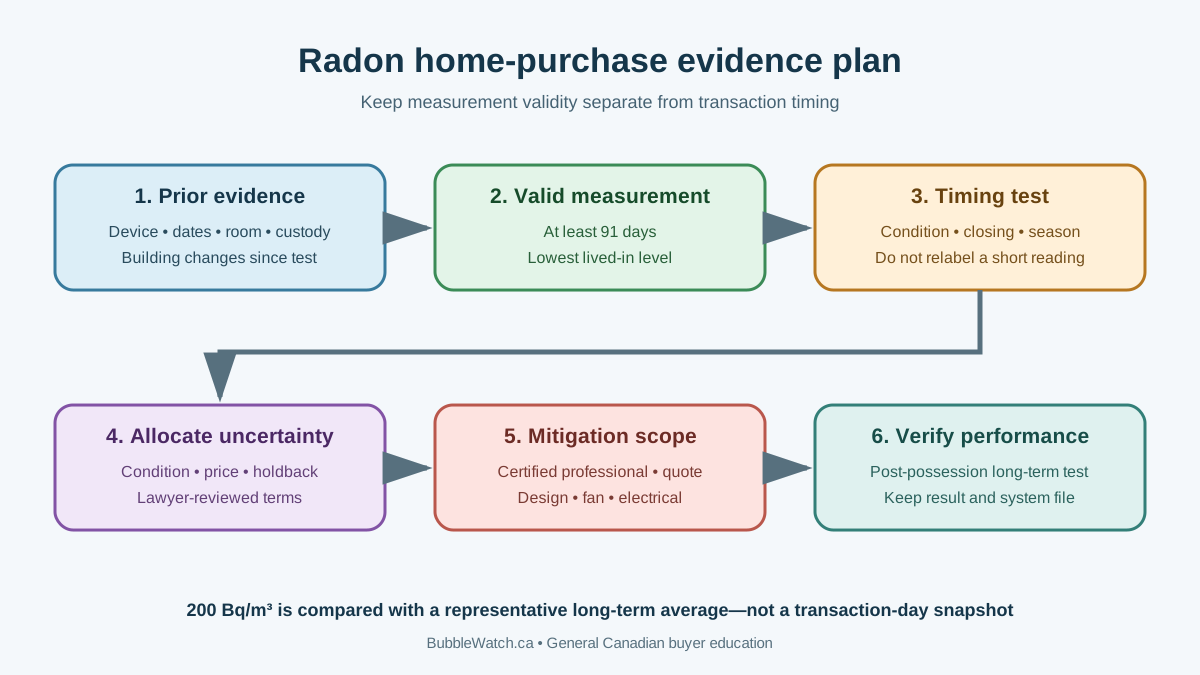
Short answer: treat radon as a measurement and allocation problem
Use five separate decisions:
- Is there a valid, property-specific long-term result?
- Does the result represent the current building and lowest lived-in level?
- Can a valid test be completed within the transaction schedule?
- If uncertainty remains, who accepts the cost and work after closing?
- How will mitigation and post-mitigation performance be verified?
Do not collapse these questions into “the home passed” or “the area is low risk.” The Canadian guideline is a measured concentration, not a neighbourhood classification.
What Canada's radon guideline means
Health Canada's radon guideline is 200 becquerels per cubic metre, written as 200 Bq/m³, for the average annual radon level in a normal occupancy area. The department recommends corrective action above that level, with action taken sooner as the concentration rises.
The guideline does not mean every result below 200 is risk-free. Health Canada states that no radon level is considered risk-free and recommends reducing exposure as much as practicable. Buyers can choose a lower personal action level after discussing health questions with an appropriate health professional.
The comparison must use a representative long-term average. A single high hour on an electronic monitor does not establish the annual average, and a low weekend does not clear the home.
A valid result needs at least 91 days
Health Canada's current residential measurement guide recommends testing for 3 to 12 months. It defines a long-term measurement as at least 91 days and says corrective-action decisions should be based on tests meeting that minimum.
For a three-month test, the guide gives special weight to the heating season. A below-guideline test with fewer than 91 days during the heating season may underestimate the annual level and should be repeated under the federal guidance. A result above the guideline does not need a second low-season test before action begins.
This creates a transaction rule:
| Available measurement | What it can support | What it cannot establish |
|---|---|---|
| 91–365 days, correctly placed and documented | A long-term average for the tested period | Permanent performance after later building changes |
| Less than 91 days | A preliminary signal or reason for more inquiry | The annual-average decision under Health Canada guidance |
| Neighbourhood or map data | Regional awareness and testing priority | The level in the subject home |
| Seller recollection without report | A request for records | Device, dates, placement, or result validity |
| Mitigation-system presence | Evidence that prior action may have occurred | Current radon level or system performance |
If an offer has a seven-day condition, the clock cannot produce a valid new long-term result. The parties can instead work with prior evidence and allocate the unresolved risk.
Audit a seller's existing radon report
Ask for the complete report or electronic export, not a screenshot of the final number. Create a test ledger:
| Field | Evidence to collect |
|---|---|
| Device | Manufacturer, model, serial number, detector type |
| Performance | C-NRPP performance status where applicable, laboratory details |
| Start and end | Date, time, total duration, interruptions |
| Location | Floor, room, height, distance from doors, windows, vents, walls, electronics |
| Occupancy | How the tested space was used during the test |
| Conditions | Renovation, vacancy, ventilation changes, open windows, unusual events |
| Result | Long-term average, units, laboratory uncertainty or quality notes |
| Custody | Who placed, observed, moved, ended, and submitted the detector |
| Building | Layout and systems at test date versus today |
Health Canada's 2026 device and placement instructions place the detector on the lowest lived-in level, away from kitchens, bathrooms, laundry rooms, windows, doors, vents, exterior walls, heat sources, and interfering electronics. The detailed guide adds spacing and normal-occupancy requirements.
A result from an unfinished storage basement may not represent a finished basement bedroom. A main-floor result may be incomplete if a lower family room is normally occupied. Record the actual use rather than relying only on the room label.
Check changes to the tested building
Radon entry and dilution can change when owners:
- finish or begin occupying a basement;
- replace windows or air-seal the envelope;
- install or alter heat-recovery ventilation;
- add a sump, drainage system, crawl-space membrane, or foundation work;
- change furnaces, exhaust equipment, fireplaces, or make-up air;
- build an addition or alter slab penetrations;
- turn off, remove, or modify an active mitigation system.
A valid 2022 result is useful evidence, but it is not conclusive for a substantially altered 2026 home. Ask a certified measurement or mitigation professional if the changes justify a new test.
Health Canada recommends testing homes with active mitigation and retesting those systems every five years. A buyer should also obtain the installation, commissioning, maintenance, fan, alarm, electrical, warranty, and post-mitigation records.
Do not stage a pretend long-term test
Some sellers begin a detector when listing and advertise an early average. Keep the start date visible. An electronic monitor may display a number after hours or days, but that display has not become a 91-day measurement.
Short measurements can be distorted by weather, window use, ventilation, pressure, device movement, or a temporarily changed room. A buyer may use the information to ask questions or negotiate a path, but should label it preliminary.
Avoid instructions that encourage occupants to change normal behaviour. Health Canada says residents should not alter their lifestyle during a long-term test. A result obtained under artificial “closed-house” conduct is not a substitute for normal long-term occupancy.
Fit radon work into the purchase timeline
Start with dates:
| Transaction event | Date | Radon task | Owner |
|---|---|---|---|
| Offer preparation | Request prior reports and system records | Buyer representative | |
| Condition period | Validate evidence; obtain professional review and budget | Buyer | |
| Condition deadline | Decide using contract rights and financing advice | Buyer/lawyer | |
| Closing preparation | Preserve access, equipment, and document obligations | Parties/lawyers | |
| Possession | Confirm system present and operating; photograph devices | Buyer | |
| First suitable test period | Start correctly placed long-term test | Buyer/professional | |
| Result date | Compare with chosen action threshold | Buyer | |
| Mitigation and follow-up | Complete work and verify with post-test | Certified professional/buyer |
Use the inspection-clause planning guide to reserve specialist access rather than assuming a general inspection includes radon measurement.
Contract options when time is too short
Contract law and customary clauses differ by province. A buyer's real-estate lawyer should draft or review terms for the exact transaction. Possible structures for discussion include:
- buyer approval of a specified existing report;
- a condition allowing a defined professional review;
- an extended closing or condition period if a valid test is already underway;
- a seller obligation to preserve an in-progress detector and ordinary occupancy;
- a fixed price adjustment based on an informed mitigation allowance;
- seller-completed mitigation by a named qualification standard, followed by documentation and post-testing;
- a carefully administered holdback tied to objective work and release evidence;
- buyer acceptance of post-closing testing and cost.
Avoid vague terms such as “subject to a satisfactory radon test” when the clause does not define duration, placement, device, access, result, remedy, deadline, or who decides satisfaction. Also avoid promising a result below an exact number without professional input on practicability.
A holdback is not simply money left with an agent. The closing-holdback guide explains why amount, holder, release test, deadline, dispute process, access, and excess cost need legal drafting.
Build a mitigation budget from scope, not folklore
Health Canada identifies active soil depressurization as the most common reduction method. A fan draws soil gas from beneath the slab or membrane and discharges it outside through a designed route. The correct solution depends on foundations, crawl spaces, additions, sumps, drainage, mechanical systems, and discharge constraints.
Ask a Canadian National Radon Proficiency Program certified mitigation professional for a property-specific assessment. A budget should state:
- diagnostic work and pressure-field testing;
- suction point count and location;
- crawl-space membrane or sump treatment;
- pipe route, fan location, weather protection, and discharge point;
- electrical work and permit responsibility;
- system monitor, labels, alarm, and owner instructions;
- sealing that supports the system without being sold as the only control;
- noise and exterior appearance;
- warranty, fan life, energy use, and maintenance;
- target and post-mitigation test;
- taxes, access repair, finishing, and contingency.
Do not use a national rule-of-thumb price as if it were a quote. Finished basements, multiple foundations, tight exterior clearances, complex routing, remote travel, and electrical work can change scope.
Verify certification and proposal boundaries
Health Canada's current guidance directs Canadians to C-NRPP certified measurement and mitigation professionals. Check the live directory, the individual's certification category, status, service area, insurance, and any conflict between measurement and sales.
Ask if the proposal follows the current Canadian mitigation standard used by the professional and what is excluded. Record who will repair drywall, firestop penetrations, handle asbestos or other hazardous materials, obtain electrical work, and restore finishes.
A home inspector may identify that a test is warranted without being certified to design mitigation. A laboratory result does not itself specify the correct building work.
Confirm the system on the final walkthrough
If the purchase relies on an installed system, add these checks to the final-walkthrough plan:
- fan and pipe remain in place;
- system monitor shows the expected operating indication;
- circuit, disconnect, alarm, labels, and manuals are present;
- no new foundation or mechanical change is visible;
- seller has delivered invoices, design, warranty, and test reports;
- an electronic monitor included in the sale is identified in the chattel list;
- no borrowed detector or rented device is mistaken for an included item.
The walkthrough cannot measure annual radon exposure. It confirms promised physical state and document delivery before closing.
Test correctly after possession
Choose an electronic radon monitor that has passed the relevant C-NRPP performance testing or a suitable long-term detector. Follow Health Canada's current placement instructions and the manufacturer's directions.
Record:
- device identity and photographs;
- exact start time and placement;
- normal room use;
- unusual ventilation, weather, renovation, or power events;
- any device movement;
- end time, result export, and laboratory submission;
- heating-season coverage.
Leave the device undisturbed for at least 91 days. Longer testing, up to 12 months within the device's specifications, can better represent annual variation.
If a passive detector must be mailed to a lab, allow for analysis time. Health Canada's current public instructions say results for long-term detectors may arrive several weeks after the test ends.
Respond to the result
For a long-term average at or above 200 Bq/m³, Health Canada recommends reducing the level within one year, sooner as the result rises. Contact a certified mitigation professional and keep the original report.
For a result below 200, retain the evidence and decide if your household wants a lower voluntary target. Reassess after foundation work, major air-sealing, basement occupancy changes, or mitigation-system alteration.
After mitigation, complete the professional's required commissioning and a valid follow-up measurement. Keep the pre-test, design, invoice, warranty, operating instructions, photos, and post-test together for future owners.
Condos, apartments, and multi-unit properties
An upper-floor unit can still have radon, although ground-contact areas often receive more attention. Health Canada's guide says homes above ground level should still be tested.
In a condo or strata transaction, identify:
- unit floor and lowest normally occupied area;
- if the result is unit-specific;
- common mechanical and ventilation systems;
- ground-contact common areas and amenity rooms;
- corporation test or mitigation records;
- alteration approval for any unit or common-property work;
- responsibility for penetrations, exterior discharge, electricity, access, and maintenance.
A lobby or basement mechanical-room result does not automatically represent a dwelling unit. A unit owner may lack authority to install a fan, penetrate common property, or place an exterior discharge without approval. Review the status certificate or strata documents using the condo-status-certificate guide and local counsel.
Rural homes and private water
Radon is primarily an indoor-air question in this purchase workflow, but private well water can add location-specific questions. Health Canada advises consulting the provincial or territorial authority when radon in water is a concern.
Rural buyers should also map crawl spaces, slab additions, workshops, secondary suites, generators, wood-burning equipment, sumps, and water systems. Combine the air plan with the rural due-diligence checklist rather than treating one environmental test as a property clearance.
Seller preparation without overpromising
A seller can reduce transaction confusion by starting a valid long-term test well before listing, ideally early enough to finish and address a high result. Preserve normal occupancy and the full device record.
If mitigation is installed, provide:
- original measurement;
- certified professional's proposal and invoice;
- permits or electrical record where required;
- system drawing and components;
- commissioning and post-mitigation result;
- warranty, service, and fan replacement information;
- current operating observation;
- dates of later building changes.
State what the evidence proves. “System installed and 2025 post-test averaged 72 Bq/m³ over 120 days” is a verifiable fact. “Guaranteed radon-free” is not.
Worked example: a seven-day condition and an old result
A buyer receives a 2019 laboratory report showing 118 Bq/m³ over 94 winter days in the basement family room. Since then, the seller replaced windows, finished a former storage room as a bedroom, and installed a larger kitchen exhaust fan. The offer has a seven-business-day inspection condition.
The buyer cannot complete a new valid long-term test in seven days. Instead, the buyer confirms the old report's dates and placement, asks a C-NRPP professional how the alterations affect confidence, obtains a mitigation budget, checks insurer and lender requirements, and asks a lawyer about a price adjustment or buyer-funded post-closing plan.
After possession, the buyer places a qualified monitor in the lowest lived-in room for a heating-season test lasting more than 91 days. The eventual result, not a three-day display during negotiations, drives the mitigation decision.
Radon purchase file checklist
Evidence
- Complete prior reports and data exports
- Device, laboratory, dates, duration, and placement
- Occupancy and heating-season coverage
- Building changes since test
- Mitigation design, invoice, warranty, and post-test
- C-NRPP certification checked
Transaction
- Condition and closing dates mapped
- Existing evidence reviewed by the right professional
- Property-specific mitigation budget obtained
- Lender and insurer questions answered
- Contract option reviewed by local lawyer
- Walkthrough obligations written clearly
After possession
- Correct device selected
- Lowest lived-in placement documented
- At least 91 days completed
- Result and heating-season context retained
- Mitigation completed if required
- Post-mitigation performance verified
False-confidence traps to remove from the file
Delete shorthand conclusions from the decision ledger and replace them with evidence. “New home” does not mean a radon rough-in is active or that the home was tested. A capped pipe may be a rough-in with no fan, discharge, diagnostic work, or measured performance.
“Seller never had a problem” is not a measurement because radon cannot be detected by human senses. “No basement” is incomplete because crawl spaces, slab-on-grade foundations, and upper units can still require testing. “Neighbour tested low” describes a different pressure field and building.
A mitigation quotation also does not prove current concentration. Keep the measurement file and the building-solution file separate until a qualified professional connects them. If a contract refers to either file, identify the document by author, date, property, and revision so the parties do not rely on a marketing summary.
Finally, convert units carefully. Canadian guidance uses Bq/m³. A report or imported monitor may display picocuries per litre. Use the device documentation or a qualified professional for conversion, preserve the original units, and never compare a converted rounded number without retaining the source result.
Frequently asked questions
Can a home inspector clear radon during a normal inspection?
Not through a same-day reading. A valid annual-exposure decision under current Health Canada guidance requires at least 91 days. An inspector can review the property, identify records, place a device if timing permits, or refer a certified professional.
Is a two-day electronic monitor result useless?
It can be a preliminary observation, but it is not the long-term average Health Canada uses for the 200 Bq/m³ decision. Label its duration and do not advertise it as a pass or clearance.
Does a result below 200 Bq/m³ mean no action is needed forever?
No. There is no risk-free radon level, building conditions can change, and active systems need continued attention. Keep the report, consider the household's chosen threshold, and retest after material changes or according to current guidance.
Can the seller run the test?
A seller can use a suitable do-it-yourself long-term detector, but a buyer should audit device, placement, dates, custody, occupancy, and alterations. A certified measurement professional can improve independence and documentation.
Does a mitigation system hurt resale value?
The system is evidence of a managed condition when it is professionally designed, operating, documented, and supported by a valid post-test. Missing records or a silent fan create uncertainty that a buyer must investigate.
Should a buyer waive the purchase if no valid result exists?
That depends on price, risk tolerance, contract rights, mitigation feasibility, financing, insurance, health priorities, and local advice. The evidence plan gives the buyer a defined cost and follow-up path instead of a false short-term answer.
What to do next
Request every radon report and mitigation record before writing or firming the offer. Put test dates, room, device, building changes, and transaction deadlines in one ledger. If no current valid result exists, obtain certified professional input and a property-specific mitigation allowance, then have local counsel document the chosen allocation.
After possession, complete a correctly placed long-term test and act on the result. That sequence protects the health decision without pretending a short purchase condition can measure a full season.
This article provides general Canadian home-purchase information, not medical, engineering, legal, insurance, or environmental advice. Requirements and contract remedies vary by province, municipality, building, and transaction. Use current Health Canada guidance and qualified local professionals.
Advertisement

About David R. Chen, CFA
David R. Chen is a Chartered Financial Analyst and the Senior Housing Economist at BubbleWatch.ca. He brings 12+ years of experience in quantitative real estate analysis and mortgage underwriting. Formerly an analyst at a major Canadian bank, he specializes in modeling payment shock, regional affordability divergence, and private lending risk.
View David's professional bio & credentials →