Sewer Lateral Camera Inspections When Buying a
A buyer-focused method for turning a sewer video into a mapped, distance-referenced record that separates private and municipal responsibility, identifies incomplete runs, and supports repair quotes and transaction decisions.
Sewer Lateral Camera Inspections When Buying a Home in Canada
A sewer camera inspection can show roots, cracks, offsets, deformation, standing water, deposits, intrusions, and inaccessible sections inside a building sewer or service lateral. It does not automatically prove who owns the defective section, how deep it is, what caused the condition, or which repair method a municipality will approve.
For a buyer, the useful product is not a verbal “looks okay.” It is a continuous video tied to an access point, direction, distance counter, pipe material and diameter, property boundary, observed defects, limitations, and written repair recommendation.
Arrange the inspection early enough to clean or create access, obtain municipal information, and price a defined repair. A blocked camera at eight metres is a finding, not a clearance of the remaining line.
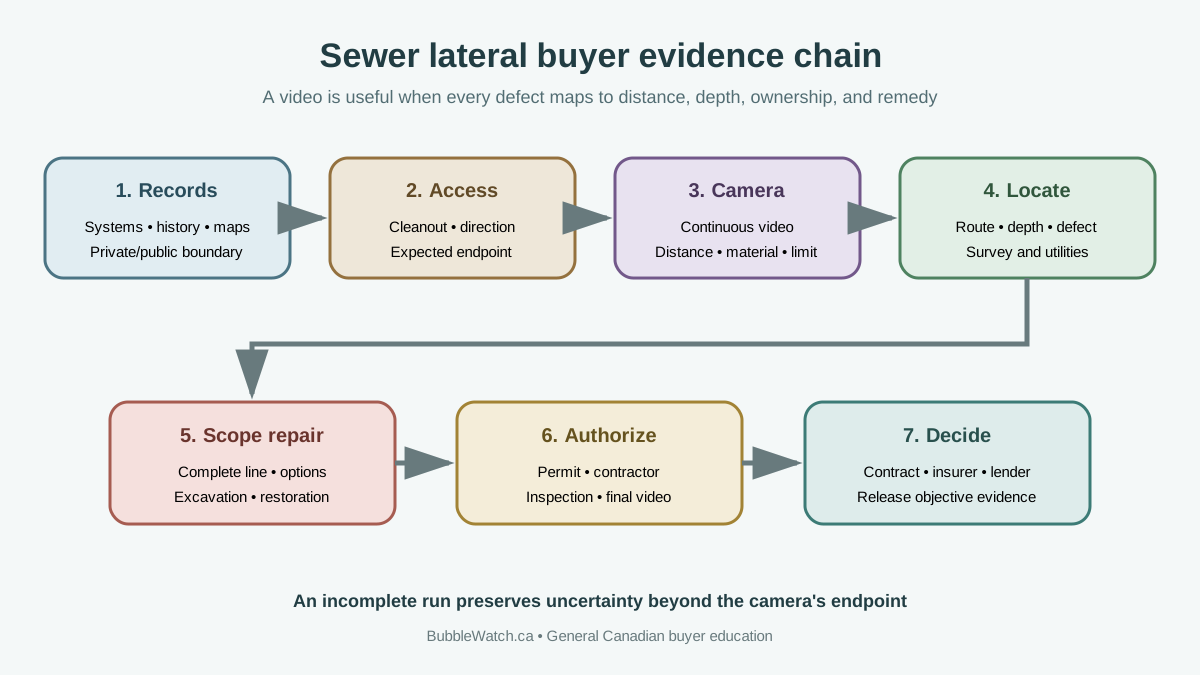
Short answer: map the video to ownership and repair scope
Use seven steps:
- Identify sanitary, storm, combined, foundation-drain, and private-system connections.
- Establish the likely private-municipal ownership boundary under local rules.
- Choose a safe, usable cleanout and define the intended camera destination.
- Record a continuous, distance-referenced video with written observations.
- Investigate every incomplete run and material defect.
- Obtain location-specific repair options, permits, and restoration prices.
- Confirm insurance, lender, and contract treatment before conditions expire.
Do not assume the sewer main is reached because the camera operator says the run was long enough. Obtain the observed endpoint and supporting map.
Keep the original media after closing. A future plumber can compare root growth, joint movement, standing water, cleaning results, or a repair without repeating the transaction's uncertainty from memory.
A home inspection rarely includes a full sewer scope
Federal home-inspection guidance describes a visual, non-invasive inspection of major systems. A home inspector may test representative plumbing fixtures and identify drainage symptoms, but underground pipe interiors need different equipment and access.
The general inspector can note:
- slow or noisy drainage;
- sewage odour or staining;
- floor-drain and cleanout condition;
- prior backup evidence;
- backwater valve or sump observations;
- mature trees and settlement clues;
- inaccessible plumbing and need for a specialist.
Normal fixture flow during a two-hour inspection does not establish the full lateral's condition. A partially obstructed line may pass ordinary water and fail under peak use or rainfall.
Name every drainage system before scoping
Older Canadian homes can have sanitary, storm, combined, foundation-drain, sump, catch-basin, and roof-water connections. Rural properties may use septic rather than a municipal sanitary sewer.
Create a connection register:
| System | Building exit | Private route | Municipal/private destination | Access | Known changes |
|---|---|---|---|---|---|
| Sanitary | |||||
| Storm | |||||
| Foundation drainage | |||||
| Sump discharge | |||||
| Roof/downspout |
Do not send a sanitary camera into one line and describe all site drainage as inspected. Ask the plumber which pipe was entered and what could not be examined.
If the property has septic, use the separate septic-system inspection workflow. A camera run through the building sewer does not assess the tank, effluent, distribution, field, soil, permit capacity, or replacement area.
Establish the ownership boundary locally
Responsibility differs by municipality and connection. Toronto's current blocked sewer guidance states that the City owns the section from the sewer main to the property line, while the owner is responsible from the property line into the home.
Another municipality may define responsibility differently or administer special repair programs. Road allowance, easement, condominium, common-element, private road, or shared connection can complicate the line.
Ask the municipality for:
- ownership and repair boundary;
- available service maps and connection cards;
- main type and sewer system type;
- known public-side work or investigations;
- private-side permits and approved materials;
- cleanout and backwater-valve rules;
- subsidy, grant, or root-related program conditions;
- reporting process during a blockage or backup;
- restoration rules in boulevard, sidewalk, or road;
- shared or crossed-service records.
A defect at a distance counter reading is not assigned to an owner until the route and boundary are located.
Request the property's sewer history
Ask the seller for:
- backup and blockage dates;
- plumber, drain contractor, and municipal service reports;
- prior videos and written interpretations;
- cleaning, augering, jetting, or root-cutting invoices;
- excavation, spot repair, lining, or replacement records;
- permits, inspections, and warranties;
- insurance claims and restoration evidence;
- backwater valve, sump, and alarm installation records;
- easement, shared-drain, or neighbour correspondence;
- changes to grading, additions, trees, driveways, or landscaping.
Use the property-disclosure evidence ledger to separate “no backup observed during ownership” from professional pipe evidence. A seller may genuinely know nothing about a line installed decades earlier.
Choose and document the access point
A suitable cleanout can permit a safer, more complete camera run. Access through a toilet may require removal and reset, can limit camera direction, and needs owner permission and restoration responsibility.
Before the appointment, establish:
- cleanout location, diameter, cap condition, and accessibility;
- pipe direction from the access point;
- expected route and distance to the property line or main;
- fixtures or branches excluded upstream;
- backwater valve location;
- risk of sewage release when opening;
- contents protection and cleanup;
- permission for toilet removal, cleaning, or additional access;
- who repairs damage or leakage.
Toronto notes that an accessible working cleanout is important for investigation and that missing access can require owner-arranged installation. A buyer's inspection clause should allow the specific access work rather than assuming a generic visual-inspection right covers it.
Define a complete camera deliverable
Ask the plumbing or drain professional for:
- property address and inspection date;
- technician and business identity;
- access point and travel direction;
- pipe material, diameter, and changes;
- on-screen continuous distance counter;
- continuous video with voice or written location notes;
- observed branches and fittings;
- defect type, severity, and distance;
- standing water and camera orientation;
- endpoint and reason the run stopped;
- still images keyed to the report;
- cleaning performed before or during review;
- limitations and recommended action;
- downloadable original file, not only a compressed clip.
Reset the counter at a documented reference point. If the camera is pushed, pulled, or restarted, the report should explain distance continuity.
Read the video as a sequence
Build a finding table:
| Distance | Material/diameter | Observation | Flow/structural significance | Location confidence | Next action |
|---|---|---|---|---|---|
| 0 m | Access point | High | |||
| Joint/branch/change | |||||
| Defect | |||||
| Endpoint | Main, boundary, blockage, bend, or limit |
Common observations include:
- root entry at joints or defects;
- grease, scale, debris, or mineral deposits;
- cracks, fractures, holes, or missing pipe;
- offset, separated, or open joints;
- deformation, blistering, or collapse;
- low sections holding water;
- protruding connections or foreign objects;
- changes from clay to cast iron, concrete, plastic, or other material;
- liner edges, patches, and previous repair;
- camera obstruction, dirty water, or lost visibility.
The operator should distinguish an observation from its cause. Standing water may suggest grade or deformation, but location, cleaning, flow, and site conditions affect interpretation.
An incomplete run needs a second decision
The camera may stop because of roots, deposits, a sharp fitting, small pipe, backwater valve, collapsed section, water, inaccessible cleanout, equipment limit, or concern about getting the head stuck.
Record:
- distance reached;
- visual reason for stopping;
- expected remaining distance;
- safe next step;
- seller permission required;
- risk of cleaning or additional access;
- deadline and cost.
Possible next steps include controlled cleaning and rescoping, a different access point, locating the camera head, municipal investigation, or excavation. The qualified professional should choose the method.
Do not demand aggressive root cutting or jetting without understanding pipe condition. Cleaning can reveal defects, but it can also interact with fragile or collapsed pipe and creates restoration and blockage risk.
Locate defects on the ground
A distance counter alone follows pipe length, not a straight property-line measurement. Bends, vertical drops, and an uncertain access point can shift surface location.
For decision-critical work, ask the contractor to use appropriate locating equipment and mark:
- defect and camera-head position;
- pipe depth;
- approximate route;
- property boundary relationship;
- utilities and site obstacles;
- building, porch, deck, tree, driveway, retaining wall, and road conflicts.
Use a survey or municipal plan when ownership depends on boundary position. A drain contractor is not a land surveyor unless separately qualified.
Distinguish maintenance from structural repair
Root cutting, augering, and jetting can restore flow without repairing the opening that allowed intrusion. Recurring maintenance may be a deliberate management choice, but the buyer needs frequency, failure consequence, access, and insurer implications.
Repair options may include:
- local excavation and spot repair;
- full open-trench replacement;
- pipe bursting where suitable and approved;
- cured-in-place or other lining where the host pipe and municipality allow it;
- cleanout installation;
- backwater protection or drainage changes;
- tree and root management under local rules.
No method is universally best. Grade, diameter, bends, connections, collapse, host-pipe shape, access, utilities, frost, soil, and authority standards determine suitability.
Price the entire repair boundary
Normalize quotes with the same video, located defects, route, and municipal requirements.
| Cost layer | Scope questions |
|---|---|
| Investigation | Cleaning, rescope, locating, permits, engineering |
| Pipe work | Length, diameter, material, fittings, cleanouts, method |
| Site access | Excavation, shoring, dewatering, winter work, utilities |
| Building access | Slab, basement finish, plumbing, fire separation |
| Exterior restoration | Driveway, walk, porch, deck, landscaping, tree work |
| Public realm | Boulevard, sidewalk, road occupancy, traffic control |
| Protection | Backwater valve, alarm, maintenance access |
| Delay | Temporary sanitation, accommodation, schedule contingency |
Ask who owns unexpected conditions and excess length. A spot repair quote may exclude a second defect farther downstream because the first blockage prevented a complete scope.
Backwater valves solve a different problem
A backwater valve is intended to reduce reverse flow under defined conditions. It does not repair a cracked or rooted lateral, and it requires correct selection, installation, access, inspection, and maintenance.
Ottawa's current basement-flooding explanation separates municipal sewer surcharging from a private lateral blockage. It notes that a clogged or unmaintained backwater valve can itself contribute to a backup.
The City of Ottawa's backwater-valve permit page requires an accessible normally open sanitary valve for covered new dwellings and identifies permit inspection. Local rules elsewhere differ.
Record valve type, protected fixtures, installation permit, access, alarm, maintenance, and how occupants should behave during closure. Have a licensed local plumber assess the system.
Grade evidence confidence alongside defect severity
A report can label a defect severe while its location remains uncertain. The buyer needs both axes:
| Finding | Condition confidence | Location confidence | Ownership confidence | Decision status |
|---|---|---|---|---|
| Roots at 12.4 m | High on video | Medium until locate | Low until boundary map | Open |
| Standing water 18–22 m | Medium without cleaning | Medium | Medium | Further review |
| Main connection observed | High if fitting is clear | Medium | Confirm with municipality | Endpoint candidate |
| Line beyond obstruction | No evidence | No location | Unknown | Uninspected |
Video quality, dirty water, camera orientation, and narration affect condition confidence. Counter calibration, access reference, route, and electronic locating affect position. A survey, easement, and municipal policy affect ownership.
Avoid a traffic-light report that turns all of this into green, yellow, or red without preserving the evidence. Two yellow conditions can have very different costs: recurring root maintenance in an accessible yard versus uncertain collapse under a finished addition.
Audit a proposed liner or trenchless repair
Trenchless methods can reduce surface disruption, but the word “liner” is not a specification. Ask the contractor and municipality for:
- host-pipe preparation and suitability criteria;
- pre-cleaning and pre-installation video;
- exact start and end points;
- finished internal diameter;
- treatment of branches and cleanouts;
- bends, offsets, deformation, missing pipe, and standing-water limits;
- resin, liner, curing, and quality-control records;
- access or launch pits;
- service interruption and bypass needs;
- final video and acceptance criteria;
- warranty terms and exclusions;
- future cleaning and repair compatibility;
- municipal approval, permit, and inspection.
A liner follows the existing route; it may not correct adverse grade or a badly deformed host pipe. Pipe bursting and open excavation have their own utility, soil, connection, vibration, access, and restoration constraints.
Ask bidders to explain rejected options as well as the proposed method. A useful recommendation states why the selected repair fits this route and defect, not why the contractor owns the equipment.
Include indoor sanitary continuity in the work plan
Sewer work can leave the home without toilets, sinks, laundry, or safe drainage. The quote and contract should state shutdown dates, permitted use, temporary arrangements, cleaning, disinfection, and what happens if the line cannot be returned to service that day.
For occupied multi-unit buildings, identify every affected unit and notification duty. A contractor cannot assume all occupants stop using water because one owner received an email.
If sewage entered the building, separate pipe repair from contaminated-material cleanup. Record affected finishes, contents, drying, disposal, environmental or hygiene advice, insurer involvement, and restoration. Do not let fresh flooring erase the cause and repair history from the purchase file.
Check programs without counting the subsidy twice
Some municipalities offer grants or subsidies for assessments, backwater valves, sump pumps, or related flood protection. Toronto's current Basement Flooding Protection Subsidy Program lists eligible categories and conditions that can change.
Confirm property eligibility, approved contractor requirements, application timing, permits, inspections, invoices, payment timing, prior applications, and available funding directly with the municipality. A program may fund protective plumbing but not replacement of a defective lateral.
Do not reduce the repair budget until approval and payment terms are understood. Do not let both parties claim the same expected grant in their price calculations. The purchase agreement should address who applies, receives funds, owns repayment risk, and supplies records when work spans closing.
Insurance and prior backups
Tell the intended insurer about known backups, claims, repairs, line condition, backwater protection, sump systems, and intended work. Ask in writing about:
- sewer-backup coverage and limit;
- deductible;
- prior-loss effect;
- required valve or plumbing assessment;
- excluded unfinished repairs;
- coverage during excavation or vacancy;
- contents and additional living expense;
- repeated-loss restrictions;
- proof required after work.
Use the home-insurance binder guide. A clear camera video does not guarantee sewer-backup coverage because municipal surcharge and private pipe condition are different risk paths.
Contract options
Local counsel should draft the transaction term. Topics may include:
- access for named plumbing and drain professionals;
- permission for cleanout work, toilet removal, cleaning, and restoration;
- delivery of prior videos, claims, and municipal records;
- required route, endpoint, video, distance table, and written report;
- buyer approval and deadline;
- defined defect location and repair scope;
- permits, contractor qualification, inspection, and warranty;
- handling an incomplete run or new downstream defect;
- excavation and finish restoration;
- price amendment, completion, extension, termination, or holdback;
- final rescope and release evidence.
“Sewer to be fixed” is not measurable. Identify the line, defect, method or performance requirement, endpoint, authority approval, and evidence.
For post-closing work, apply the closing-holdback controls. A holdback can be inadequate when the camera never reached the downstream line.
Condos, common elements, and shared laterals
Determine the unit, corporation, common-element, and municipal boundaries. Stacked units, townhouses, bare-land strata, laneway homes, and converted houses can share drains.
Request:
- corporation plumbing maps;
- unit and common cleanouts;
- backup and claim history;
- reserve projects and special assessments;
- shared-service agreements;
- access rights across another unit or parcel;
- allocation of repair and restoration;
- alteration approval for valves or rerouting.
A unit fixture test does not clear a common building drain. Review condo records and obtain the correct specialist scope.
Worked example: roots at the apparent property line
A camera enters a basement cleanout and shows clay pipe, roots at 14 metres, and an impassable joint at 17 metres. The operator guesses that the obstruction is near the sidewalk and recommends replacement.
The buyer obtains a municipal connection map, a legal survey, and a camera-head locate. The defect is actually beneath the front yard on the private side, while five metres of private pipe beyond it remain uninspected.
The seller permits controlled cleaning and a rescope. A second offset appears downstream. Contractors now quote the same two-defect route, depth, cleanout, permit, restoration, and final video. The buyer's decision is based on the complete private line rather than the first visible roots.
Buyer checklist
System and history
- Sanitary, storm, combined, and foundation connections identified
- Municipal/private boundary verified
- Prior backups, claims, cleaning, and repairs requested
- Shared lines and easements checked
- Access points mapped
Camera evidence
- Continuous original video retained
- Counter reference and travel direction documented
- Material, diameter, branches, and endpoint recorded
- Findings keyed to distance and still images
- Every incomplete section explained
- Critical defects located at the surface and depth
Transaction and repair
- Repair quotes use the same complete scope
- Permits and municipal standards checked
- Excavation and restoration included
- Insurer and lender questions answered
- Contract rights cover cleaning and additional access
- Final rescope and completion evidence defined
Frequently asked questions
Is a sewer camera inspection needed for every house?
Risk depends on age, material, trees, history, access, renovation, local systems, and buyer tolerance. Older lines and incomplete records make the evidence especially useful. Ask the inspector and local plumbing professional.
Can the camera see leaks?
It can show visible defects and conditions inside the pipe, but it does not directly test every leak to surrounding soil. The professional may recommend other investigation.
Does root cutting fix the pipe?
It removes or reduces the obstruction for a time. It does not necessarily close the joint, crack, or opening through which roots entered.
Is trenchless repair always cheaper?
No. Suitability and total cost depend on host-pipe condition, connections, access, length, permits, pits, restoration, and contractor method. Compare complete scopes.
Who repairs the section under the sidewalk?
Local ownership and restoration rules decide. A sidewalk location does not by itself prove municipal responsibility. Confirm route, boundary, easement, and municipal policy.
Can a seller provide an old video?
It is useful history if the address, access, date, route, counter, endpoint, and full file are clear. Changes, cleaning, roots, settlement, and intervening repairs may justify a current scope.
What to read next
Start with the home inspection condition workflow to reserve enough access and time for a camera, cleaning, locating, municipal search, and quotes. If the line has an open repair that may extend past closing, use the holdback guide to understand why release evidence and downstream uncertainty need precise legal treatment.
This article provides general Canadian home-purchase information, not plumbing, engineering, municipal, environmental, legal, insurance, lending, or contracting advice. Ownership, permits, repair standards, and subsidy programs vary locally. Use current official guidance and qualified local professionals.
Advertisement

About David R. Chen, CFA
David R. Chen is a Chartered Financial Analyst and the Senior Housing Economist at BubbleWatch.ca. He brings 12+ years of experience in quantitative real estate analysis and mortgage underwriting. Formerly an analyst at a major Canadian bank, he specializes in modeling payment shock, regional affordability divergence, and private lending risk.
View David's professional bio & credentials →