Fireplace and Wood-Stove Inspections When Buying
A buyer's system-level inspection method for identifying every solid-fuel appliance and venting path, choosing the correct inspection depth, separating an inspection report from certification, and matching repair evidence to insurer and closing requirements.
Fireplace and Wood-Stove Inspections When Buying a Home in Canada
A fireplace, insert, wood stove, pellet appliance, chimney, and connector form a combustion and venting system. A clean-looking hearth does not establish clearances, chimney condition, appliance approval, safe draft, insurance acceptance, or the state of concealed components.
For Canadian buyers, “WETT certified fireplace” is inaccurate shorthand. WETT certifies individuals in defined categories; the professional provides an inspection report for conditions observed at a stated inspection level. Appliances, installations, and companies do not receive a permanent WETT certification.
Inventory every appliance and venting path, obtain the inspection depth needed for the evidence, and send the actual report to the intended insurer before conditions expire. Do not light a seller's appliance during a showing without permission and professional direction.
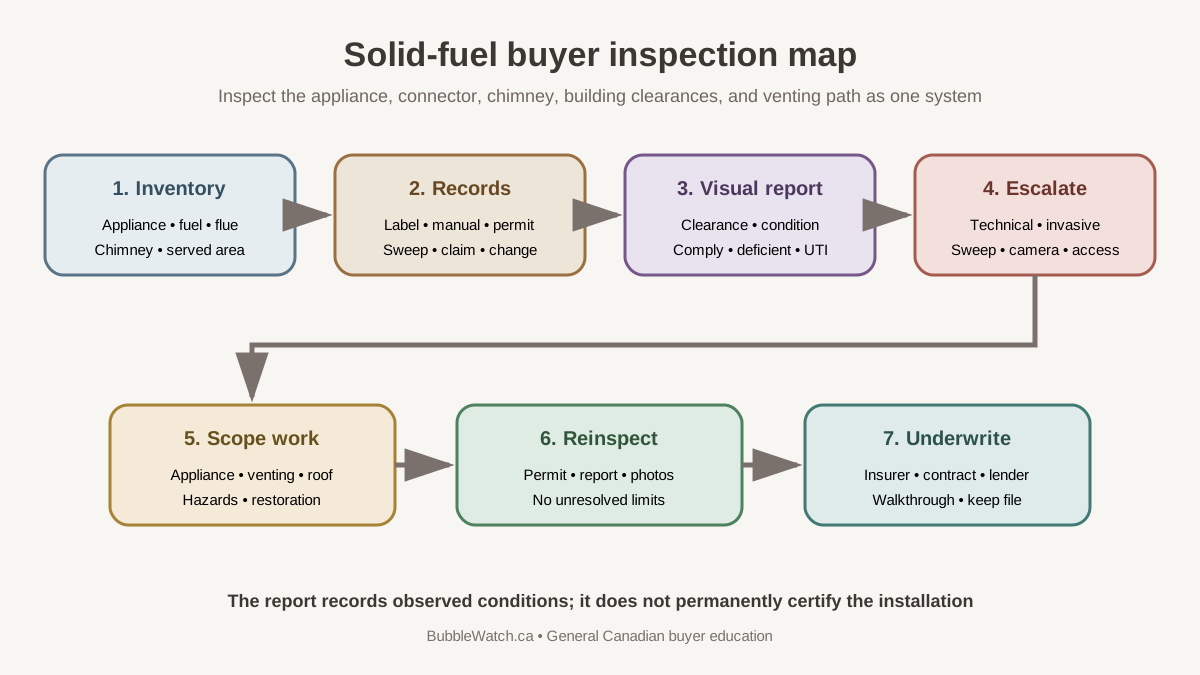
Short answer: inspect the entire system at the right depth
Use six steps:
- Identify each appliance, fuel, connector, flue, chimney, and served area.
- Collect labels, manuals, permits, installation, sweeping, repair, and prior inspection records.
- Confirm the intended insurer's report and professional requirements.
- Start with the agreed visual inspection and escalate visible concerns or access limits.
- Price appliance, chimney, building, hazardous-material, and restoration work together.
- Require final inspection and insurer evidence after any change.
An old report describes the system at its inspection date. Moving an appliance, changing a connector, reroofing around a chimney, installing an insert, or finishing adjacent walls can change the observed condition.
Inventory every combustion appliance
Create a system register:
| ID | Appliance/fuel | Location | Connector | Flue/chimney | Certification label | Status/use | Report |
|---|---|---|---|---|---|---|---|
Include:
- open masonry fireplaces;
- factory-built fireplaces;
- wood and pellet stoves;
- fireplace inserts;
- wood furnaces and boilers;
- cook stoves or masonry heaters;
- outdoor boilers where present;
- gas or propane inserts and log sets, routed to the appropriate gas professional;
- oil, gas, and water-heating equipment sharing or approaching chimney systems;
- unused, disconnected, decorative, or boarded openings.
A capped chimney can serve another appliance or conceal an abandoned flue. A decorative fireplace may have been used despite missing approval. Record claimed status and physical evidence separately.
Collect the system history
Ask the seller for:
- appliance make, model, serial number, label, and manual;
- purchase and installation invoices;
- permits, authority inspections, and final records;
- prior WETT or other inspection reports;
- sweeping and maintenance dates;
- chimney liner, cap, flashing, masonry, connector, and hearth repairs;
- chimney-fire, smoke, carbon-monoxide, water, and insurance claims;
- insurer questionnaires and requirements;
- fuel use and operating problems;
- roof, attic, wall, floor, or addition renovations near the system;
- removed appliances and abandoned flues;
- warranties and transferable documents.
Ask about smoke spillage, difficult startup, odour, rapid creosote, staining, alarm events, overheating, damaged components, and long disuse. Use the property-disclosure evidence ledger to preserve dates and professional conclusions.
Understand WETT's role accurately
Wood Energy Technology Transfer's current inspection FAQ states that the product is an inspection report completed by a WETT-certified professional, with that person's certification number. It says appliances and installations are not WETT certified.
WETT is a training and education association and national program registrar, not the government regulator or insurer. Provincial, territorial, municipal, fire, building, environmental, and insurance requirements still apply.
Verify the individual in WETT's current professional directory, their category, status, service, insurance, and availability. A company employing one certified person does not make every worker certified.
Choose the inspection level from the question
WETT's current SITE inspection levels distinguish visual, technical, and invasive access. A visual inspection reviews readily visible components. A technical inspection may use tools, ladders, attic access, and removal of accessible parts. An invasive inspection can involve concealed access under written permission and appropriate controls.
Before booking, state:
- real-estate and insurer purpose;
- appliance and chimney count;
- known concerns and prior reports;
- roof, attic, crawl-space, and cleanout access;
- long disuse or performance problems;
- concealed chimney, insert, chase, or factory-built components;
- seller permission and repair terms;
- insurer's required form or level;
- deadline and report delivery.
A standard visual report may be adequate for routine insurer use and still recommend deeper review. “Unable to inspect” is a limitation, not a compliant finding.
Define the written report
Request:
- property address, date, weather, and purpose;
- professional name, certification number, category, and signature;
- inspection level and referenced basis;
- appliance, label, model, fuel, and location;
- connector, flue, liner, chimney, cap, termination, hearth, and shielding;
- measured clearances and reference points;
- visible condition and operation of accessible components;
- photographs keyed to findings;
- compliant, non-compliant, not applicable, and unable-to-inspect items;
- urgent safety direction;
- cleaning, repair, replacement, or deeper-inspection recommendations;
- limitations and changes that invalidate reliance.
Ask if the buyer and insurer may rely on the report. A report commissioned for the seller can have contractual limits.
Inspect appliance approval and clearances
The professional should identify the appliance label or determine how an unlabeled system is evaluated under applicable requirements. Record:
- manufacturer and model;
- listed or certified standard where present;
- installation manual;
- wall, corner, ceiling, furniture, fuel, and traffic clearances;
- floor protection and ember protection;
- heat shields and ventilated spacing;
- door, glass, gasket, latch, baffle, firebrick, and controls;
- connector type, joints, screws, support, slope, and clearance;
- combustion-air provisions where relevant;
- evidence of overheating, modification, corrosion, cracks, or damage.
Do not measure one visible side and assume concealed clearances. Finishing, cabinets, mantels, television mounts, trim, stored wood, and furniture can alter safe spacing after installation.
Inspect the chimney as a system
Record masonry versus factory-built chimney, flue count, liner type, served appliances, interior or exterior route, attic and chase access, roof penetration, termination, and cleanouts.
Possible concerns include:
- cracked, missing, displaced, or deteriorated liner;
- damaged factory-built sections or incompatible components;
- creosote, soot, glaze, nests, or blockage;
- inadequate height or termination clearance;
- unsupported or improperly joined sections;
- water entry, flashing, cap, crown, masonry, or freeze-thaw damage;
- combustible framing or finish clearance;
- multiple appliances or abandoned openings;
- inaccessible offsets and concealed chases;
- evidence of chimney fire or overheating.
A roof photograph cannot establish the liner's full interior condition. A sweep can remove deposits and reveal defects; cleaning and inspection are separate deliverables even when one professional performs both.
Treat inserts and factory-built systems carefully
A fireplace insert changes the relationship among appliance, liner, original fireplace, hearth, mantel, and chimney. Obtain the insert label, manual, full liner evidence, installation record, block-off or sealing details, and inspection.
Factory-built fireplaces and chimneys depend on compatible listed components and air spaces. Concealed chase framing, attic insulation, reroofing, or replacement parts can matter. Do not mix components based only on similar diameter or appearance.
If labels are missing or components cannot be identified, ask the qualified professional and authority about acceptable evaluation, repair, replacement, or decommissioning. Do not invent a model from a listing photograph.
Carbon monoxide and combustion spillage
Health Canada's current carbon-monoxide prevention guidance says CO has no colour, smell, or taste and requires an alarm for detection. It recommends professional annual inspection of fuel-burning appliances and annual chimney cleaning for a wood-burning fireplace.
Natural Resources Canada's combustion-spillage guidance explains that wood fireplaces can spill combustion products when draft is weak, including during the late burn. Exhaust fans, tight construction, weather, and other appliances can affect pressure.
The buyer should ask the qualified professional about:
- smoke or odour complaints;
- soot or staining;
- draft and spillage evidence;
- kitchen, bath, dryer, and central-vacuum exhaust;
- make-up and combustion air;
- other appliances and shared pressure effects;
- renovations that tightened the envelope;
- CO and smoke alarm placement, certification, age, and operation;
- further diagnostic testing under safe professional control.
Never conduct a smoke or spillage test from online instructions during a showing. If a CO alarm sounds, leave and follow emergency guidance.
Wood smoke and intended use
Health Canada's current wood-smoke guidance identifies fine particles, carbon monoxide, volatile organic compounds, and other pollutants. It recommends qualified annual inspection, chimney cleaning, a certified low-emission appliance, and dry seasoned untreated wood.
Ask how often the buyer expects to burn, who is sensitive to smoke, where fuel will be stored, and if local air-quality bylaws restrict use. A fireplace used twice a year and a wood stove serving as primary heat create different maintenance, insurance, and resilience decisions.
For primary or backup heat, include heat distribution, fuel supply, outage operation, freeze protection, chimney cleaning access, ash handling, and a non-combustion contingency.
Check permits and authority records
Ask the municipality, fire authority, or provincial body identified locally about:
- installation permit or notification;
- inspection and final status;
- chimney, liner, insert, or appliance change;
- building, roof, structural, and gas work;
- open orders or deficiencies;
- wood-burning restrictions;
- decommissioning requirements;
- records available to owner and buyer.
A permit record applies to its described work and date. It does not replace a current condition inspection. A current report does not erase missing authorization for earlier construction.
Send the insurer the actual system file
Use the insurance-before-closing workflow and provide:
- appliance inventory and use;
- photographs, labels, and manuals;
- current inspection report at the insurer's required level;
- professional certification details;
- sweeping, repair, permit, and final records;
- chimney count and other fuel-burning appliances;
- primary or supplementary heat status;
- alarm and maintenance information;
- proposed work and deadline;
- vacancy, rental, seasonal, or remote occupancy.
Ask the insurer to confirm acceptance, conditions, completion deadline, proof, deductible, and coverage in writing. A WETT report is evidence for underwriting; it does not bind the insurer by itself.
Price deficiencies as a building project
Create a full cost stack:
| Cost layer | Scope questions |
|---|---|
| Investigation | Sweep, camera, technical/invasive access, engineer or mason |
| Appliance | Repair, parts, label issue, replacement, removal |
| Venting | Connector, liner, chimney, cap, crown, flashing, support |
| Building | Hearth, clearances, shields, framing, roof, firestopping |
| Hazard controls | Asbestos, lead, mould, animal waste, soot |
| Authority | Permit, inspection, report, correction |
| Restoration | Roof, masonry, attic, walls, ceilings, floors, paint |
| Operation | Alarms, tools, wood storage, annual sweep, fuel |
| Delay | Accommodation, alternate heat, winter schedule |
Normalize quotes against the same report and desired outcome. A chimney-liner price may exclude appliance replacement, roof access, masonry repair, and interior restoration.
Decommissioning needs a defined safe state
If the buyer will not use the system, ask the qualified professional and authority how to decommission it. Define:
- appliance removal or retention;
- fuel and ash removal;
- connector and opening closure;
- flue treatment and ventilation;
- weather cap and water control;
- combustible clearances and abandoned components;
- gas, electrical, or other service disconnection by authorized trades;
- roof, wall, floor, and hearth restoration;
- permit, inspection, and insurer record;
- future reactivation prohibited without new review.
Boarding the firebox or removing a stove does not necessarily close the chimney, roof, shared flue, or insurance question.
Audit chimney-camera evidence
A camera inspection can document accessible liner surfaces, joints, offsets, deposits, gaps, cracks, or damage. It still needs a route and limitation record.
Ask for:
- camera system and operator;
- chimney and flue entered;
- access and travel direction;
- cleaning completed before imaging;
- full video rather than selected stills;
- orientation, height or distance references;
- liner material, size, shape, and visible joints;
- every offset, blockage, branch, and endpoint;
- image quality and areas obscured by deposits;
- defect locations tied to building levels where possible;
- written interpretation and recommended action;
- limits caused by geometry, access, or equipment.
Do not interpret a bright line or dark patch yourself. The qualified chimney professional must connect the image to material, location, consequence, and repair. If masonry stability, structural framing, roof support, or fire damage is suspected, an engineer or other specialist may be required.
After repair, require the inspection method suited to the repaired component. A photograph of a liner at the roof does not prove its lower connection, and a firebox photograph does not prove the cap.
Check hearth-area finishes and renovations
Home renovations often change the installation after the original appliance work. Map new flooring, raised hearths, mantels, cabinets, shelves, television mounts, wall panels, spray foam, attic insulation, roof assemblies, and chase enclosures.
Ask:
- which finishes are combustible;
- required clearance measurement points;
- hearth extension beneath rugs or new flooring;
- hidden shields and air gaps;
- penetrations through walls, ceilings, and floors;
- firestopping and attic insulation boundaries;
- labels or access panels covered by finishes;
- structural support for masonry or heavy appliances;
- permits and final inspection for the renovation;
- asbestos or lead within materials that repair will disturb.
Use the unpermitted-renovation workflow when the hearth or chase changed without records. A compliant original installation can become deficient after a later owner reduces clearance.
Plan wood, ash, and pest management
Ask where firewood is stored, dried, carried, and stacked. Wood against the house can affect moisture, pests, access, and fire exposure. Indoor quantities should follow professional and local fire-safety advice.
Inspectors may identify nests, animal entry, damaged caps, or debris. Wildlife removal, chimney sweeping, cap repair, and contaminated-material cleanup need appropriate professionals. Do not reach into a flue or clean animal waste during a viewing.
Define ash cooling, metal container, final disposal, hearth cleaning, tool storage, and child or pet protection. Include these operating needs in the buyer's decision if the stove is primary heat.
For rural homes, map fuel access during winter, seasoned-wood supply, chimney service availability, roof snow access, and the backup heat source. The rural-property due-diligence guide places the appliance within roads, utilities, insurance, and emergency response.
Seller preparation
A seller can commission the insurer-relevant inspection early, sweep when advised, collect permits, and correct defined deficiencies through qualified professionals. Preserve before-and-after photographs and reinspection evidence.
Market the system accurately. State the appliance, last inspection and sweep dates, and included records. Avoid “certified,” “approved forever,” “zero-clearance” used as a generic adjective, or “works perfectly” without support.
If the system has not been used for years, disclose that fact and do not test it casually before listing. Long disuse can justify technical inspection, cleaning, animal checks, and review of building changes.
Update the property disclosure after a new inspection, repair, chimney leak, alarm, or insurer requirement. Deliver the complete report, including unable-to-inspect fields and recommendations, rather than only the favourable first page.
Contract options
Local counsel should adapt terms to the property and province. Possible topics include:
- access for named inspector, sweep, technician, mason, roofer, or engineer;
- insurer-required inspection level and written report;
- permission for cleaning, ladders, attic access, component removal, or invasive review;
- delivery of labels, manuals, permits, claims, and prior reports;
- buyer approval and deadline;
- seller repair tied to exact deficiencies and qualified trades;
- permit, reinspection, final report, and insurer acceptance;
- hazardous-material and concealed-condition handling;
- restoration and property damage;
- no-use covenant before closing;
- price change, extension, termination, or holdback.
Avoid “obtain WETT certificate.” Require the appropriate inspection report from a currently certified individual and identify the insurer's acceptance evidence.
Final walkthrough
Use the final-walkthrough guide to confirm the inspected system has not changed. Do not light it unless the contract, seller, insurer, and qualified professional have planned safe operation.
Confirm:
- appliance, connector, hearth, shields, chimney, and cap remain;
- included tools, screens, doors, remote controls, and manuals are present;
- stored fuel and ash match the agreement;
- no new damage, water, soot, or alteration is visible;
- repairs, sweeping, permits, and reinspection reports arrived;
- alarms and agreed replacement records are present;
- a removed system was closed and restored as specified.
Treat a stove, insert, or detachable accessory as a fixtures-and-chattels issue too. Use the closing inventory guide to name included items.
Condos, attached homes, and rentals
Chimneys, chases, roofs, fire separations, exterior terminations, and insurance may be common property. Request corporation approvals, inspection history, chimney cleaning, reserve work, fire orders, unit alteration records, and responsibility boundaries.
Smoke can affect adjoining occupants and local bylaws. A unit owner may lack authority to install, replace, or decommission a system without approval.
For rentals, confirm legal use, maintenance allocation, alarms, inspections, fuel supply, tenant instructions, and insurer acceptance under local law. Do not assume a tenant can be required to operate a solid-fuel appliance as primary heat without professional and legal review.
Worked example: the report covers the stove but not the chimney chase
A rural listing includes a wood stove and a five-year-old inspection report. The insurer asks for a current report. A visual inspection finds an acceptable appliance label and visible clearances but cannot inspect the factory-built chimney where a recent attic renovation enclosed the chase.
The inspector recommends technical access. With seller permission, the qualified professional enters the attic and finds insulation packed against a component requiring clearance. The remediation scope now includes safe insulation removal, chimney component review, attic air-sealing and insulation design, reinspection, and insurer acceptance.
The buyer does not treat the first report as a failed certificate. It is a scoped observation that correctly triggered deeper evidence after the building changed.
Buyer checklist
System and records
- Every appliance, fuel, connector, flue, and chimney inventoried
- Labels, manuals, permits, inspections, and sweeping obtained
- Claims, chimney fires, spillage, and long disuse asked about
- Roof, attic, wall, and appliance changes mapped
- Included tools and accessories listed
Inspection
- Insurer's required report and deadline confirmed
- Individual certification and category verified
- Correct inspection depth selected
- Unable-to-inspect items escalated
- Appliance, venting, clearances, chimney, and alarms covered
- Written report and photographs retained
Transaction
- Quotes cover building and restoration scope
- Hazardous materials addressed before invasive work
- Permits and authority evidence checked
- Insurer acceptance received in writing
- Contract avoids “WETT certificate” shorthand
- Final reinspection and no-change evidence defined
Frequently asked questions
Is there a WETT certificate for a fireplace?
No. WETT certifies individuals. The certified professional provides an inspection report for the system and conditions observed at the stated level.
How long is a WETT inspection valid?
The report describes what was observed on its date. WETT says the inspector cannot know later changes. The insurer decides how current the report must be.
Does chimney sweeping count as an inspection?
They are related but distinct. A sweep removes deposits; inspection evaluates accessible condition and compliance within scope. One professional may perform both and should document each.
Can the buyer test-fire the stove during inspection?
Only under seller permission and qualified professional direction when safe and appropriate. Operating a questionable or dirty system can create fire, smoke, CO, and property risk.
Will a compliant report guarantee insurance?
No. The insurer makes the underwriting decision and can impose its own report, repair, use, and deadline requirements.
Is removal cheaper than repair?
Sometimes, but safe decommissioning can include connector, flue, roof, wall, floor, gas, electrical, masonry, and finish work. Compare complete scopes.
What to read next
Use the home-insurance binder guide to send the appliance inventory and actual report to the insurer while the purchase condition remains available. If specialist access is still needed, use the inspection-clause workflow to define ladders, attic access, cleaning, component removal, and restoration before the appointment.
This article provides general Canadian home-purchase information, not fire-safety, combustion, chimney, code, environmental, legal, insurance, lending, or contracting advice. Requirements vary by system, jurisdiction, insurer, and authority. Use current official guidance and qualified local professionals.
Advertisement

About David R. Chen, CFA
David R. Chen is a Chartered Financial Analyst and the Senior Housing Economist at BubbleWatch.ca. He brings 12+ years of experience in quantitative real estate analysis and mortgage underwriting. Formerly an analyst at a major Canadian bank, he specializes in modeling payment shock, regional affordability divergence, and private lending risk.
View David's professional bio & credentials →