Knob-and-Tube and Aluminum Wiring When Buying a
A buyer's circuit-by-circuit evidence method for separating wiring type from actual condition, matching specialist findings to insurer demands, and budgeting authorized electrical work plus access and finish restoration.
Knob-and-Tube and Aluminum Wiring When Buying a Home in Canada
An older wiring label is not an electrical diagnosis. Knob-and-tube conductors can be present, abandoned, partly replaced, concealed, altered, insulated over, or serving only a few circuits. Aluminum can describe large service conductors that remain common or smaller branch-circuit wiring with connection requirements that deserve focused review.
The purchase decision depends on a circuit map, condition assessment, authority records, insurer response, and priced scope. A general home inspection can identify visible clues and recommend specialist review, but it does not open concealed walls, certify the installation, approve insurance, or define every repair.
Build the evidence before the offer becomes firm. “Updated electrical” should become a list of panels, circuits, conductor types, devices, permits or notifications, inspection records, remaining older work, and insurer conditions.
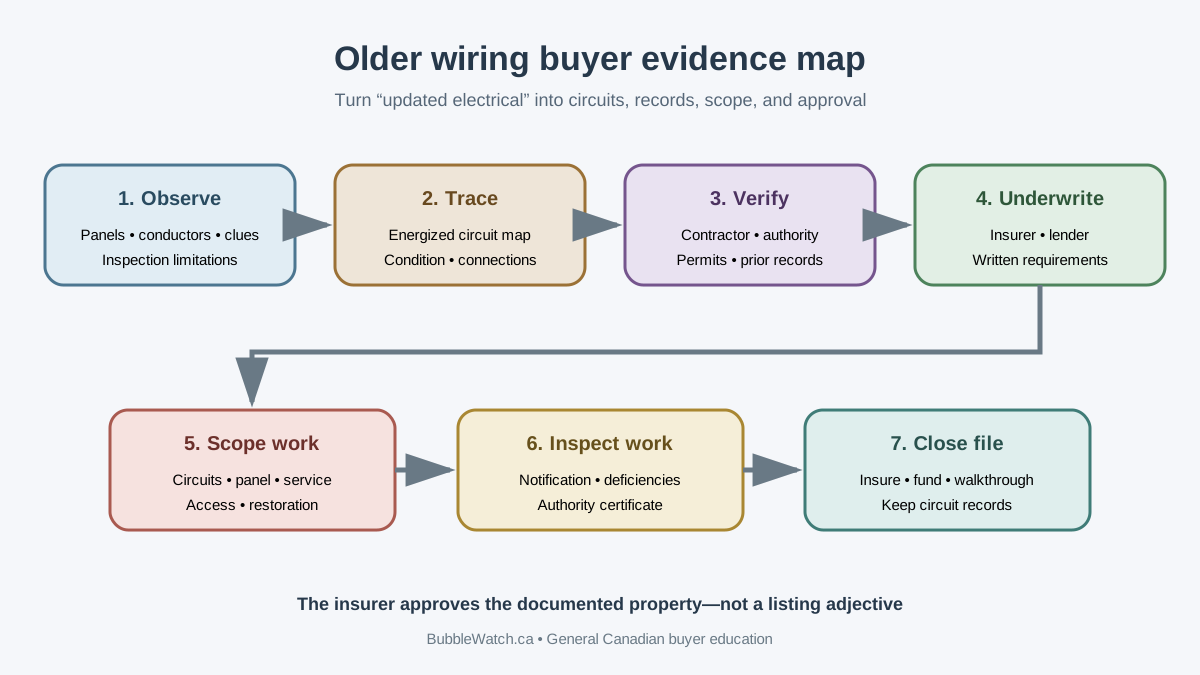
Short answer: map circuits, then price the insurer-accepted scope
Use six steps:
- Document service, panels, wiring types, additions, and renovations.
- Ask the general inspector to identify visible clues and limitations.
- Retain the locally authorized electrical contractor or professional for focused assessment.
- Match findings to authority records and work history.
- Give accurate evidence to the intended insurer and lender.
- Price electrical work together with access, hazardous-material controls, and restoration.
Do not assume complete rewiring is always mandatory. Do not assume an apparently working light proves a safe, insurable, or properly authorized circuit.
What a general home inspection can establish
Innovation, Science and Economic Development Canada's home-inspection guidance describes a non-invasive visual review of major systems, including electrical panels, junction boxes, and fixtures. The department also warns that the home inspector should not provide renovation-cost estimates.
The inspector can record accessible observations such as:
- service and panel labels;
- visible conductor types and damaged insulation;
- open splices, missing covers, or improvised extensions;
- receptacle grounding indications and device condition;
- warm, scorched, buzzing, loose, or damaged components;
- overfusing or mismatched breaker concerns visible within scope;
- missing GFCI or AFCI protection where the inspector's standard addresses it;
- amateur work, additions, and inaccessible areas;
- need for urgent or further electrical review.
The inspector cannot identify concealed wiring in every finished wall. A receptacle tester has defined limitations. Panel observations do not prove every downstream connection.
Name the wiring correctly
Create a wiring register:
| Area/circuit | Conductor material/method | Visible condition | Grounding/protection | Alteration evidence | Specialist action |
|---|---|---|---|---|---|
Separate:
- knob-and-tube wiring;
- aluminum branch-circuit wiring;
- larger aluminum service or feeder conductors;
- copper branch wiring;
- armoured, non-metallic, or other cable methods;
- low-voltage, data, alarm, solar, battery, generator, and EV systems;
- abandoned versus energized conductors.
Do not call all aluminum conductors a defect. The concern, connection method, equipment rating, workmanship, damage, and insurer requirement depend on the actual installation.
Knob-and-tube: condition and alteration matter
Ontario's Electrical Safety Authority explains in its knob-and-tube consumer guidance that the method was used in early homes and lacks some protections found in modern systems. ESA recommends assessment by a Licensed Electrical Contractor and notes that some insurers require replacement before offering coverage.
The review should identify:
- energized extent and circuit destinations;
- conductor insulation condition;
- unsupported, pinched, overheated, or damaged sections;
- improper splices or extensions;
- protection at the panel;
- use in kitchens, baths, outdoors, appliances, and high-load areas;
- grounding needs for connected equipment;
- thermal insulation contact and inaccessible areas;
- abandoned conductors that could be mistaken for live work;
- prior repair and authority documentation.
A partial replacement may leave short runs between a junction box and upper-floor devices. Ask for circuit tracing rather than a basement-only observation.
Aluminum branch wiring: inspect connections and insurer requirements
ESA's residential aluminum-wiring notice says purchasers of homes from the common installation period may encounter insurers that require inspection and repair or replacement, followed by ESA inspection and a certificate. It also corrects the myth that all aluminum wiring was recalled.
Focused review can include:
- conductor alloy and size where identifiable;
- devices and connectors listed or approved for the conductor;
- terminations at receptacles, switches, fixtures, junctions, breakers, and appliances;
- signs of overheating, oxidation, arcing, looseness, or damage;
- mixed-metal splices and the connector system used;
- workmanship and prior retrofit method;
- load, circuit protection, and equipment compatibility;
- authority notification and inspection record;
- inaccessible connections and sampling limitations.
Do not choose a repair product or technique from an online forum. The locally authorized contractor must follow current code, product instructions, and authority requirements.
Audit panels and service capacity separately
Older wiring can coexist with a newer panel, and a new panel does not prove branch circuits were replaced. Record:
- service voltage and rated capacity;
- main disconnect and panel manufacturer/model;
- breaker or fuse type, labelling, and spare capacity;
- subpanels, split service, and outbuilding feeds;
- double taps, mismatched components, damage, moisture, or corrosion observed by the professional;
- grounding and bonding review;
- service entrance, meter, mast, and utility interface;
- large loads such as heat pumps, ranges, hot tubs, EV charging, suites, and workshops;
- recalls, bulletins, or insurer restrictions identified by the right source.
A 200-amp label is not a load calculation. A buyer planning electrification should request a contractor's load assessment and utility questions before assuming spare capacity.
Build an electrical work-history ledger
Ask for:
- permits, notifications, inspection certificates, and deficiency notices;
- contractor invoices with licence number;
- panel schedules and one-line diagrams;
- renovation drawings and final inspection records;
- utility service upgrades;
- solar, generator, battery, pool, hot tub, and EV documents;
- fire, insurance, or loss reports involving electrical systems;
- seller photographs before walls were closed;
- warranties and product documentation.
Ontario permits and terminology cannot be assumed nationally. Each province or territory has its own safety authority, code administration, contractor authorization, and homeowner rules. Ask the local authority which records exist and what a record proves.
A closed notification applies to the described work. It does not certify unrelated older circuits or concealed DIY changes outside that scope.
Verify the contractor's authority
In Ontario, ESA states that only a Licensed Electrical Contractor can be hired to perform electrical work, subject to limited exemptions. Its contractor guidance explains the seven-digit ECRA/ESA licence and notification process.
Elsewhere, use the provincial or territorial regulator's directory and terminology. Verify:
- business licence or authorization status;
- named professional and scope;
- liability insurance;
- ability to file permits or notifications;
- intended inspection and certificate;
- subcontractors and restoration responsibility;
- quote assumptions and exclusions.
An electrician employed by an unlicensed business may not make that business eligible for hire under local rules. Check the contracting entity, not only a person's trade title.
Send the insurer a fact package
Use the insurance-before-closing workflow. Give the insurer:
- property address, age, occupancy, and closing date;
- service and panel information;
- wiring types and energized extent;
- specialist assessment and photographs;
- proposed repair or replacement scope;
- contractor authorization;
- permit or notification plan;
- required inspection certificate and deadline;
- vacancy or renovation period;
- open deficiencies and completion evidence.
Ask for the decision in writing. One insurer may accept a documented repair program; another may require replacement or decline the risk. A broker's preliminary comment is not a bound policy.
Record the exact deadline. “Within 30 days” requires contractor, access, authority inspection, wall repair, and funding to fit the first month of ownership.
Involve the lender before removing conditions
The lender normally requires satisfactory property insurance at funding. It may also rely on an appraisal that assumes ordinary condition and occupancy.
Tell the lender about material electrical work, insurer deadlines, vacancy, and any seller-completed project. Ask if a price holdback, completion condition, revised appraisal, or proof of insurance affects funding.
If the buyer plans a heat pump, electric backup, air conditioner, boiler controls, or other major mechanical change, pair the service-capacity review with the heating and cooling buyer system map. Equipment, breaker, conductors, disconnect, controls, distribution, and backup must be scoped together.
Do not spend the down payment reserve twice. Rewiring may require cash at the same time as land-transfer tax, legal fees, moving, and immediate repairs.
Scope access and restoration, not only wire
Electrical quotations often exclude the work needed to reach and refinish concealed runs. Build a total-project table:
| Cost layer | Questions |
|---|---|
| Electrical assessment | Circuit tracing, openings, report, load calculation |
| Authorized work | Circuits, devices, panel, service, protection, grounding |
| Authority | Notification/permit, inspection, deficiency correction, certificate |
| Access | Attic, crawl space, flooring, plaster, drywall, cabinets, masonry |
| Hazard controls | Asbestos, lead, vermiculite, dust, occupied-area protection |
| Restoration | Insulation, firestopping, walls, ceilings, trim, paint, tile |
| Occupancy | Power outage, contents, temporary accommodation, schedule |
| Future loads | Heat pump, EV, suite, workshop, service upgrade |
Use the asbestos renovation-scope guide before cutting older finishes. A wiring quote that excludes hazardous-material work may be accurate but incomplete for the buyer's cash plan.
Normalize electrical quotes
Give each contractor the same assessment, circuit schedule, insurer letter, and required deliverables. Compare:
- energized circuits included;
- complete replacement versus connection repair;
- device, connector, cable, breaker, and panel specifications;
- service and utility work;
- GFCI/AFCI and grounding upgrades;
- smoke/CO, alarms, low voltage, and excluded systems;
- openings, fishing methods, surface raceway, and visible routes;
- notification, inspection, certificate, and deficiency work;
- restoration and cleanup;
- unit prices for concealed discoveries;
- work duration, outages, taxes, and warranty.
Ask the insurer to accept the proposed evidence before selecting a cheaper scope that fails underwriting. Ask the electrical contractor to own only conclusions within its authorization.
Investigate DIY and renovation work by zone
Electrical uncertainty often follows the renovation chronology rather than the home's original age. A 1920s house may have careful permitted work, while a recent basement can contain undocumented extensions.
Mark every addition, finished basement, converted attic, garage, shed, kitchen, bathroom, rental unit, pool, hot tub, sauna, generator, solar array, battery, heat pump, and EV charger. For each zone, record construction year, contractor, authority file, panel source, circuit labels, and visible wiring method.
Look for evidence that deserves authorized review:
- device styles or cover plates that change within one circuit;
- receptacles added to baseboards, cabinets, surface channels, or extensions;
- extension cords used as permanent supply;
- buried junction boxes or inaccessible splices suspected from routing;
- crowded panels and labels that do not match operation;
- several large loads added without a load assessment;
- exterior cable, boxes, or fixtures exposed to water or damage;
- outbuilding feeds with unknown burial, grounding, or disconnects;
- seller statements that work was completed by a friend or former owner;
- inspection stickers that identify only a different project.
These are inquiry triggers, not a licence for the buyer to dismantle devices. The electrical contractor decides safe access and testing.
Treat authority records as scoped evidence
Create a register for each notification, permit, certificate, or inspection:
| Record | Applicant/contractor | Work description | Opened/closed | Deficiencies | Areas not covered |
|---|---|---|---|---|---|
Match the document to the address, unit, date, contractor, and physical work. A service-upgrade certificate may cover meter and panel work but exclude old branch circuits. A kitchen notification does not establish the basement suite.
Ask the authority how archived records are searched, who can request them, and what retention limits apply. “No record located” can reflect search terms or age; it does not prove no electrical work occurred.
If a file remains open, determine the outstanding inspection, defect, access, fee, or applicant issue. The seller may need to authorize release or contact the original contractor. Do not promise that a buyer can simply adopt another party's open file after closing.
Plan occupied-home rewiring
If work occurs after possession, decide how the household will live through it. Circuit shutdowns, wall openings, dust barriers, ladders, attic access, and daily cleanup can make bedrooms, kitchens, stairs, and home offices unusable.
Ask the contractor and restoration team for a room sequence showing:
- power available at the end of each day;
- refrigerator, heating, sump, alarm, medical, and internet continuity;
- safe separation of occupants, children, and pets;
- temporary lighting and approved temporary supply;
- contents removal and furniture protection;
- ceiling and wall opening schedule;
- hazardous-material stop-work rule;
- authority inspection points before closure;
- patching, drying, sanding, painting, and final cleaning;
- testing, labels, and owner orientation.
Temporary electrical arrangements must be designed by authorized professionals, not improvised by the buyer. Add accommodation, storage, meals, missed work, and schedule contingency to the project budget.
Seller preparation and truthful marketing
A seller can improve buyer confidence by commissioning an appropriate assessment early, locating authority records, and obtaining written insurer-relevant evidence. The seller should avoid claims such as “all copper,” “fully rewired,” or “200-amp service” unless records and physical review support their full meaning.
Prepare a package with:
- service and panel photographs;
- accurate panel schedules;
- contractor invoices and licence identifiers;
- authority notification, permit, certificate, and deficiency records;
- a circuit map showing remaining older wiring;
- insurer-required assessment or repair form;
- load calculation or service-upgrade record where relevant;
- drawings and warranties for specialized systems;
- dates and scope of access or finish repairs.
If work is completed while listed, preserve before-and-after photographs and do not close walls before required inspections. Update the disclosure if a new defect, failed inspection, damaged finish, or expanded scope is discovered.
Contract options
Local counsel should draft terms for the actual province and evidence. Topics can include:
- access for a named electrical contractor;
- delivery of authority and contractor records;
- buyer approval of a focused assessment and insurer decision;
- seller work defined by circuits and equipment, not “update wiring”;
- authorized contractor and required notification or permit;
- authority inspection, certificate, and correction of deficiencies;
- treatment of concealed older wiring and hazardous material;
- restoration standard and property damage;
- deadline, extension, price amendment, termination, or holdback;
- final insurance and lender evidence.
A seller-paid allowance transfers project risk to the buyer. A seller-completed project creates quality, access, schedule, and hidden-condition risks. Compare both structures with professional advice.
Final walkthrough evidence
Use the final-walkthrough checklist to confirm promised physical state and records. Do not remove panel covers or test exposed conductors yourself.
Collect:
- final contractor invoice and licence details;
- notification or permit number;
- authority certificate and cleared deficiencies;
- updated panel schedule;
- photographs and circuit map;
- insurer-required form;
- warranties and manuals;
- restoration completion;
- seller disclosure of new problems or damage.
Test ordinary switches and included equipment only as safe and agreed. A walkthrough cannot reproduce the licensed assessment or authority inspection.
Condos, duplexes, and multi-unit homes
Identify unit panels, house panels, meters, common wiring, fire separation, shared loads, and corporation responsibility. A condo owner may need alteration approval before opening walls or changing a panel.
For a duplex or secondary suite, verify service capacity, metering, heating loads, life-safety circuits, permits, and legal-use records. An electrically functional suite may still have authorization, insurance, or fire-separation gaps.
Review condo records with the status-certificate process and renovation records with the unpermitted-work guide.
Worked example: “mostly rewired”
A listing says a 1930s home was mostly rewired in 2018. The seller provides a panel invoice but no circuit schedule. The general inspection sees modern cable in the basement and knob-and-tube conductors in the attic.
A locally authorized contractor traces circuits and finds the kitchen, basement, and panel are modern, while several upper-floor lighting and receptacle runs remain energized older wiring. The insurer requires replacement of the remaining runs and an authority certificate within a fixed period.
The buyer obtains a circuit-defined quote, asbestos review for ceiling access, plaster restoration pricing, and the insurer's written acceptance of the plan. The lawyer then addresses access, price, deadline, and evidence. “Mostly” becomes a measured project rather than a percentage guess.
Buyer checklist
Evidence
- Service, panels, and all wiring methods inventoried
- Renovation and authority records requested
- Energized older circuits traced
- Connection condition and prior repairs assessed
- Inaccessible areas and limitations recorded
Approval
- Contractor authorization verified
- Insurer decision received in writing
- Lender informed of material work and deadline
- Permit/notification and inspection path defined
- Required certificate identified
Budget and closing
- Electrical scope normalized across quotes
- Access and finish restoration included
- Hazardous materials addressed
- Future load and service capacity assessed
- Contract terms use objective circuits and records
- Final walkthrough document package listed
Escalate immediate safety observations
Purchase conditions and quote comparison do not delay an urgent hazard response. If an inspector or electrical professional identifies active arcing, overheating, exposed energized parts, water at electrical equipment, damaged service conductors, smoke, or another immediate danger, follow that professional's safety direction and contact the responsible authority or emergency service as advised.
Do not touch the equipment, remove covers, reset a repeatedly tripping breaker, energize a disconnected circuit, or ask the seller to perform an informal repair. Keep occupants away from the area and route communication through the agreed transaction channel.
Record the observation, time, photographs taken from a safe location, professional direction, shutdown, repair, notification, inspection, and restoration. Tell the insurer and lender about material changes. The later purchase decision should use the repaired condition and final evidence, not the assumption that a shutdown alone resolved the cause.
Frequently asked questions
Is knob-and-tube wiring automatically illegal?
Rules and insurer positions vary. ESA notes Ontario's code is not retroactive and recommends licensed assessment of condition. Alterations, damage, use, and local authority requirements still matter.
Is all aluminum wiring dangerous?
No blanket label is accurate. Separate branch wiring from service conductors and have authorized professionals assess conductor, connections, equipment, condition, and required repair. The insurer makes its own underwriting decision.
Does a new breaker panel mean the house was rewired?
No. A panel replacement can retain older downstream circuits. Obtain the work record and circuit tracing.
Can a home inspector issue an electrical certificate?
Not through an ordinary visual inspection. Use the professional and authority process required in the province and by the insurer.
Should the seller rewire before closing?
That depends on contract timing, access, hidden conditions, insurer and lender requirements, contractor availability, quality control, and buyer preference. Define scope and evidence before choosing who manages it.
What is the biggest budgeting mistake?
Pricing cable and devices without access, hazardous-material controls, authority correction, service work, and finish restoration. Treat it as a building project.
What to do next
Ask the inspector to label visible conductor types and limitations, then retain the locally authorized electrical contractor to trace energized older circuits and define required work. Send that report to the actual insurer before removing conditions.
Build the price from electrical work, authority inspection, access, hazardous materials, restoration, and future loads. Have local counsel use circuit-level scope and objective completion records in any transaction term.
This article provides general Canadian home-purchase information, not electrical, engineering, legal, insurance, lending, code, or contracting advice. Requirements vary by jurisdiction, authority, insurer, property, and scope. Use authorized local contractors and current official guidance.
Advertisement

About David R. Chen, CFA
David R. Chen is a Chartered Financial Analyst and the Senior Housing Economist at BubbleWatch.ca. He brings 12+ years of experience in quantitative real estate analysis and mortgage underwriting. Formerly an analyst at a major Canadian bank, he specializes in modeling payment shock, regional affordability divergence, and private lending risk.
View David's professional bio & credentials →