Plumbing and Water-Heater Inspections When Buying
A buyer's water-path method for mapping service and distribution, testing fixtures and drains in context, investigating materials and leaks, verifying water-heater ownership and safety, and pricing access, permits, and restoration.
Plumbing and Water-Heater Inspections When Buying a Home in Canada
Plumbing is more than visible pipe material. A buyer needs to trace water from the public main or private source, through the service, meter, shutoffs, distribution, heaters, fixtures, drains, vents, private sewer or septic system, and final discharge.
Good pressure at one kitchen faucet does not prove adequate simultaneous flow upstairs. A dry cabinet does not rule out a seasonal, intermittent, or concealed leak. A new water heater does not renew old supply pipes, venting, drain capacity, or a rental contract.
The buying file should identify what was observed, what was operated, which materials remain concealed, how leakage history was repaired, and what access and finish work a real replacement needs.
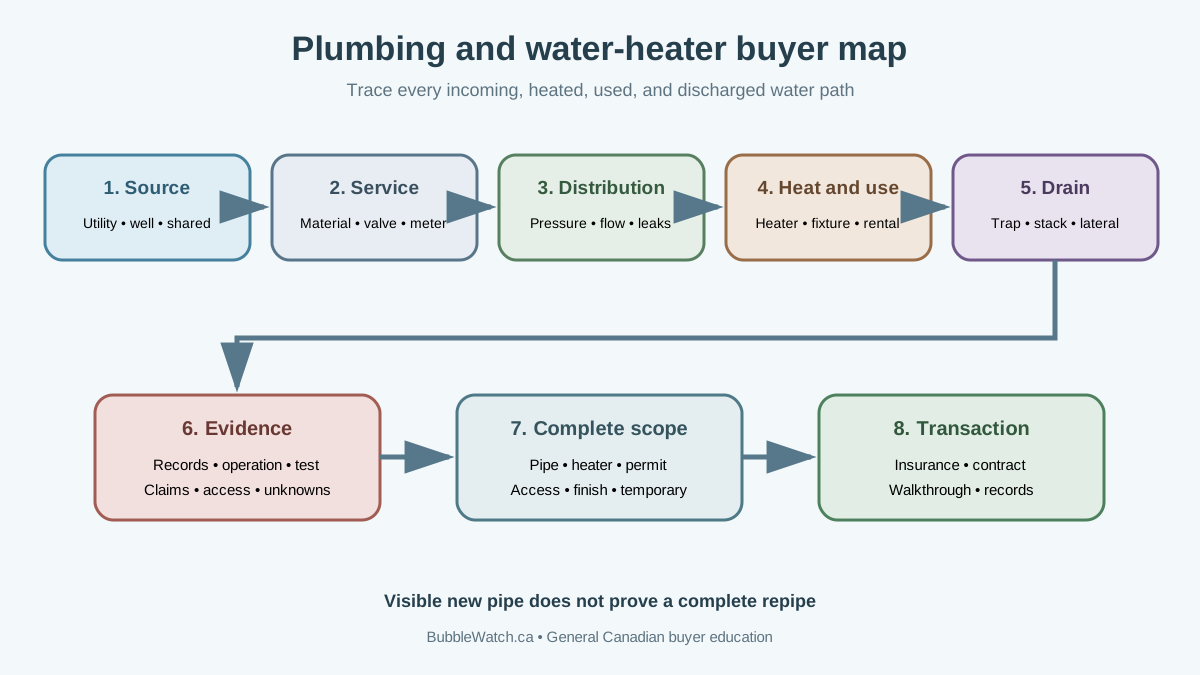
Short answer: draw one water-in and water-out map
Map the incoming side:
source → service line → curb or well controls → meter → main shutoff → pressure or treatment → cold distribution → water heater → hot distribution → fixture
Map the outgoing side:
fixture → trap → branch drain → stack and vent → building drain → cleanout → private lateral or septic system → municipal or onsite destination
Add clear-water and equipment paths: foundation drains, sump, condensate, relief discharge, softener backwash, filter waste, roof drains, catch basins, and appliance drains.
Each unidentified connection is a due-diligence question. Do not infer destination because a pipe disappears into a wall or slab.
Understand the home-inspection scope
The federal home-inspection guide describes visual assessment of accessible plumbing. Inspectors commonly operate fixtures, observe accessible supply and drains, and report leakage or functional concerns.
Scope usually excludes dismantling valves, pressure testing concealed pipe, sewer camera work, water-quality laboratory analysis, well-yield testing, septic inspection, destructive openings, and certification of code compliance. Occupied belongings, winterized fixtures, shut water, inaccessible crawl spaces, finished ceilings, tenant areas, and unsafe conditions can limit the review.
Ask which fixtures will be operated simultaneously, whether tubs and overflows are tested, how long drains are observed, and which cleanouts or service entries are accessible. Record every untested fixture and reason.
Inventory source, service, and responsibility
Determine whether water is municipal, private well, shared well, cistern, hauled, lake, spring, or another source. Identify who owns and maintains each segment.
For municipal service, request:
- utility account and current service material records;
- property-side and municipal-side ownership boundary;
- curb stop and main shutoff locations;
- replacement, repair, leak, freeze, and pressure history;
- meter, remote reader, backflow, and pressure equipment;
- planned municipal work or service-line program;
- easements or shared connections.
For a private well, use the well-water testing and yield guide for source records, laboratory quality, yield, equipment, setbacks, treatment, and legal access. One kitchen sample does not establish the whole well system.
Treat pipe material as an evidence trigger
Record accessible materials separately for service, cold, hot, recirculation, drains, vents, hydronics, and appliance connectors. Common observations may include copper, PEX, CPVC, galvanized steel, lead, polybutylene, Kitec-branded composite, cast iron, ABS, PVC, clay, and mixed transitions.
Do not infer the entire house from one basement segment. Renovations often leave old risers, buried slab branches, concealed bathroom piping, or an original service line.
For each material concern, ask:
- exact locations and quantity;
- manufacturer markings where relevant;
- fittings and joining method;
- installation and failure history;
- insurer position;
- local authority requirements;
- sampling or specialist method;
- replacement access and finish scope.
Material name alone is not a leak prediction. Condition, water chemistry, pressure, temperature, installation, movement, freezing, age, and joints matter.
Investigate lead through records and sampling
Health Canada's lead in drinking water guidance explains that lead can enter drinking water from service lines and plumbing components. Municipalities and provinces apply the Guidelines for Canadian Drinking Water Quality through their own systems.
Ask the utility for its current service-line material information and replacement program. Check both public and private portions because ownership can differ.
Visual identification can be uncertain and does not measure water exposure. If water quality matters to the decision, use an accredited laboratory and the sampling protocol specified by the relevant public-health or water authority. First-draw, flushed, stagnation, fixture, and service-line questions can require different methods.
Do not install a generic filter without confirming it is certified and maintained for the identified contaminant and conditions. Treatment can reduce exposure while service replacement remains a separate infrastructure decision.
Test flow, pressure, and simultaneous demand
With permission, operate representative fixtures alone and together. Record:
- static and flowing pressure where a qualified professional measures it;
- change when toilets flush, showers run, or appliances fill;
- hot-water arrival time and temperature stability;
- hammer, vibration, whistling, pulsing, or pump cycling;
- weak upper-floor or remote fixtures;
- pressure-reducing valve, booster, expansion, or well-tank behaviour;
- cross-flow or temperature change;
- leakage during and after operation.
A pressure gauge reading needs context: measurement point, fixture demand, time, municipal conditions, regulator, elevation, and instrument. High pressure can stress components; low flow can reflect service size, corrosion, restrictions, valve position, treatment equipment, or simultaneous use.
For wells, pump, tank, recovery, yield, and water level require a system-specific test. Do not run a well aggressively without owner permission and qualified planning.
Inspect shutoffs and emergency control
Locate the main shutoff, meter valves, fixture stops, appliance valves, exterior taps, irrigation controls, and any automatic leak shutoff. Photograph and label them for the possession file.
Do not force an old valve during a showing. Ask a plumber to assess corroded, inaccessible, leaking, unsupported, or unlabelled controls.
Check whether occupants can reach the main quickly without moving storage or entering a locked unit. For rentals and multi-unit houses, clarify who can isolate each suite and whether one tenant loses water during another unit's repair.
An automatic shutoff can reduce some pressurized supply losses. It does not stop sewer backup, foundation seepage, overland water, or every slow leak.
Inspect visible distribution and leak clues
Review accessible pipes in basements, crawl spaces, cabinets, chases, attics, garages, and mechanical rooms. Look for:
- active drops, spray, sweating, or damp insulation;
- mineral deposits, green staining, rust, pitting, or patched pinholes;
- unsupported runs, abrasion, tight bends, and stressed fittings;
- freeze exposure and heat-trace equipment;
- mixed metals and questionable transitions;
- concealed valves or joints;
- water marks, swollen cabinets, damaged subfloor, and ceiling patches;
- odour, mould-like growth, insects, and rot;
- abandoned pipe and unknown capped branches.
Condensation on a cold pipe is different from a leaking joint but can still wet materials. Identify indoor humidity, insulation, air movement, and pipe temperature.
Ask for repair invoices when repeated pinholes or ceiling openings appear. Spot repairs may indicate localized damage or a broader material and water-chemistry issue.
Operate fixtures with a room-by-room checklist
At each sink, tub, shower, toilet, bidet, laundry, bar, exterior tap, and appliance connection, check:
- secure mounting and intact surfaces;
- supply connectors and shutoffs;
- hot and cold orientation;
- flow and drainage;
- faucet, spout, diverter, spray, and seals;
- basin, overflow, stopper, and trap;
- toilet fill, flush, seal, movement, and floor condition;
- shower enclosure, curb, door, grout, sealant, and adjacent finish;
- tub access panel and drain connections where visible;
- anti-scald or mixing control where applicable;
- leakage during use and several minutes after.
Do not flood-test an enclosure or overflow beyond the agreed inspection method. Hidden waterproofing and drain connections may need specialist review.
Loose toilets and stained ceilings below bathrooms deserve prompt investigation. Replacing sealant at the visible surface may not repair a failed pan, drain, flange, or supply.
Review drains, vents, and traps
Slow drainage can reflect a local trap, branch, stack, vent, private lateral, septic, or use pattern. Gurgling, siphoned traps, odour, repeated plunging, and multiple affected fixtures help locate the level.
Inventory accessible cleanouts, floor drains, trap primers, backwater valves, sewage ejectors, pumps, and vent terminations. Ask about winter freeze, roof work, animals, renovations, and abandoned fixtures.
A drain cleaner receipt proves a service occurred. It does not describe pipe material or remaining condition. Use the sewer-lateral camera guide for roots, offsets, collapse, cleaning, locating, and full-run evidence.
For septic properties, drain performance inside the house does not replace tank, field, permit, use, setback, and replacement investigation.
Map basement flood protection separately
Floor drains, backwater valves, sumps, foundation drains, and sewage ejectors can look like one plumbing cluster while serving different purposes. Draw each connection and protected area.
Use the basement-flood due-diligence guide to separate overland, groundwater, foundation, private-sewer, municipal-surcharge, and plumbing losses. Check valve maintenance, sump power and backup, alarms, discharge, and prior contamination.
Never assume a valve visible near the cleanout protects every lower fixture. A plumber should identify branches on each side.
Inventory every water heater
Include storage tank, tankless, heat-pump water heater, indirect tank, combination boiler, solar system, point-of-use unit, recirculation, mixing valve, and suite-specific equipment.
Record:
- ownership or rental;
- manufacturer, model, serial, capacity, fuel, and installation evidence;
- rated input and electrical requirements;
- service, flushing, anode, descaling, and repair history;
- warranty and transferable registration;
- fuel line, shutoff, venting, combustion air, and exhaust termination;
- electrical circuit, disconnect, condensate, and drainage;
- relief valve and discharge path;
- drain pan, floor drain, leak sensor, and automatic shutoff;
- expansion control and pressure equipment;
- seismic restraint where locally applicable;
- nearby stored contents and damage exposure.
Do not operate a relief valve casually. It is a safety device and can fail to reseat or discharge dangerously. Qualified inspection should assess it and the discharge arrangement.
Read a water-heater rental before assuming it
Request the complete agreement, current monthly charge, escalation, remaining term, transfer steps, service inclusions, exclusions, buyout schedule, removal terms, and current payout statement. Confirm the legal owner and whether other equipment is bundled on the account.
Compare the remaining rental stream and buyout with an owned replacement that includes permit, venting, fuel or electrical work, disposal, downtime, tax, and warranty. A low monthly figure can conceal a long obligation, while a buyout can transfer aging equipment with little remaining product coverage.
If the seller agrees to pay out the contract, require closing evidence that the account and transfer obligation are resolved. Local counsel should also review any security registration or title-related issue raised by the actual contract.
The hot water heater inspection, step by step
The inventory above is what to record. This is the order to work in when the search query is the heater itself, during a home inspection or a buyer's own walkthrough with the inspector.
- Photograph the rating plate first. Record manufacturer, model, serial number, capacity, fuel, and rated input before anything is operated. The plate is the record every later question depends on, and it is often hard to read once furniture and stored items go back against the tank.
- Settle ownership before condition. Find the rental plate or account label if one exists, then read the contract terms in the rental section above. A heater in perfect condition can still be the wrong heater to inherit.
- Read the age from the plate, not the listing. Many rating plates print a manufacture date directly. If only a serial number is shown, the manufacturer's own serial lookup or support line decodes it; serial formats differ by brand, so do not apply one brand's pattern to another. Installation stickers, permits, and invoices are the backup record. Age alone is not a condition verdict, but it drives warranty status, parts availability, and the insurer questions below.
- Check the base and every fitting for active water. Rust streaks, mineral crust, damp flooring, and a wet drain pan point to a leak that may only show under pressure or heat cycles. Look again after fixtures have run, not only on arrival.
- Trace the relief valve and its discharge pipe. The pipe should exist, run unobstructed, and end somewhere visible and safe. A missing, capped, threaded-closed, or uphill discharge path is a safety defect for a qualified plumber to correct, not a cosmetic note.
- Follow the vent or exhaust to the outside. For fuel-burning units, confirm the vent connector, chimney or sidewall termination, and combustion air as covered in the safety section below. Soot, corrosion, melted plastic near the draft hood, or a disconnected section ends the walkthrough step and starts a specialist call.
- Run hot water at the farthest fixture. Note arrival time, stability while a second fixture opens, and any discolouration on first draw. This tests the distribution side of the heater, which a new tank alone does not fix.
- Collect the paper trail. Service stickers on the tank, flushing or descaling records, anode or element replacements, warranty registration, and the rental payout statement if the seller is clearing the contract. What cannot be produced gets priced as unknown.
Water-heater red flags at a glance
| What you see | Why it matters | Next step |
|---|---|---|
| Rust or water at the tank base | The tank itself may be failing; supply leaks usually trace to a fitting above | Ask a plumber to identify the source before conditions are removed |
| No manufacture date readable on the plate | Age, warranty, and insurance questions cannot be answered from the listing | Use the manufacturer's serial lookup and the seller's invoices |
| Relief discharge pipe missing, capped, or ending uphill | The safety discharge has nowhere safe to go | Qualified correction and re-inspection before closing |
| Soot, corrosion, or gaps at the vent connector | Combustion gases may not be leaving as designed | Licensed gas or heating technician review; do not rely on a carbon-monoxide alarm alone |
| Rental plate but no contract in the disclosure | Transfer, buyout, and term obligations are unknown | Require the full agreement and payout statement in the purchase file |
| Rumbling, popping, or long recovery after use | Sediment or element problems can cut capacity and raise running cost | Service record request, then a plumber's assessment |
| No drain pan or floor drain under a tank above finished space | A slow leak has no managed path and damages finishes first | Price pan, drain, and leak-sensor work into the replacement quote |
Examine fuel-burning water-heater safety
Fuel-burning units require qualified review of ignition, burner, combustion, vent connector, chimney or sidewall termination, combustion air, draft, spillage, clearances, condensate, and carbon-monoxide risk.
Renovations can enclose a mechanical room, add exhaust equipment, or reduce air supply. A new door can change pressure conditions.
Ask about red tags, utility notices, repeated pilot outage, soot, corrosion, melted components, moisture, and vent replacement. A carbon-monoxide alarm does not certify the appliance or vent.
Coordinate chimney and shared-vent assessment with any furnace or boiler. Replacing one appliance can alter the remaining vented appliance's requirements.
Evaluate electric and heat-pump water heaters
Electric resistance tanks need circuit, wiring, disconnect, element, thermostat, tank, relief, drain, and leakage review. Heat-pump water heaters also move heat and moisture within the room and may produce condensate.
For a heat-pump unit, ask about:
- room volume and air pathway;
- noise near living or sleeping areas;
- cooling and dehumidifying effect on the space;
- ducted intake or exhaust if installed;
- condensate route, trap, pump, alarm, and overflow;
- filter access and cleaning;
- electric backup operation and demand;
- performance in a cold mechanical room;
- exact model and warranty.
An energy-saving unit can create comfort or freeze concerns if placed in a small cold room without design review.
Check tankless and combination systems
Tankless water heaters need fuel or electrical capacity, venting, condensate, water flow, scale control, inlet temperature, simultaneous demand, controls, and service access. Ask for descaling records and approved maintenance.
Minimum activation flow and maximum temperature rise affect performance. A headline flow rate under warm inlet conditions may not describe a Canadian winter or several fixtures at once.
Combination boilers serve space heat and domestic water through one appliance or connected tank. A failure can remove both services. Review priority controls, summer operation, distribution, storage, mixing, and backup plans.
Understand temperature, scalding, and microbial control
The National Plumbing Code of Canada 2025 includes service-water-heater thermostat provisions, while provinces and territories adopt and modify model codes on their own schedules. Local rules and qualified professionals govern the house.
Water-storage temperature, fixture delivery temperature, mixing valves, recirculation, stagnation, scald risk, and microbial control form one design problem. Do not lower a tank thermostat or alter a mixing valve based only on a single online number.
Ask a licensed plumber or public-health authority for current local guidance, especially where children, older adults, immunocompromised occupants, rentals, long pipe runs, or recirculation are involved.
Measure fixture temperature only with a safe protocol and appropriate instrument. One reading can change with recent use and heater cycling.
Review water treatment and cross-connections
Inventory softeners, sediment filters, carbon, reverse osmosis, ultraviolet, iron treatment, neutralizers, dosing, and specialty equipment. Obtain water test, treatment objective, model, capacity, media, service, sanitation, waste, drain, and bypass records.
A device label does not prove current performance or suitability. Filters can become exhausted, bypassed, contaminated, or poorly matched.
Check irrigation, boilers, pools, hot tubs, bidets, hose connections, treatment drains, and other cross-connection risks through a qualified plumber and local water authority. Backflow devices require correct selection, installation, testing, and maintenance where applicable.
Ask where softener backwash, reverse-osmosis reject water, and equipment drains discharge. Do not assume every flexible tube is safely connected.
Investigate leak and claim history
Request dates, source, duration, affected rooms, water category, extraction, drying, removed material, plumbing repair, mould work, insurer records, and recurrence. Connect ceiling repairs to the fixture or pipe above.
Use the mould moisture-first guide when materials were wet or odour persists. A plumber's invoice can prove source repair while drying and reconstruction require their own evidence.
Send accurate history to the insurer using the home-insurance closing workflow. Ask about water endorsements, repeated losses, existing damage, required pipe replacement, automatic shutoffs, deductibles, and binding conditions.
Price replacement with access and restoration
A useful repiping or water-heater quote includes:
- exact material, size, route, fittings, supports, insulation, and valves;
- service line and utility coordination where applicable;
- wall, ceiling, floor, cabinet, tile, shower, attic, crawl, and exterior access;
- hazardous-material testing and controls before disturbance;
- temporary water, washroom, heat, and accommodation;
- permits, inspections, backflow, pressure, expansion, and testing;
- heater, vent, fuel, electrical, drain, pan, alarm, and shutoff;
- patching, firestopping, waterproofing, paint, cleaning, and landscaping;
- fixture reconnection, commissioning, warranty, and maintenance;
- tax and concealed-condition rates.
Ask which old pipe remains and where transitions occur. A “whole-house repipe” can exclude service, fixtures, buried branches, exterior taps, suite lines, drains, and restoration.
For occupied multi-unit properties, include notices, phased shutdown, access rights, tenant services, and legal duties.
Permits, authority, insurance, and contract terms
Plumbing, fuel, electrical, backflow, service, water-heater, and structural work may involve different permits and authorities. Check current local requirements directly.
Use local legal advice for specialist access, water tests, camera work, controlled openings, records, rental transfer or payout, insurer acceptance, exact seller repair, permit, testing, restoration, reinspection, price change, holdback, extension, or termination.
Avoid “repair all leaks.” Identify pipe or fixture, location, cause, method, material, access, affected finishes, qualified contractor, permit, test, and acceptance evidence.
At final walkthrough, run agreed fixtures within the planned safe scope, check ceilings and cabinets, confirm no active fans or buckets, verify heater and rental status, and obtain permits, invoices, warranties, laboratory reports, and keys for locked equipment.
Worked example: good pressure hides a partial repipe
A renovated house has strong kitchen flow and a new rented water heater. The listing says plumbing was updated.
Invoices show PEX installed only in the open basement ceiling. Galvanized risers remain behind two bathroom walls, and one upper shower loses flow during toilet refill. A patched dining-room ceiling aligns with a prior bathroom leak. The rental agreement has a large transfer cost not shown in the listing notes.
The plumber maps the remaining risers, measures performance under simultaneous demand, and scopes staged replacement with tile and ceiling access. The buyer's lawyer addresses the rental, and the insurer reviews the pipe and loss history.
The visible new pipe was accurate evidence. It was not evidence of a complete system replacement.
Buyer checklist
- Incoming and outgoing water paths mapped
- Source, service material, ownership, shutoffs, and utility records checked
- Accessible supply, drain, vent, and equipment materials inventoried
- Lead questions handled through authority records and proper sampling
- Flow, pressure, simultaneous demand, fixtures, and drains assessed
- Sewer, septic, sump, and backwater systems separated
- Every water heater and rental contract documented
- Fuel, electrical, venting, relief, drainage, and scald risks reviewed
- Leak history includes source, drying, repair, and recurrence
- Quotes include access, permits, temporary service, and restoration
Frequently asked questions
Can a home inspector identify every pipe material?
No. Accessible pipe can be identified or flagged, but finishes, slabs, soil, and renovations conceal portions. Map observed and unknown sections separately.
Does high water pressure mean plumbing is good?
No. Pressure and flow differ, and high pressure can stress components. Simultaneous demand, service size, restrictions, valves, and condition matter.
Should buyers test tap water for lead?
Use current local public-health or utility guidance. Service records and properly designed accredited-laboratory sampling answer different questions; an informal sample can mislead.
Is a rented water heater a minor monthly expense?
It can carry transfer, escalation, buyout, service, removal, and term obligations. Read the complete contract and address it in the purchase agreement.
Does a new water heater fix hot-water problems?
Not necessarily. Distribution length, pipe restriction, recirculation, mixing, fixture flow, simultaneous demand, fuel or electrical capacity, and controls also matter.
Can a drain camera inspect water-supply pipes?
No. Sewer cameras assess accessible drain or lateral interiors. Supply material, leakage, pressure, flow, and water quality require different methods.
What does a home inspection check on a water heater?
The heater portion of a home inspection covers the rating plate (make, model, serial, capacity, fuel), ownership or rental status, visible leaks and corrosion at the tank and fittings, venting and combustion air on fuel-burning units, the relief valve and its discharge path, drainage and drain pan, electrical or fuel connections, and hot-water delivery at fixtures. It is a visual and operational review of what is accessible. It does not open the tank, test concealed piping, or certify code compliance, which is why the step-by-step section above separates what a buyer can observe from what needs a licensed plumber.
How can I tell how old a water heater is?
Start with the rating plate: many units print the manufacture date on it. If the plate shows only a serial number, use the manufacturer's own serial lookup or support line, because each brand encodes dates differently and one brand's pattern does not decode another's. Installation stickers, permits, service invoices, and the seller's records are the backup. If none of those exist, treat the age as unknown in the purchase file rather than guessing from appearance, and ask your insurer what documentation it needs, since insurers set their own age and condition rules for water-heater coverage.
Sources and verification
- Innovation, Science and Economic Development Canada - Home inspections: federal consumer guidance on the scope and limits of a visual home inspection, including accessible plumbing.
- Health Canada - Lead in drinking water: federal health guidance on how lead can enter drinking water through service lines and plumbing components, and how to reduce exposure.
- Public Health Agency of Canada - Water temperature and burns/scalds: federal guidance on water-heater storage temperature, Legionella prevention, mixing valves, and tap-temperature scald protection.
These sources support the inspection, drinking-water, and hot-water safety claims above. Local plumbing, fuel, electrical, rental, and public-health requirements can differ, so verify the property-specific rules with the responsible authority and qualified professionals.
What to read next
Use the sewer-lateral camera workflow when several drains are slow, roots recur, or the private pipe remains unknown. Use the basement-flood buyer map when drains, sump, foundation water, and municipal surcharge may overlap.
This article provides general Canadian home-purchase information, not plumbing, drinking-water, public-health, fuel, electrical, flood, code, legal, insurance, or contracting advice. Requirements vary by source, system, property, jurisdiction, utility, and authority. Use current official guidance and qualified local professionals.
Advertisement

About David R. Chen, CFA
David R. Chen is a Chartered Financial Analyst and the Senior Housing Economist at BubbleWatch.ca. He brings 12+ years of experience in quantitative real estate analysis and mortgage underwriting. Formerly an analyst at a major Canadian bank, he specializes in modeling payment shock, regional affordability divergence, and private lending risk.
View David's professional bio & credentials →