Mould Inspections When Buying a Home in Canada
A buyer's moisture-first method for tracing visible, hidden, and recurring mould; selecting qualified help; using sampling only for a defined question; and pricing source repair, containment, removal, verification, and reconstruction together.
Mould Inspections When Buying a Home in Canada: Find the Moisture Source First
Mould is evidence that materials were wet or damp enough to support growth. The buyer's first task is to find the moisture source, affected materials, concealed extent, and recurrence history - not to shop for a single air number labelled “pass.”
Health Canada recommends controlling dampness and cleaning visible mould regardless of species. It does not set a health-based indoor exposure limit, and its guidance says routine air measurement or species identification is usually unnecessary when moisture and visible growth can be found directly.
A useful purchase file connects the leak, condensation, flood, ventilation, or humidity cause to a defined remediation and reconstruction scope. Cleanup without source correction invites recurrence; source repair without safe removal can leave damaged material and contamination behind.
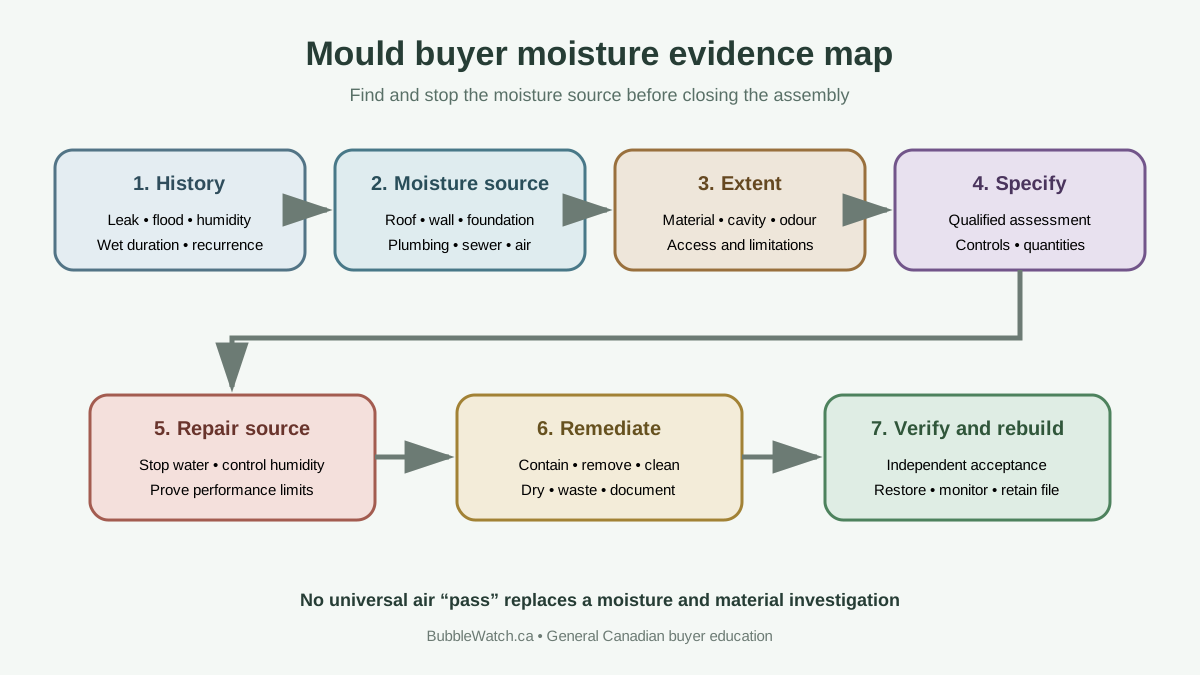
Short answer: follow water, material, and time
Use three linked maps:
- Water: roof, wall, window, foundation, plumbing, sewer, flood, condensation, and indoor humidity.
- Material: drywall, insulation, wood, flooring, carpet, contents, finishes, and cavities affected.
- Time: first event, duration wet, drying, cleanup, recurrence, repair, and current condition.
Then retain qualified professionals to define source repair, remediation controls, removal quantity, verification, and restoration. Do not disturb suspect growth during a showing or rely on odour masking, fresh paint, or a short dry-weather visit.
Health Canada's decision framework
Health Canada's current guide to moisture and mould indoors concludes that indoor mould growth may pose a health hazard. People in damp and mouldy homes are more likely to experience respiratory and irritation effects, while individual susceptibility varies.
The department does not propose a health-based exposure limit because current science does not support one. That means a laboratory count cannot be compared with a federal “safe home” threshold that does not exist.
Health questions belong with a healthcare professional. Building investigation belongs with qualified building, moisture, indoor-environment, plumbing, roofing, envelope, drainage, or remediation professionals as the evidence requires.
Start with a whole-building walk-through
Health Canada recommends checking all rooms, attics, basements, crawl spaces, and storage areas for visible growth, stains, dampness, peeling finishes, warped material, efflorescence, leaks, condensation, flood evidence, and musty odour.
Create an observation register:
| ID | Room/assembly | Visible sign | Moisture reading/context | Odour | Known event | Access limit |
|---|---|---|---|---|---|---|
Include:
- roof and attic sheathing, insulation, penetrations, and ventilation;
- bathrooms, kitchens, laundry, and fan ducts;
- windows, exterior walls, closets, and cold corners;
- foundation walls, slabs, crawl spaces, and rim joists;
- plumbing fixtures, supply, drains, appliances, and shutoffs;
- mechanical rooms, humidifiers, coils, pans, condensate, and ducts;
- under sinks, cabinets, flooring, and stored contents;
- garages, additions, enclosed balconies, and below-grade rooms.
The register documents observations, not medical conclusions. Avoid touching, scraping, lifting, or opening suspect material without permission and safety planning.
Reconstruct every moisture event
Ask the seller for:
- leak, backup, flood, condensation, and humidity dates;
- photographs before cleanup;
- emergency, plumber, roofer, envelope, drainage, and insurer records;
- drying logs and equipment records;
- moisture readings and material-removal scope;
- mould assessment, sampling, remediation, and verification reports;
- building permits and repair invoices;
- roof, foundation, window, plumbing, sewer, sump, and ventilation changes;
- recurrence monitoring;
- tenant, condo, neighbour, or property-manager reports.
Build a timeline:
| Event/date | Water source | Wet duration | Materials affected | Drying/removal | Source repair | Recurrence evidence |
|---|---|---|---|---|---|---|
Health Canada's flood-cleanup guidance says materials are less likely to grow mould when dried within 48 hours. A claim that a leak was “cleaned immediately” should be supported by duration, drying, and material evidence.
Distinguish active moisture from old staining
Fresh meter readings, thermal images, and infrared patterns can help an experienced professional find areas for investigation. They do not identify mould species, see through every material, or establish historical dryness.
Record weather, indoor temperature, relative humidity, recent plumbing use, heating or cooling operation, and tool limitations. A dry wall after weeks without rain may still have leaked during wind-driven storms. A cool thermal pattern can reflect insulation or air leakage rather than liquid water.
Use targeted openings only with seller consent, qualified direction, dust controls, repair terms, and hazardous-material planning. The asbestos buyer guide explains why opening older finishes can create a separate exposure project.
Follow the moisture source by system
Roof and attic
Ask about shingles or membrane, flashing, valleys, penetrations, ice dams, attic bypasses, bath fans, soffit and ridge ventilation, and prior roof leaks. Dark sheathing can require professional interpretation; colour alone does not establish active growth.
The roof buyer guide connects covering and flashing with attic evidence, while the attic air-and-moisture map separates outdoor water from indoor air leakage, exhaust, frost, and insulation defects.
Walls and windows
Check cladding, flashing, sealants, penetrations, balcony or deck interfaces, window wells, and condensation. Interior surface mould at a cold corner can reflect thermal bridging, blocked airflow, high humidity, or water entry.
Use the window and exterior-door inspection guide to separate failed glazing, room-side condensation, perimeter air leakage, exterior drainage, flashing, and concealed wall damage before choosing replacement.
Foundation and drainage
Use the foundation-crack decision map to separate structural movement from water paths. Review grading, downspouts, surface drainage, groundwater, foundation drains, sump, joints, and flood history.
If water affected a finished basement, apply the basement-flood due-diligence workflow to reconstruct contamination, drying, sewer, sump, valve, exterior drainage, and insurance evidence before defining remediation.
Plumbing and sewer
Trace supply, drains, tubs, showers, toilets, appliances, condensate, and hidden chases. A backup needs sanitation and pipe-cause evidence; use the sewer-lateral camera workflow where the private line is involved.
Ventilation and indoor humidity
Confirm kitchen, bath, dryer, and mechanical exhaust reaches outdoors. Review humidifiers, dehumidifiers, heat-recovery ventilation, air conditioning, cold rooms, occupant load, and stored contents.
Health Canada recommends indoor relative humidity generally between 30% and 50%, adjusted through ventilation or dehumidification as necessary. A single inspection reading does not describe all seasons.
Size the visible growth without treating area as the whole answer
Health Canada classifies a small area as no more than three patches with combined area up to one square metre, medium as more patches or combined area below three square metres, and large as a single patch exceeding three square metres. Its guide recommends qualified professional assessment and cleanup for large growth.
Area helps choose controls, but buyers must also consider:
- repeated small patches across rooms;
- strong or widespread musty odour;
- sewage or contaminated flood water;
- HVAC involvement;
- immunocompromised or sensitive occupants;
- inaccessible cavities;
- recurring growth after cleanup;
- structural or extensive material damage;
- hazardous materials disturbed by access;
- cause still active.
Many small patches can signal a larger building moisture problem. Do not use a tape measure to downgrade a complex recurring loss.
Air sampling is not a universal clearance test
Health Canada's public mould guidance says that, in most cases, measuring indoor air concentration or identifying species is unnecessary. Find and fix the moisture and mould problem.
Air results vary with weather, ventilation, activity, windows, season, sampling location, method, and outdoor conditions. A low result can miss concealed growth, and a high result needs building context.
Sampling may support a defined professional question when growth is suspected but not found, when scope or HVAC conditions require it, or when a qualified protocol uses results as one part of verification. Before paying, ask:
- What decision will the result change?
- Why did visual and moisture investigation not answer it?
- What method, locations, duration, controls, and comparison apply?
- Who interprets the result and under which published basis?
- What limitation remains after a favourable result?
Do not accept a proprietary pass threshold without its scientific and professional basis.
Select an independent qualified assessor
Health Canada recommends checking a company's experience, training, references, procedures, insurance, health and safety plan, costs, warranties, and follow-up. Canada does not have one national mould-professional licence for all roles.
Ask the assessor to state:
- education, relevant certifications, and project experience;
- independence from remediation sales;
- professional and liability insurance;
- inspection areas and exclusions;
- moisture and building methods;
- destructive-access limits;
- sampling rationale and laboratory, if any;
- written cause and scope conclusions;
- remediation specification and verification role;
- conflicts and referral relationships.
An inspector can identify a concern without being qualified to design a large remediation. A remediation contractor can price work without being the independent party who defines acceptance.
Write a remediation specification
A useful specification identifies:
- source repair prerequisite;
- rooms, assemblies, materials, and estimated quantities;
- containment and pressure controls;
- occupant, contents, and pathway protection;
- HVAC isolation or treatment;
- worker protection and site access;
- removal versus cleaning by material;
- tools, dust control, and cleaning sequence;
- waste handling;
- drying target and measurement;
- hidden-condition escalation;
- independent verification and acceptance;
- reconstruction boundary;
- records and photographs.
Health Canada advises physical removal and disposal of mould-damaged material that cannot be properly cleaned. It also says not to use bleach for mould cleanup. Buyers should not convert that guidance into a DIY plan for a large or complex property.
Fix the source before closing the cavity
Source work can include roofing, flashing, plumbing, drainage, grading, foundation, ventilation, insulation, air sealing, dehumidification, sewer, or appliance repair. The professional team should sequence it with remediation.
If source repair cannot be tested until the next heavy rain, snowmelt, cooling season, or humidity period, state that performance window. A one-day dry reading after reconstruction is not seasonal proof.
Keep inspection access where monitoring is needed. Do not reinstall mould-sensitive finishes against a wall that remains wet.
Define post-remediation verification
Verification should be designed before work begins. It can include:
- source repair complete;
- specified material removed or cleaned;
- containment maintained and work area cleaned;
- no visible dust, debris, or growth;
- no unexplained musty odour;
- materials dry to the professional's project criteria;
- hidden areas reviewed before closure;
- photographs and waste records complete;
- air or surface sampling only if the protocol justified it;
- deficiencies corrected before reconstruction;
- final report identifies remaining limitations.
The verifier should have the competence and independence required by the project. A contractor's invoice confirms billing and stated work; it does not replace an independent acceptance report when the specification requires one.
Price remediation and reconstruction together
Create a cost stack:
| Cost layer | Scope questions |
|---|---|
| Investigation | Moisture mapping, openings, sampling rationale, reports |
| Source repair | Roof, wall, window, foundation, plumbing, sewer, ventilation |
| Preparation | Contents, containment, move-out, HVAC, utilities |
| Remediation | Material quantity, cleaning, removal, equipment, labour |
| Verification | Independent visits, readings, report, retest |
| Reconstruction | Insulation, drywall, flooring, cabinets, paint, trim |
| Hazard controls | Asbestos, lead, electrical, sewage, structural work |
| Delay | Accommodation, storage, financing carry, seasonal test |
Normalize bids against the same assessor scope. A cheap “fogging” quote is not comparable with controlled material removal and source repair.
Ask who owns concealed expansion. If a cabinet removal exposes a larger wall cavity, define stop-work, documentation, authorization, unit rates, and revised verification.
Normalize remediation bids line by line
Give each bidder the same assessor report, floor plan, material schedule, source-repair status, hazardous-material information, and verification protocol. Compare:
- rooms, assemblies, materials, and estimated quantities included;
- containment boundaries and pressure approach;
- occupied-area, contents, and access protection;
- HVAC isolation and cleaning responsibility;
- removal, cleaning, sanding, HEPA vacuuming, and drying steps;
- equipment type, placement, monitoring, and duration;
- disposal and daily cleaning;
- electrical, plumbing, and fire-safety arrangements;
- consultant visits and hold points;
- post-remediation verification and failed-check response;
- openings, temporary finishes, and reconstruction;
- unit rates and authorization for concealed expansion;
- work hours, occupancy, taxes, schedule, and warranty.
One bid may include demolition only, another may include source repair, and a third may include finished reconstruction. Compare the same completed outcome rather than the contractor's headline total.
Ask who writes and changes the scope. If the remediation contractor can expand its own work without independent review, require a documented authorization path. If the assessor also sells remediation, disclose the relationship and consider independent verification.
Treat HVAC findings as a separate technical scope
Growth near a register does not prove the entire duct system is contaminated. Dust in a duct does not prove mould. An indoor-environment or HVAC professional should assess moisture, filtration, coils, drain pans, humidifiers, insulation, air handlers, returns, supply paths, and operation.
Record:
- equipment and served zones;
- visible growth or water at specific components;
- filter type and maintenance;
- condensate drainage and overflow history;
- humidifier use and leakage;
- lined versus bare duct sections;
- flooded or contaminated components;
- outdoor-air and exhaust balance;
- shutdown, isolation, replacement, or cleaning recommendation;
- verification before restarting.
Do not run air-moving equipment through an active controlled work area unless the remediation and HVAC plan allows it. Do not authorize whole-system duct cleaning merely because a company bundled it with an air test.
Plan the first year after closing
Even after accepted work, the buyer should preserve a performance plan. Set reminders for roof and plumbing checks, rain and snowmelt observations, humidity logging, sump and alarm tests, condensate and fan maintenance, and accessible cavity review.
Retain baseline photographs and place inexpensive hygrometers only where they will be read and interpreted. Record date, room, temperature, and occupancy context rather than reacting to one transient humidity value.
If musty odour, staining, dampness, or growth returns, document it before cleaning and contact the source professional. Recurrent evidence can show that the original source, hidden extent, seasonal condition, or building operation was not fully resolved.
Keep invoices for replacement hoses, roof repairs, sealants, pumps, fans, filters, and dehumidifiers beside the remediation report. This makes routine maintenance traceable and helps a future inspector distinguish prevention work from another concealed cleanup.
Update the file after every later leak, alteration, inspection, repair, and change in room use.
For a rental or multi-unit property, assign inspection and reporting responsibility in leases, management procedures, and corporation communication. Occupants should know how to report leaks quickly without being asked to diagnose mould.
Insurance, lending, and disclosure
Give the intended insurer accurate leak, backup, flood, claim, mould, source-repair, remediation, and reconstruction evidence. Ask about existing damage, seepage, groundwater, sewer backup, vacancy, renovation, exclusions, and proof needed after work.
Use the insurance-before-closing workflow. A mould remediation certificate does not change a policy exclusion or establish the cause of loss.
The lender may require satisfactory insurance, appraisal, habitability, or completed work. Tell the lender if major rooms will be stripped after closing or occupancy will be delayed.
For seller statements, use the property-disclosure evidence guide. Describe the water event, affected area, source conclusion, work, verification, and recurrence monitoring rather than “mould fixed.”
Contract options
Local counsel should draft terms for the property and province. Possible topics include:
- access for qualified moisture, building, environmental, and trade professionals;
- controlled openings and restoration;
- delivery of claims, reports, photographs, and invoices;
- buyer approval of a named assessment;
- source repair and remediation as separate defined scopes;
- contractor qualification, containment, and waste records;
- independent verification before reconstruction;
- handling concealed expansion;
- occupancy, utilities, damage, and restoration;
- deadline, extension, price change, termination, or holdback;
- post-closing seasonal monitoring and access.
Avoid a clause requiring a “mould-free certificate.” Health Canada does not define a zero-mould or safe air threshold. Use observable scope, moisture correction, professional protocol, and disclosed limitations.
Condos, rentals, and shared assemblies
Moisture may cross unit, roof, wall, balcony, riser, garage, or common mechanical boundaries. Identify who controls source repair, unit remediation, finishes, access, insurance, and temporary accommodation.
Request corporation or landlord records for:
- roof, envelope, window, plumbing, and garage leaks;
- repeated stack or unit events;
- engineering and building-envelope reports;
- claims, remediation, and reconstruction;
- reserve projects and assessments;
- unit alteration and ventilation history;
- access and chargeback decisions;
- unresolved complaints or litigation.
A clean unit surface can recur if the common source remains. Review the applicable condo or strata documents and local tenancy law.
Worked example: fresh paint after a washing-machine leak
A seller reports a washing-machine hose leak eighteen months earlier. The laundry drywall was repainted, but no drying or material-removal record exists. During inspection, the wall is dry and has no visible growth; the adjacent closet has a mild musty odour.
With written access, a qualified assessor maps the event, checks the baseboard and flooring, and opens a limited area under controlled conditions. Growth extends behind the baseboard into the closet wall, while the replacement hose and drain are sound.
The buyer obtains a scope for controlled removal, verification, and restoration rather than ordering an unrelated whole-house air sample. The contract decision uses the affected assembly and evidence gap, not the freshness of the paint.
Buyer checklist
Moisture and extent
- Whole-building walk-through completed
- Water-event timeline built
- Roof, wall, foundation, plumbing, sewer, and ventilation paths reviewed
- Visible, odour, and concealed clues mapped
- Inaccessible areas and weather limitations recorded
Professional scope
- Assessor qualifications, independence, and insurance checked
- Sampling tied to a defined unanswered question
- Source repair specified
- Remediation quantities and controls defined
- Independent verification designed before work
- Reconstruction and hazardous materials included
Transaction
- Insurer and lender received accurate evidence
- Reports, claims, and photos requested from seller
- Contract addresses controlled openings and hidden expansion
- Seasonal performance limits recorded
- Final report and remaining limitations required
- Post-closing reserve preserves other urgent repairs
Frequently asked questions
Does every mould concern need an air test?
No. Health Canada says routine air measurement or species identification is usually unnecessary. Visual and moisture investigation should locate and correct the problem; sampling needs a defined professional purpose.
What air count means the home is safe?
Health Canada does not set a health-based indoor mould exposure limit. Results require method and building context and cannot create a universal pass.
Can fresh paint hide mould?
Paint can cover staining or surface growth, but it is not proof of concealment or remediation. Investigate moisture history, underlying materials, source repair, and records.
Is black mould uniquely dangerous?
Colour does not establish species, exposure, or project response. Health Canada recommends addressing visible mould and dampness regardless of type.
Can a buyer clean a small patch after closing?
Health Canada provides precautions for small areas, but recurrence, sensitive occupants, contaminated water, hidden extent, HVAC involvement, and unresolved sources can justify professional help. Do not disturb it during the transaction.
What is the strongest seller evidence?
A complete file connects the original water event, drying, source repair, removed materials, remediation controls, independent verification, reconstruction, and recurrence monitoring.
What to read next
Use the inspection-clause planning guide to reserve permission and time for moisture assessment, controlled openings, specialist review, and quotes. If the moisture originates at a below-grade crack or drainage system, move next to the foundation-crack buyer workflow so a cleanup scope does not substitute for source diagnosis.
This article provides general Canadian home-purchase information, not medical, environmental, occupational-hygiene, building-science, legal, insurance, lending, or remediation advice. Conditions and requirements vary by property and jurisdiction. Use current Health Canada guidance and qualified local professionals.
Advertisement

About David R. Chen, CFA
David R. Chen is a Chartered Financial Analyst and the Senior Housing Economist at BubbleWatch.ca. He brings 12+ years of experience in quantitative real estate analysis and mortgage underwriting. Formerly an analyst at a major Canadian bank, he specializes in modeling payment shock, regional affordability divergence, and private lending risk.
View David's professional bio & credentials →