Basement Flooding Due Diligence When Buying a
A buyer's source-first method for separating overland water, seepage, sewer backup, drain failure, and plumbing losses; verifying protection and cleanup; pricing remaining risk; and securing insurance and contract evidence before closing.
Basement Flooding Due Diligence When Buying a Home in Canada: Trace the Water Path
“Basement flooded once” is not a diagnosis. Water can cross the lot, seep through a foundation, rise with groundwater, enter through a window well, back up through a sewer, escape from plumbing, or arrive through several paths during the same storm.
A pump, valve, waterproof coating, insurance repair, or dry inspection day cannot prove that every path is controlled. Buyers need an event history, a drainage and plumbing map, evidence that each source was corrected, and a clear account of what has not been tested under severe conditions.
The decision is both physical and financial. A home may need drainage, sewer, foundation, electrical, remediation, finish, landscape, insurance, and emergency-power work before the risk is acceptable.
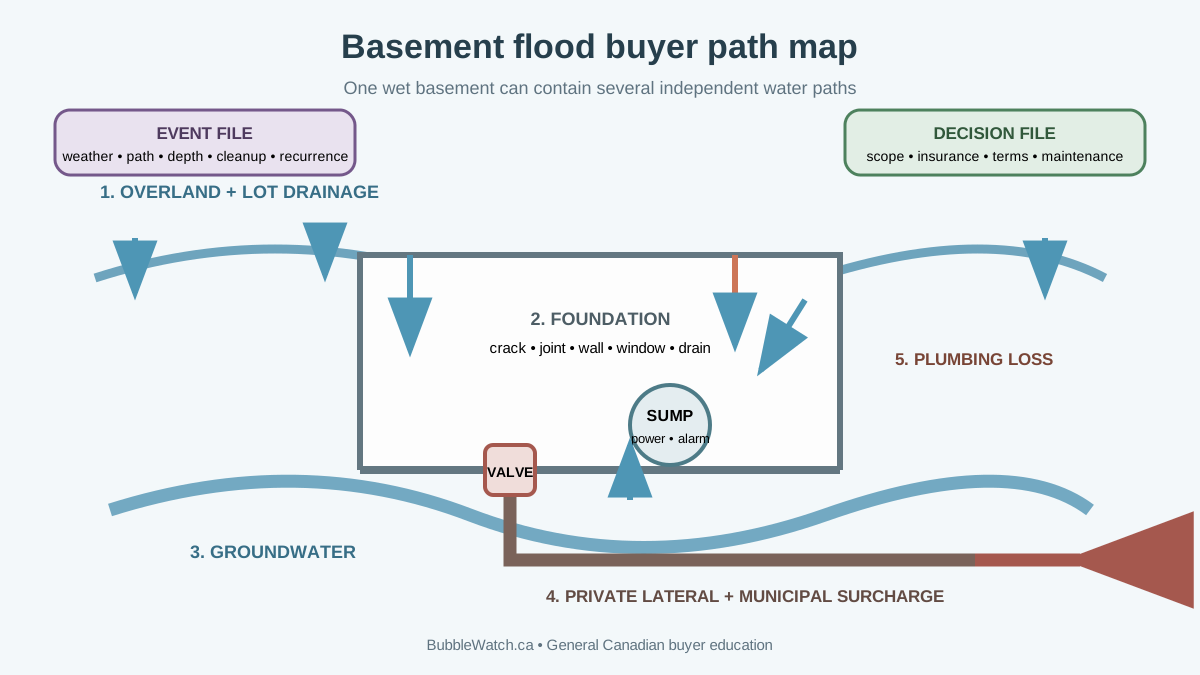
Short answer: name the water before pricing the protection
Classify each reported or observed event:
- Overland entry: surface water crosses a door, window, window well, garage, or opening.
- Foundation seepage: water crosses a crack, joint, wall, slab edge, or penetration.
- Groundwater and foundation drainage: water exceeds the capacity or reliability of drains, sump, discharge, or waterproofing.
- Sewer backup: wastewater or stormwater reverses through drains or fixtures.
- Private pipe restriction: roots, collapse, offset, grease, debris, or poor grade limits outflow.
- Plumbing or equipment loss: supply pipe, water heater, appliance, drain, condensate, or sprinkler releases indoors.
- Roof and wall drainage: gutters, downspouts, grading, or exterior features concentrate water beside the house.
One event can occupy several categories. Keep each path in the file until evidence rules it out or defines its control.
Build an event chronology
Ask for every known leak, seepage, backup, flood, overflow, sump alarm, pump failure, frozen discharge, and emergency visit. Include events before the current seller if records or visible evidence exist.
Create a chronology:
| Date/weather | Entry point | Water type | Depth/area | Duration | Cleanup | Source conclusion | Repair | Recurrence |
|---|---|---|---|---|---|---|---|---|
Request:
- photographs and video during the event;
- rainfall, snowmelt, power-outage, and municipal notices;
- emergency, plumber, drain, foundation, roofer, landscaper, electrician, and restoration invoices;
- sewer camera recordings and written findings;
- drying logs, moisture readings, material-removal scope, and mould reports;
- insurer claim, adjuster, coverage, payment, and denial records where available;
- permits, subsidy applications, final inspections, and warranties;
- neighbour, tenant, condo, municipal, and prior-owner reports;
- monitoring since the repair, including severe-weather dates.
“Professionally fixed” needs a defined source, scope, contractor, date, test, and remaining limitation. A restoration invoice may prove cleanup and reconstruction without proving why water entered.
Read the site before the basement finish
The federal government's property-grading guidance explains that grading should direct water away from the building. Local requirements and lot constraints still govern the actual design.
Walk the property and record:
- high and low points relative to the foundation;
- depressions, settlement, hardscape, and soil against cladding;
- driveway, side-yard, patio, deck, stair, and walkway slopes;
- retaining walls and water arriving from higher land;
- swales, catch basins, ditches, culverts, and easements;
- downspout outlets, extensions, underground connections, and discharge points;
- roof valleys and large areas that concentrate runoff;
- window wells, drains, covers, clearance, and overflow path;
- basement doors, garage thresholds, vents, utility openings, and below-grade stairs;
- recent landscaping, new paving, pools, additions, and neighbouring changes.
Observe after rain if contract timing and access permit. A dry summer showing can conceal spring snowmelt, frozen soil, autumn leaf blockage, or extreme-storm behaviour.
Do not redirect water onto a neighbour, sidewalk, slope, or unsafe winter surface. A drainage professional should account for grading, soil, frost, discharge, local bylaws, easements, and downstream capacity.
Separate foundation movement from water entry
Inspect accessible walls and slabs for cracks, joints, patches, efflorescence, staining, peeling finishes, corrosion, rot, softness, odour, and recent paint. Record crack location, orientation, width, displacement, repair, and relationship to exterior drainage.
Use the foundation-crack buyer guide to separate structural assessment from water-path work. An injection can seal one crack without correcting settlement, exterior water pressure, a failed drain, or a different entry point.
Ask whether work was interior or exterior and whether it included excavation, membrane, drainage layer, footing drain, sump connection, insulation, crack repair, structural repair, grading, and restoration. Exterior access can be constrained by decks, driveways, porches, utilities, lot lines, and attached buildings.
Finished walls can hide the foundation. Request pre-renovation photographs, repair records, permits, and controlled access where justified and permitted. Infrared and moisture meters can guide investigation but do not see every concealed cavity or reconstruct past events.
Map the private drainage and sewer system
Draw the actual connections:
- foundation or weeping-tile drains;
- sump pit, primary pump, backup pump, discharge, and alarm;
- floor drains and traps;
- sanitary building drain and private lateral;
- storm lateral if present;
- downspout and catch-basin connections;
- backwater valve location and protected fixtures;
- cleanouts and inspection ports;
- septic system for unsewered properties;
- municipal sanitary, storm, or combined system.
Older renovations can leave cross-connections, abandoned pipes, capped branches, or more than one route. Never assume one visible valve protects every lower fixture.
The National Research Council's private-side drainage guidance covers foundation drainage, sumps, backwater protection, and sanitary building sewers as distinct but related systems. A licensed local plumber or drainage professional should map the property under current code and municipal rules.
Inspect the private sewer lateral
A camera inspection can identify roots, offsets, cracks, collapse, deposits, standing water, material transitions, intrusions, and inaccessible sections. It should include the full accessible run, location information, narration, footage, stills, and a written conclusion.
Use the sewer-lateral camera inspection guide to plan cleaning, access, locating, and quote escalation. A camera may show pipe condition but cannot prove municipal capacity during an extreme storm.
Ask:
- whether the camera reached the municipal connection or septic tank;
- what prevented full access;
- whether the line was cleaned first and why;
- where defects lie relative to buildings, trees, pavement, and lot lines;
- who owns each segment;
- whether spot repair, lining, bursting, excavation, or replacement is feasible;
- how basement fixtures connect to the protected side of any valve.
A newly cleared root blockage can recur. The useful quote includes the underlying pipe condition and maintenance or replacement plan.
Understand backwater valves
The federal government's current backwater-valve guidance explains that a valve allows wastewater to leave and closes when backflow is detected. It recommends professional selection because valve type and location depend on the home's plumbing.
For an existing valve, record:
- manufacturer, model, type, size, age, and installation invoice;
- permit and municipal inspection where required;
- exact pipe and fixtures protected;
- access cover visibility and clearance;
- alarm and power arrangement;
- inspection, cleaning, and service dates;
- flap or gate condition documented by a plumber;
- branches connected downstream of protection;
- prior backups before and after installation.
The federal page advises at least annual maintenance and notes that water use while a valve is closed can contribute to an internal flood. An alarm can warn occupants that the valve is closed.
A valve can reduce sewer-backup risk. It does not stop overland water, wall seepage, plumbing leaks, or all failures. Installation can require breaking the slab, changing branches, restoring finishes, and coordinating permits.
Use the plumbing and water-heater buyer map to trace supply leaks, lower fixtures, drains, heaters, shutoffs, and cross-connections that sit outside the sewer-backup diagnosis.
Inspect the sump system as emergency equipment
The federal flood-preparation guidance recommends considering a sump pump and backflow protection. A sump can remove water accumulating near the foundation, but performance depends on collection, capacity, discharge, power, controls, and maintenance.
Record:
- pit condition, cover, liner, and incoming drain connections;
- primary and backup pump make, model, age, capacity, and controls;
- check valve, piping, fittings, and support;
- discharge endpoint and risk of freezing or recirculation;
- dedicated electrical supply and safe receptacle arrangement;
- battery, water-powered, generator, or second-pump backup;
- high-water alarm and remote alert;
- test and service records;
- operating frequency in dry weather, rain, and spring;
- evidence of overflow, short cycling, sediment, corrosion, or odour.
Have a qualified professional test it under controlled conditions. Do not unplug, lift floats, add water, or open electrical equipment during a casual viewing.
If a pump runs frequently, determine whether it reflects normal groundwater, a drainage defect, a recirculating discharge, a plumbing leak, or another source. If it has never run, confirm the drains actually connect and the float operates.
Treat backup power as part of reliability
Heavy storms can coincide with utility outages. Ask how long the backup can operate under realistic pump cycling, how it is charged, how age is tracked, and what maintenance or replacement it needs.
A battery label is not a runtime guarantee. Capacity changes with age, temperature, load, pump condition, and cycle frequency. Water-powered backups require adequate supply and local approval; generators require safe connection, fuel, placement, and operating plans.
Consider two independent alarms: local audible warning and remote notification where reliable service exists. An alarm informs; it does not remove water.
For landlords or frequent travellers, define who responds, how quickly they can enter, where shutoffs and service contacts are, and what happens during an extended outage.
Distinguish clean water, groundwater, and sewage cleanup
The contamination category affects worker protection, material removal, cleaning, contents, HVAC, and verification. Sewer backup requires different sanitation controls from a small clean-water supply leak.
Health Canada's flood-cleanup and indoor-air guidance emphasizes safe cleanup and rapid drying. Obtain records showing:
- source and contamination classification;
- water extent and maximum depth;
- time before extraction and drying;
- affected drywall, insulation, flooring, cabinets, contents, and cavities;
- removal and cleaning methods;
- drying equipment and moisture logs;
- electrical, fuel, and appliance assessment;
- mould assessment and remediation where required;
- independent or project-defined verification;
- reconstruction materials and concealed-area photographs.
New flooring and baseboards prove reconstruction, not drying or source control. Use the mould inspection guide when odour, staining, repeated wetting, or concealed organic material remains.
Read municipal flood information carefully
Ask the municipality about flood maps, sewer type, known service work, backwater-valve rules, private-side responsibilities, subsidy history, and planned projects. A municipal study can describe area risk without predicting the exact home's performance.
Toronto's current Basement Flooding Protection Subsidy Program states that, as of May 1, 2026, eligible properties may receive up to $6,650 for covered work completed within its applicable dates. Covered categories include a home plumbing assessment, backwater valves and alarms, a sump system with alarm and battery backup, and certain connection severance work.
That figure is Toronto-specific and subject to eligibility, invoices, licensed work, property history, deadlines, program rules, and available terms. A buyer elsewhere should use the current local program. Even in Toronto, do not subtract the maximum from a quote before confirming the property and work qualify.
Ask whether the address has already received a lifetime-limited subsidy and whether the seller has an open application. Program approval does not replace technical diagnosis or insurance acceptance.
Obtain a home plumbing assessment where useful
Toronto's updated program recognizes a professional home plumbing assessment as a separate category. The principle is useful outside Toronto too: map internal drains, lower fixtures, valves, sumps, connections, and defects before buying devices.
A useful assessment should state:
- accessible plumbing observed and areas excluded;
- sewer and foundation-drain configuration;
- number and placement of valves required;
- fixtures that remain unprotected;
- sump collection, capacity, power, discharge, alarm, and backup;
- camera or locating work needed;
- permit and municipal requirements;
- ranked repair options and quote assumptions.
Ask the plumber to explain how the proposed system behaves when the valve closes, power fails, discharge freezes, or rainfall exceeds pump capacity.
Check electrical, gas, and mechanical damage
Flood depth can affect receptacles, wiring, panels, furnaces, boilers, water heaters, heat pumps, pumps, controls, fuel systems, elevators, and stored chemicals. Ask for qualified inspection and replacement records.
Do not energize wet equipment. Canadian emergency guidance says to use qualified professionals for electrical, gas, and structural safety after flooding.
Look for relocated outlets, new lower-wall wiring, rust, replaced appliance dates, cut drywall lines, abandoned ducts, and mismatched finishes. These are prompts for records, not proof of a flood.
Include temporary heat, hot water, dehumidification, storage, and accommodation in the cost plan if essential equipment can be lost during remediation.
Price every layer of remaining work
Build a scope stack:
| Layer | Examples |
|---|---|
| Diagnosis | Plumbing assessment, sewer camera, locating, engineer, moisture mapping |
| Exterior source | Grading, swale, drainage, window wells, downspouts, waterproofing |
| Plumbing protection | Backwater valve, branches, cleanouts, sump, backup, alarms |
| Pipe work | Cleaning, roots, spot repair, lining, excavation, replacement |
| Building repair | Foundation, framing, electrical, mechanical, insulation |
| Environmental | Containment, removal, cleaning, drying, verification |
| Restoration | Drywall, flooring, cabinets, paint, contents, landscaping |
| Continuity | Temporary services, move-out, storage, monitoring, maintenance |
Request quantities, access assumptions, permit responsibility, tax, landscaping, finish limits, hidden-condition rates, warranty, schedule, and severe-weather testing limitations.
An interior waterproofing quote may manage water after it enters while an exterior quote tries to block entry. Compare objectives and residual risk, not labels alone.
Obtain insurance answers before waiving conditions
The Financial Consumer Agency of Canada's home-insurance guide explains that coverage, exclusions, deductibles, and settlement terms vary. Flood-related words in conversation do not establish which policy peril applies.
Send the insurer accurate event, claim, repair, valve, sump, sewer, foundation, and occupancy facts. Ask in writing about:
- ability to bind coverage for closing;
- sewer-backup and overland-water options;
- groundwater, seepage, repeated-loss, mould, and existing-damage treatment;
- sublimits, deductibles, waiting periods, and exclusions;
- required inspections, repairs, photos, or invoices;
- finished-basement and contents assumptions;
- vacancy, rental, and business-use effects;
- lender loss-payee requirements.
Use the insurance-before-closing workflow. A seller's successful past claim does not prove the buyer will receive the same coverage or terms.
Write purchase terms around evidence and access
Local counsel should adapt terms to the province and property. Possible topics include:
- access for inspector, plumber, drain contractor, foundation professional, engineer, electrician, remediation specialist, and insurer;
- permission for camera, locating, controlled openings, pump tests, valve access, and finish removal;
- hazardous-material and contamination controls;
- delivery of event, claim, repair, subsidy, permit, warranty, and municipal records;
- severe-weather revisit or defined limitation response;
- buyer approval of technical, insurance, and quote evidence;
- exact seller work, contractor qualification, permits, photographs, test, and reinspection;
- price change, holdback, extension, termination, or occupancy arrangements.
Do not use “basement to be waterproofed” as the entire scope. Name the source, assembly, method, access, affected area, drainage endpoint, restoration, verification, and residual limitations.
The inspection-clause guide helps align specialist and laboratory time with the offer deadline.
Worked example: one storm, three water paths
A finished basement had water during an intense storm. The seller installed a sump pump and replaced flooring. The invoice does not identify the entry route.
The buyer's plumber maps an unprotected basement floor drain, finds a backwater valve on only one branch, and records a private lateral restriction. Exterior review finds a low side yard directing runoff into a window well. Moisture assessment finds dry finishes at inspection but no drying logs from the loss.
The buyer obtains separate scopes for lateral repair, valve and branch correction, window-well and grading work, backup power and alarms, selective finish opening, and moisture verification. The insurer reviews the actual event and completed-work plan.
The sump remains useful for foundation drainage. It was never evidence that the sewer and overland paths were controlled.
Seller preparation and disclosure
Sellers should assemble the chronology before listing. Preserve full reports, unsuccessful repairs, claim decisions, photographs, and recurrence notes as well as favourable invoices.
Provide safe access to valve covers, cleanouts, sump pits, lower walls, floor drains, utility rooms, and exterior drainage. Do not conceal access with new flooring, cabinets, stored contents, or fixed panels.
Use the property-disclosure evidence method to distinguish “no water observed since June 2023 repair” from “will never flood.” Update disclosure if a new storm, alarm, blockage, odour, or repair occurs before closing.
Final walkthrough and possession plan
Use the final walkthrough to check for new water, odour, stains, lifted finishes, fans, dehumidifiers, pump alarms, excavation, disconnected discharge, missing valve cover, or unfinished seller work. Compare with inspection photographs.
Confirm all reports, permits, warranties, maintenance instructions, spare alarm parts, and agreed invoices arrived. Test equipment only under the agreed qualified procedure.
After possession, establish annual and storm-season maintenance for valves, sumps, alarms, batteries, drains, gutters, grading, window wells, and discharge. Save emergency contacts, shutoff locations, insurer claim instructions, and safe cleanup guidance.
Buyer checklist
Event and source
- Every flood, backup, seepage, leak, and alarm placed on a timeline
- Water type, path, depth, duration, and cleanup recorded
- Exterior grading and openings mapped
- Foundation, sewer, drain, and plumbing causes separated
- Severe-weather and seasonal limitations stated
Protection and condition
- Private lateral camera and locating completed where justified
- Backwater valve coverage and maintenance verified
- Sump collection, discharge, power, backup, and alarm checked
- Electrical, mechanical, structural, and environmental damage assessed
- Municipal and subsidy facts confirmed directly
Transaction
- Complete repair and restoration scopes priced
- Insurer response obtained in writing
- Contract grants specialist access and enough time
- Seller work has measurable acceptance evidence
- Final walkthrough and first-year maintenance plan prepared
Frequently asked questions
Does a backwater valve prevent all basement flooding?
No. It can reduce reverse flow through protected plumbing. Overland entry, foundation seepage, groundwater, plumbing leaks, unprotected branches, maintenance failure, and internal water use while closed remain separate risks.
Does a sump pump prove the basement is waterproof?
No. A sump manages water reaching its collection system. Its effectiveness depends on connections, capacity, discharge, power, backup, alarms, and maintenance.
Can a sewer camera predict a municipal backup?
No. It can assess accessible private pipe condition. Municipal surcharge and extreme-storm capacity require different evidence.
Should buyers avoid every home with a past flood?
Past flooding calls for deeper evidence, not an automatic answer. Source certainty, repair quality, recurrence, contamination, protection, insurance, cost, and buyer risk tolerance determine the decision.
Will a municipal subsidy transfer to a buyer?
Rules vary. Confirm address history, applicant eligibility, covered work, deadlines, invoices, and ownership requirements directly with the current local program. Do not assume the advertised maximum is available.
Is a dry basement during inspection enough?
No. Moisture can be seasonal or event-driven, and finishes can conceal evidence. Review history, weather context, records, drainage, plumbing, accessible materials, and specialist findings.
What to read next
Use the foundation-crack decision map for movement, seepage, excavation, and structural scope. If the event involved drains or fixtures, use the sewer-lateral camera workflow before selecting a valve or accepting a cleaning invoice.
This article provides general Canadian home-purchase information, not flood, drainage, plumbing, structural, environmental, electrical, code, legal, insurance, lending, or contracting advice. Conditions and requirements vary by property, municipality, insurer, lender, and authority. Use current official guidance and qualified local professionals.
Advertisement

About David R. Chen, CFA
David R. Chen is a Chartered Financial Analyst and the Senior Housing Economist at BubbleWatch.ca. He brings 12+ years of experience in quantitative real estate analysis and mortgage underwriting. Formerly an analyst at a major Canadian bank, he specializes in modeling payment shock, regional affordability divergence, and private lending risk.
View David's professional bio & credentials →