Tree and Arborist Inspections When Buying a Home
A Canadian buyer's tree-risk and property-impact method for mapping ownership, condition, targets, roots, utilities, structures, regulated work, quotes, storm response, insurance, and long-term care.
Tree and Arborist Inspections When Buying a Home in Canada
Mature trees can add shade, privacy, habitat, wind protection, and neighbourhood character. They can also affect roofs, foundations, drains, utilities, driveways, retaining walls, septic fields, solar access, insurance, and future construction.
A real-estate walk-through cannot establish tree risk from size, lean, dead branches, or species alone. Buyers need a qualified arborist to inspect tree condition, site, targets, root environment, recent changes, ownership, and work options.
The decision file should distinguish routine care, further assessment, urgent restriction, regulated pruning or removal, neighbouring-tree coordination, and damage to built systems.
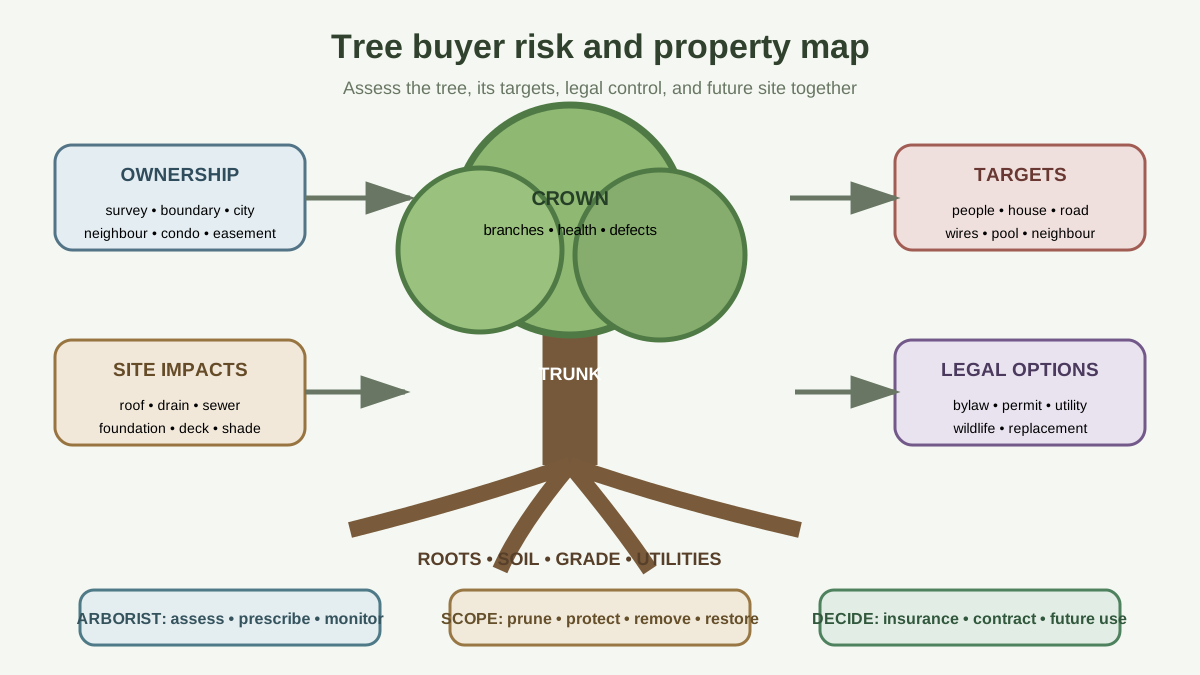
Short answer: map tree, target, ownership, and options
For every significant tree:
- assign a tree ID and approximate location;
- determine whether it is private, boundary, neighbour, municipal, shared, or subject to special land rules;
- identify species where practical and record size and condition;
- map targets such as house, people, road, wires, pool, deck, and neighbour property;
- inspect roots, soil, grade, drainage, construction, and restricted growing space;
- obtain qualified risk and health assessment;
- check bylaws, permits, heritage, ravine, conservation, and utility rules;
- price pruning, support, treatment, monitoring, removal, stump, crane, and restoration;
- assess related roof, drain, foundation, sewer, and hardscape damage;
- confirm insurance, contract, and future renovation consequences.
Do not strike trunks, cut roots, climb, pull branches, dig near the base, or remove samples during a showing.
Build a tree inventory
Create a field schedule:
| Tree ID | Location/ownership clue | Species or unknown | Approximate size | Visible condition | Targets | Access limit |
|---|---|---|---|---|---|---|
| T-01 |
Include large trees, multi-stem trees, dead trees, trees close to buildings, boundary rows, municipal boulevard trees, ravine or shoreline vegetation, windbreaks, orchard trees, stumps, and newly planted replacements.
Photograph the whole tree, trunk base, main unions, canopy, surrounding soil, structures, and overhead space from safe public or authorized locations. Leaf-off and leaf-on conditions reveal different evidence.
Do not identify legal ownership by which yard contains the trunk visually. Survey and local law matter.
Know what a home inspector can observe
ISED's home-inspection guidance includes accessible site conditions. A general inspector may note branches over the roof, roots near hardscape, dead trees, decay clues, or need for arborist review.
General inspection does not normally include climbing, aerial inspection, decay testing, root excavation, species diagnosis, tree-risk rating, pruning prescription, municipal permit opinion, or forest-health management.
Ask the inspector to record site limitations, visible tree impacts, and referrals. Then retain an arborist whose qualifications, insurance, methods, and local regulatory experience fit the property.
Tree risk is not a binary “safe/unsafe” promise. It connects likelihood of failure, likelihood of impact, consequences, time frame, weather, site change, and mitigation under the professional's method.
Choose an arborist for the actual question
Ask candidates:
- What education, certification, licence, and tree-risk qualifications do you hold?
- Are they current and independently verifiable?
- Do you carry professional and general liability insurance appropriate to assessment and tree work?
- Do you sell the pruning or removal you recommend, and how is that conflict managed?
- Which trees and site areas will be inspected?
- Is the assessment ground-based, aerial, advanced, or limited?
- What tools or tests may be used?
- How are risk, health, defects, targets, and time frame reported?
- Which conditions require repeat, aerial, root, decay, soil, lab, or engineering review?
- Can you prepare permit-supporting reports under the municipality's requirements?
- Will the report include photographs, tree IDs, map, recommendations, urgency, and monitoring?
An arborist quoting removal can identify obvious work. A buyer making a high-value transaction may need a separate written assessment before asking contractors to compete on the same scope.
Determine ownership and legal control
Use the property-survey buyer audit to compare trunks, fences, boundaries, easements, structures, and title. A canopy or root crossing a line does not by itself decide tree ownership or work rights.
Identify:
- tree base relative to the surveyed boundary;
- boundary or jointly owned tree issues under local law;
- neighbour-owned branches and roots;
- municipal boulevard or right-of-way trees;
- utility easements and line-clearance responsibility;
- condo, strata, co-op, or homeowners-association ownership;
- ravine, shoreline, conservation, heritage, or environmental protection;
- registered agreements, landscape plans, and development approvals.
Do not promise to remove a neighbour or city tree after closing. Ask the lawyer and authority what the buyer may lawfully do.
The encroachment guide helps separate physical crossing, ownership, title, agreement, and remedy.
Check current tree bylaws before valuing removal
Tree regulation changes by municipality, size, species, condition, location, development, and protected area. Toronto's current storm-damage guidance says private trees at or above its described diameter and trees of all sizes in ravine areas may require a permit when they are not imminent hazards.
Toronto's current arborist-report terms illustrate the information an authority may request: author, date, site, scope, tree inventory, condition, proposed impacts, protection, treatment, and inspection schedule.
Do not export Toronto's threshold to another city. Contact the local urban-forestry, planning, conservation, or parks authority for the exact address.
Ask about application fees, arborist report, replacement planting, security deposits, public notice, appeal, neighbour consent, work windows, nesting wildlife, utility clearance, and permit processing time. A removal quote that excludes these obligations is incomplete.
Inspect the whole tree from roots to crown
Root zone and soil
Review grade changes, fill, excavation, compaction, paving, trenching, retaining walls, drainage, erosion, exposed roots, cut roots, girdling roots, restricted pits, soil volume, irrigation, salt, and vehicle traffic.
Roots can extend well beyond the visible canopy or expected circle. Ask the arborist to define the assessment and protection area for that tree and site.
Trunk and base
Look for wounds, cavities, cracks, seams, decay, fruiting bodies, bark loss, included unions, codominant stems, swelling, girdling, hardware, old attachments, fire damage, impact, and soil piled against the trunk.
Do not fill cavities, seal wounds, or install cable without prescription.
Branches and crown
Record dead, broken, hanging, cracked, rubbing, weakly attached, overextended, or previously topped branches; canopy dieback; imbalance; sprouts; sparse leaves; and storm loss.
A healthy-looking summer canopy does not reveal every internal defect. A sparse crown can reflect drought, roots, disease, insects, construction, competition, or normal species patterns.
Lean and movement
Lean can be long-standing growth form, recent root movement, phototropic growth, slope response, or structural concern. Soil cracking, root-plate lifting, recent tilt, and changed targets add context. A photograph history can help.
Map targets and consequences
Targets include:
- bedrooms, living spaces, decks, patios, pools, play areas, and entrances;
- public sidewalks, roads, driveways, parking, and neighbour yards;
- roof, chimney, solar panels, gutters, skylights, siding, and windows;
- overhead wires, service drops, poles, and communication lines;
- sheds, fences, retaining walls, greenhouses, and vehicles;
- septic tanks, fields, wells, private lines, and buried utilities.
Risk changes when use changes. A planned nursery, play structure, rental entrance, parking pad, or pool can create a new target.
Ask the arborist to state the assessment time frame and which weather or site event should trigger earlier review.
Connect trees to roofs and drainage
Branches can rub roofing, damage surfaces, block gutters, shade damp areas, drop debris, affect chimney clearance, and create animal access. Pruning must preserve tree health and comply with utility and bylaw rules.
Use the roof-inspection evidence map to assess actual covering, flashing, drainage, and attic impacts. Removing the branch does not repair the roof.
Roots and soil can affect grading, foundation drains, sewer lines, paving, retaining walls, and water paths. A root in a failed sewer pipe does not prove the tree alone caused the pipe defect. Use the sewer-lateral camera guide for pipe material, joints, offsets, roots, location, and repair.
Ask a structural or geotechnical professional about foundation, retaining-wall, slope, or soil movement. Tree removal can also change soil moisture, wind exposure, and slope conditions.
Review construction and renovation plans early
Additions, laneway houses, driveways, pools, decks, garages, underpinning, service upgrades, trenching, drainage, and landscaping can injure roots or canopy even when the trunk remains.
Give the arborist the survey and preliminary plan before valuing the project. Ask for:
- tree inventory and ownership;
- root-protection or tree-protection zones;
- excavation and access limits;
- hoarding and monitoring;
- pruning and clearance;
- low-impact foundation or service options;
- soil and grade protection;
- replacement planting;
- pre-, during-, and post-construction inspections;
- permit and deposit requirements.
A concept sketch that fits inside zoning setbacks can still conflict with protected-tree rules. Tree approval and building approval are distinct processes that may interact.
Distinguish maintenance, mitigation, and removal
Possible professional recommendations include:
- no current work plus scheduled review;
- deadwood or targeted pruning;
- structural pruning of young trees;
- clearance pruning;
- cabling, bracing, or support with inspection schedule;
- soil, mulch, irrigation, aeration, or root-zone work;
- pest or disease diagnosis and treatment;
- lightning protection;
- target relocation or access restriction;
- further aerial, decay, root, or laboratory assessment;
- phased reduction or removal;
- stump and root management;
- replacement planting.
Tree topping is not routine risk management. Ask the arborist to explain how the proposed cut type and dose affect structure, health, regrowth, decay, and future care.
Removal can create new sun, wind, drainage, privacy, erosion, habitat, and neighbour effects. Price the site after removal, not only the cut.
Price tree work as a site project
Give bidders the same written arborist prescription. Ask for:
- tree IDs and exact work;
- climbing, aerial lift, crane, traffic, sidewalk, or road control;
- utility coordination and shutdown;
- rigging over buildings, pools, wires, or neighbours;
- permits, arborist supervision, replacement, and deposits;
- branch, wood, stump, root, and debris handling;
- protection of roof, landscape, fence, paving, drains, and soil;
- lawn or hardscape access and restoration;
- wildlife and work-window requirements;
- insurance, tax, schedule, weather, and cancellation;
- hidden cavity, bee, wire, decay, or access contingencies.
Confirm who owns removed wood and whether grinding depth fits future use. A shallow grind does not remove the root system or prepare engineered building support.
If access crosses neighbour or common land, obtain the required written rights before assuming the quote is executable.
Protect retained trees during ordinary contractor work
Roofing, painting, driveway repair, sewer work, fences, drainage, landscaping, pool service, and deliveries can compact soil, break branches, cut roots, spill material, or park equipment inside sensitive areas even when no major addition is planned.
Before work begins, ask the arborist to identify protection boundaries and prohibited activities. The site plan can address:
- fencing or hoarding location and durability;
- equipment, material, soil, waste, and vehicle storage;
- excavation, trenching, boring, and root-sensitive methods;
- pruning clearance performed before machinery arrives;
- grade, drainage, washout, fuel, salt, and chemical control;
- temporary access and ground protection;
- inspection at excavation and construction milestones;
- response to damaged roots, bark, limbs, or protection barriers;
- post-work soil and tree assessment.
A sign tied to the trunk is not a protection plan. Contractors need the tree requirements in their price, schedule, and site instructions.
Evaluate benefits without turning them into guarantees
Shade can reduce summer solar gain, while winter sun, wind, privacy, habitat, and rain interception can also matter. Benefits depend on species, crown, health, orientation, building, climate, and care.
Do not accept a precise property-value or energy-saving claim without a transparent local method. A tree can be valuable to this buyer even when no reliable dollar figure exists.
Record which benefits would disappear after pruning, decline, storm loss, or removal:
- bedroom and patio shade;
- privacy from neighbouring windows;
- street and traffic screening;
- wind buffering;
- garden microclimate;
- erosion control or slope vegetation;
- wildlife and seasonal character;
- screening of equipment or parking.
Price replacement realistically. A nursery tree cannot instantly reproduce the canopy, root system, or ecosystem function of a mature tree, and a large transplant still carries establishment risk and care.
Check wildfire and defensible-space advice locally
In wildfire-prone regions, vegetation condition, spacing, dead material, roof and gutter debris, decks, fences, firewood, slope, access, water, and neighbouring fuels can affect property planning. Use current provincial, municipal, fire-authority, and insurer guidance for the address.
Do not remove healthy protected trees from a generic online radius. Wildfire mitigation must also respect bylaws, habitat, erosion, slope stability, utility safety, ownership, and qualified arboriculture.
Ask the arborist and wildfire professional to coordinate pruning, surface fuels, ladder fuels, deadwood, tree health, replacement species, and maintenance. The roof professional should separately assess combustible debris and covering condition.
Document what the insurer requires, which work is recommended, and which permit or seasonal limits delay completion. A risk-area map alone does not define the property scope.
Plan for declining trees before emergency removal
If a tree is declining but does not require immediate removal, create trigger points: crown change, new crack, fungal fruiting body, root movement, storm damage, construction, pest detection, or a missed monitoring date.
Obtain a preliminary removal-access plan before the tree becomes harder to dismantle. Crane reach, lane permits, neighbour access, wires, pools, additions, and weak wood can increase cost and complexity.
Set aside funds for repeat assessment, pruning, removal, stump, restoration, and replacement. Do not call the entire amount annual gardening.
Inspect storm history and emergency planning
Request photographs and reports for broken limbs, uprooting, lightning, ice, wind, fire, flood, drought, and emergency work. Ask which remaining trees were inspected afterward.
Fresh cuts can be appropriate storm work or evidence that only failed pieces were removed. Review the retained structure and pruning quality.
Create a storm plan:
- keep people away from hanging limbs, fallen wires, split trunks, and moving root plates;
- contact emergency services or utility for electrical danger;
- photograph from a safe location;
- notify insurer promptly;
- use a qualified arborist for tree hazards;
- protect damaged buildings from weather only under safe professional direction;
- retain invoices, permits, and before/after records.
Do not approach a tree contacting electrical conductors.
Pest, disease, and invasive species evidence
Symptoms can include exit holes, galleries, frass, wilt, discoloured leaves, dead branches, cankers, conks, nests, and unusual growth. Species and region matter.
Ask the arborist to identify the diagnostic basis and whether laboratory, municipal, provincial, federal, or forest-health reporting applies. Do not move firewood or infested material without checking current rules.
Pesticide treatment must use products registered for the use and follow current labels and provincial restrictions. The pest inspection buyer guide explains the Health Canada registry, treatment records, and source-control sequence.
Tree health treatment should have a defined objective, application method, timing, monitoring, non-target precautions, and stop rule. Avoid indefinite annual treatment without outcome evidence.
Insurance, liability, neighbours, and rentals
Give the insurer material arborist findings, prior damage, claims, required work, vacancy, rental use, and target exposure. Ask about tree removal conditions, damage to house or neighbour property, debris cleanup, additional living expense, and existing damage.
Do not infer liability from where a branch landed. Ownership, notice, condition, weather, negligence, local law, and policy wording can matter. Use a lawyer for disputes or agreements.
For neighbour trees, share qualified findings through an appropriate channel. Do not enter the neighbour's land, damage the tree, or cut beyond lawful rights.
For rentals and condos, clarify responsibility for inspection, pruning, emergency response, tenant reports, common property, exclusive-use areas, insurance, and access. Record repeated complaints and completed work.
Contract terms and closing handoff
Use local legal advice for arborist access, seller records, urgent restriction, permit applications, pruning or removal, neighbour or municipal consent, insurance, price, holdback, extension, termination, and risk between contract and closing.
Avoid “seller to remove dangerous tree.” Name tree ID, assessment, work prescription, arborist and contractor qualifications, permit, utility coordination, stump, debris, restoration, replacement planting, reinspection, and documents.
If permits or work cannot finish before closing, price the risk and consider a properly drafted holdback or alternative. A quote does not guarantee approval.
At final walkthrough, check storm damage, broken branches, new pruning, soil disturbance, removed supports, stump condition, utility damage, and unfinished work. Transfer reports, permits, warranties, care plan, and scheduled monitoring.
Worked example: the desired addition conflicts with a protected tree
A buyer plans a rear addition and assumes a large backyard tree can be removed. The listing survey shows the trunk near the boundary but does not determine ownership.
A new survey and arborist assessment show the tree is on the buyer's parcel, in fair condition, and protected under the local bylaw. The concept foundation and equipment access enter the required protection area. Removal is not assumed to be approved.
The designer tests a smaller addition and alternative foundation with arborist protection and construction monitoring. The buyer compares that design with buying a different property. The tree's current condition was only half the decision; lawful future use changed the value.
Buyer checklist
- Significant trees numbered and mapped
- Ownership, boundary, municipal, condo, ravine, and easement status checked
- Qualified arborist scope, credentials, insurance, and independence reviewed
- Roots, trunk, crown, targets, soil, drainage, and recent changes assessed
- Bylaw, permit, replacement, wildlife, and utility rules confirmed
- Roof, sewer, foundation, paving, deck, and retaining-wall impacts separated
- Future construction tested against tree-protection requirements
- Maintenance, mitigation, removal, and monitoring options priced
- Storm plan, insurer response, and neighbour coordination prepared
- Contract and closing documents identify exact tree work
Frequently asked questions
Should buyers obtain an arborist inspection?
It is valuable where significant trees can affect safety, buildings, utilities, insurance, neighbours, or planned construction. General home inspection has a different scope.
Does a leaning tree need removal?
Not solely because it leans. Growth form, recent movement, root plate, defects, species, site, targets, and time frame require professional assessment.
Can a buyer remove a tree after closing?
Only under ownership rights and current bylaws, permits, protected-area, utility, wildlife, condo, and neighbour rules. Verify before valuing removal.
Do roots always damage foundations and sewer pipes?
No. Soil, moisture, construction, pipe condition, joints, species, distance, and site history matter. Use system-specific professionals.
Does home insurance cover tree damage?
Coverage depends on policy wording, cause, damage, cleanup, prior knowledge, and exclusions. Obtain a written response using accurate facts.
Is tree removal the end of the cost?
No. Permits, crane or access, utility coordination, stump, roots, restoration, replacement planting, deposit, drainage, and lost shade or privacy can remain.
What to read next
Use the property-survey audit to resolve tree, boundary, easement, and improvement locations before planning work. If roots appear inside a sewer line, use the sewer-camera evidence workflow to assess the pipe rather than assigning cause from the tree alone.
This article provides general Canadian home-purchase information, not arboriculture, tree risk, forestry, structural, geotechnical, utility, environmental, code, legal, insurance, or contracting advice. Requirements vary by tree, site, municipality, province, ownership, and authority. Use current official guidance and qualified local professionals.
Advertisement

About David R. Chen, CFA
David R. Chen is a Chartered Financial Analyst and the Senior Housing Economist at BubbleWatch.ca. He brings 12+ years of experience in quantitative real estate analysis and mortgage underwriting. Formerly an analyst at a major Canadian bank, he specializes in modeling payment shock, regional affordability divergence, and private lending risk.
View David's professional bio & credentials →