Title Insurance in Canada 2026 Tool (Guide & Data)
A policy-first Canadian title insurance guide separating owner and lender protection, covered title defects, known problems, physical-condition risks, fraud, and claims.
Title Insurance in Canada: Read the Policy Before You Trust the Label
Title insurance protects an owner or mortgage lender against specified losses connected to legal ownership, title defects, liens, registration errors, encroachments, fraud, and other risks listed in the policy. It does not insure the home's physical condition, future market price, every permit problem, or every dispute involving the property.
The policy wording decides the claim. “Title insured” is not a promise that the land, building, survey, permits, boundaries, taxes, condo corporation, or seller representations are problem-free. Buyers should pair the policy with legal searches, contract conditions, document review, inspection, and direct answers about known defects.
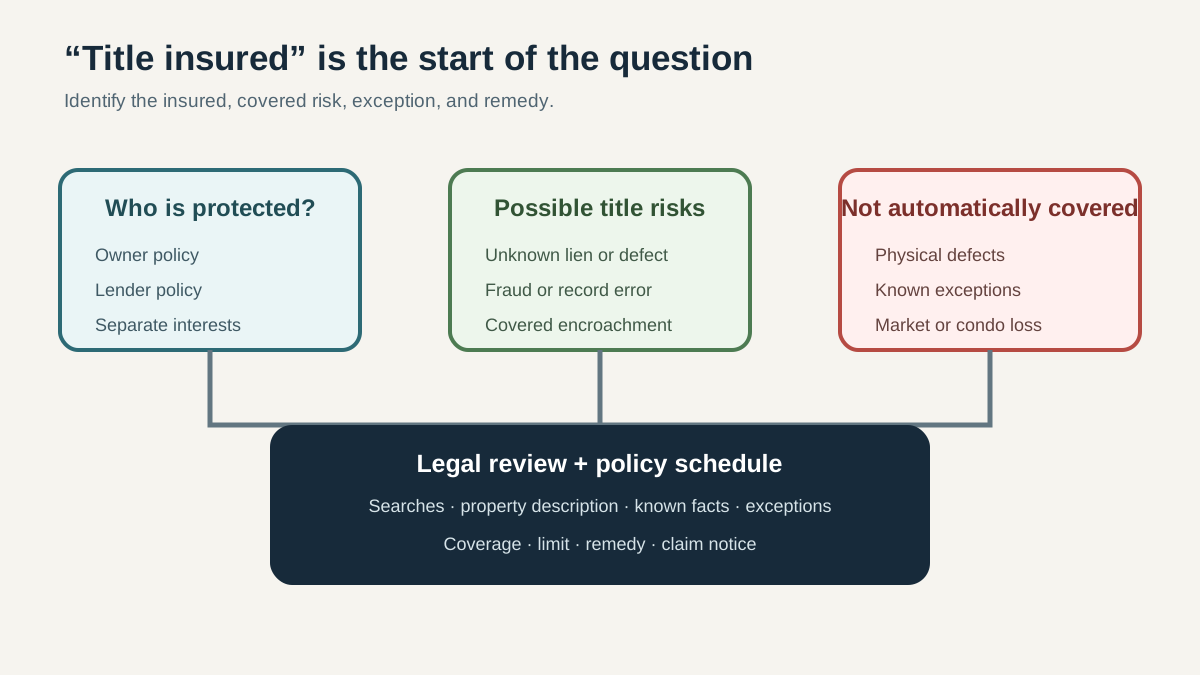
Short answer: identify the insured, risk, and remedy
Before accepting a policy, answer five questions:
- Who is insured: the homeowner, the lender, or both under separate policies?
- Which property and legal interest does the schedule describe?
- Which risks are covered as of the policy date, and which future fraud coverage applies?
- Which exceptions, exclusions, limits, and known matters remove protection?
- If a covered problem occurs, may the insurer pay money, defend title, cure the defect, or choose another remedy?
The Financial Consumer Agency of Canada explains that lender and homeowner title insurance are different. Lender coverage protects the lender's mortgage interest. Homeowner coverage protects the owner against listed title-related losses, generally while the owner holds the property.
If your closing estimate contains one line called “title insurance,” ask which policy it buys. A lender-required policy does not necessarily make the buyer an insured owner.
What “title” means
Title is the legal ownership interest recorded for the land. The transfer identifies the new registered owner. A mortgage, easement, right of way, restrictive covenant, lien, execution, lease, or other instrument may affect that ownership.
A title problem may mean:
- someone else owns or claims an interest in part of the land;
- a prior mortgage or lien should have been discharged but was not;
- the transfer or earlier instrument was forged or improperly registered;
- a building or fence crosses a boundary or easement;
- a public record contains an error;
- a prior owner's debt creates an enforceable title claim;
- the property cannot be sold or mortgaged as expected because of a covered defect.
Physical possession is not the same as legal title. A driveway used for decades may cross neighbouring land. A parking space marketed with a condo may be exclusive-use common element rather than separately owned title. A rear addition may stand over an easement. Legal review connects what the buyer thinks is included with the registered description and contract.
For physical evidence, reconcile the current title with a property survey and site walk. Read every easement or right-of-way instrument in full, and use measured encroachment analysis before asking what an owner policy might cover.
Owner policy versus lender policy
The two policies protect different economic interests.
| Policy | Insured interest | Typical duration | Loss focus |
|---|---|---|---|
| Owner policy | Buyer's ownership, subject to wording | Usually while the insured owns the property, with stated continuation rules | Loss in ownership value, defence, or cure for a covered risk |
| Lender policy | Validity, priority, and enforceability of the insured mortgage | Usually until the insured mortgage is repaid or policy rules end coverage | Lender's secured loan interest |
Suppose a forged prior transfer creates an ownership challenge. The owner may need a defence and may lose property value. The lender may face an invalid or lower-priority mortgage. Their losses overlap but are not identical.
FCAC says a lender may require title insurance as part of a mortgage contract. Ontario's Financial Services Regulatory Authority states on its consumer title-insurance page that title insurance itself is not a legal requirement in Ontario and does not replace legal advice. A mortgage contract can still make a lender policy a condition of funding.
Ask the lawyer to show:
- the owner policy and lender policy numbers;
- the named insureds;
- the legal description and municipal address;
- the policy amount;
- the effective date;
- endorsements or expanded coverage;
- every schedule exception.
Do not assume a spouse, trust, corporation, family member, future transferee, or estate is covered merely because they live at or benefit from the home. Ownership structure and continuation terms matter.
Risks a residential policy may cover
FSRA lists examples that a policy may cover, including unknown title defects, existing liens, unpaid amounts secured against title, encroachments, public-record or survey errors, title fraud, and other title issues that impair a future sale, mortgage, or lease. “May” matters: coverage depends on the purchased form and transaction facts.
Unknown liens and prior-owner debt
A prior mortgage, tax arrear, utility claim, condo arrear, construction lien, or judgment may affect title. The lawyer searches and obtains payouts or undertakings where required. Title insurance can address certain unknown or improperly cleared matters within its wording.
Insurance is not permission to ignore a known lien. If the search reveals it before closing, the contract, lawyer, lender, seller, and insurer need a documented solution. A disclosed problem may appear as a policy exception.
Fraud and forgery
Title fraud can involve a fraudster impersonating an owner, forging a transfer, or registering a mortgage without authorization. Owner coverage may address specified future fraud and forgery loss. A lender policy may address mortgage validity or priority.
The policy does not make identity verification optional. Lawyers, lenders, brokers, and insurers have anti-fraud procedures because preventing a false transfer is better than litigating and claiming afterward. Buyers should protect identification, mortgage documents, tax records, and closing instructions.
Encroachments and boundary issues
A garage, deck, fence, retaining wall, shed, driveway, or addition may cross a boundary or registered right. A policy may cover certain unknown encroachments or forced-removal loss. It may exclude a matter shown on an existing survey, disclosed by the buyer, created after closing, or outside the residential policy's terms.
If a structure or access route is important, request the survey or real property report where customary, compare it with title and physical observations, and ask the lawyer whether a current survey, agreement, permit, or endorsement is needed.
Registration and public-record errors
Names, legal descriptions, discharges, instruments, or indexing can be wrong. A policy may cover loss caused by specified errors. The first defence remains careful closing work: correct names, identification, property description, transfer, mortgage, and payout documents.
Certain permit, zoning, or work-order risks
Some residential forms may cover specified losses involving unknown bylaw violations, permits, or forced correction for work completed before the policy date. Scope varies sharply. A policy can exclude known work, current renovations, environmental matters, government expropriation, or a defect the insured created.
Never tell an insurer or lawyer that a basement, deck, addition, unit conversion, or electrical alteration is unknown if you have seen it. Disclosure protects the integrity of the transaction and allows the buyer to seek records or a contract remedy.
Use the seller-disclosure verification map to identify facts, the unpermitted-renovation resolution path to price approval or removal, and the latent/patent defect evidence guide for physical and post-closing issues. Insurance scope is assessed only after the known facts are disclosed.
What title insurance does not replace
Use this separation table:
| Risk | Primary check | Why title insurance is insufficient by itself |
|---|---|---|
| Roof, foundation, water, wiring, HVAC | Home inspection and specialists | Physical deterioration is not a title defect |
| Future resale value | Comparable sales and affordability analysis | Market loss is not insured title loss |
| Known unpermitted renovation | Records, lawyer, municipality, contract | Known matters may be excluded or require a special solution |
| Environmental contamination | Environmental inquiry and specialist | Policies commonly exclude broad environmental risk |
| Condo reserve shortfall | Status/disclosure documents and legal review | Corporation finances are not solved by owner title coverage |
| Neighbour conflict without title issue | Survey, agreement, legal advice | Personal disputes may fall outside insured risks |
| Home insurance peril | Property insurer | Fire, flood, wind, theft, and liability use another policy |
| Mortgage payment hardship | Household budget and lender | Title insurance does not make loan payments |
FCAC's home-insurance guide describes property coverage for damage, belongings, additional living expense, and liability. Title insurance and home insurance are separate. A lender may require both for different reasons.
The home inspection also serves a different purpose. It can identify visible physical conditions and recommend specialist investigation. A clean inspection does not prove legal title. A title policy does not prove a dry basement.
Known defects are the danger zone
Insurance is generally designed around covered risks that are unknown or arise within stated future coverage. A buyer who knows about a defect before the policy date must disclose it to the lawyer and insurer.
Common warning facts include:
- the listing says an addition or basement is “as is” or retrofit status is unknown;
- a fence, garage, dock, or driveway appears off-centre;
- a neighbour claims access or ownership;
- a survey conflicts with current structures;
- the seller cannot produce permits;
- a title search shows an unexpected charge;
- a condo parking or locker description differs from the listing;
- taxes, utilities, or condo fees are in arrears;
- the seller is acting through an unfamiliar power of attorney;
- names or signatures vary across documents.
Send the fact in writing and ask four questions: Is it covered, excepted, curable before closing, or a reason to amend or end the deal under a condition? Keep the answer and final policy.
Do not rely on a sales representative's statement that “title insurance covers it.” Only the insurer and policy can confirm insurance scope; only the buyer's lawyer can give legal advice about the transaction.
The title-insurance closing workflow
1. Confirm what the buyer is purchasing
Match the agreement, listing, title search, survey or plan, tax record, condo documents, and physical property. Identify parking, lockers, easements, shared driveways, laneways, waterfront rights, leased equipment, and access.
2. Search title and off-title matters
The lawyer determines which title, execution, tax, utility, zoning, work-order, condo, corporate, or other searches are appropriate. Search practice varies by province, property, lender, and title-insurance arrangement.
3. Resolve disclosed problems
The seller may discharge a mortgage, pay arrears, obtain a permit, correct title, provide an undertaking, amend the contract, reduce the price, or agree to a holdback. The solution depends on risk and law. An insurance policy may be one part of it, not the default response.
4. Review the preliminary policy treatment
Ask whether a known matter will be covered, excluded, or endorsed. If the insurer will insure over a defect, ask what loss and remedy the endorsement actually covers. “Insurable” does not necessarily mean the physical or legal issue disappears.
5. Check the issued policy after closing
Verify insured names, address, legal description, policy amount, mortgage, date, endorsements, and exceptions. Store the complete policy with the transfer, survey, closing statement, tax documents, and improvement records.
The Canadian cash-to-close guide includes title insurance as an itemized legal-account line. Ask for the premium and tax separately rather than assuming it is included in a flat legal quote.
A worked policy-reading example
A buyer purchases a 1970s detached home. The listing advertises a finished basement and a detached garage. An old survey shows the garage close to the rear boundary, but it does not show a later deck. The seller says no permit records are available.
The buyer should not ask only, “Do I have title insurance?” A better matrix is:
| Fact | Question | Evidence | Possible outcome |
|---|---|---|---|
| Garage near boundary | Does it encroach or violate a setback? | Survey, measurement, title, municipal records | Clear, agreement, endorsement, exception, or contract remedy |
| Deck absent from survey | Was it permitted and where is it located? | Inspection, permit file, current survey if needed | Accept, cure, price/holdback, or withdraw under condition |
| Finished basement | Is use lawful and work safe? | Permit, electrical, inspection, legal review | Physical repairs and legal status handled separately |
| No seller records | Which facts remain unknown? | Written seller answers and independent searches | Expanded due diligence; no assumed coverage |
If the policy contains an exception for matters known to the insured or specifically excludes the garage issue, the buyer cannot treat the one-time premium as a solution. If the insurer offers an endorsement, read the remedy and limit. It may compensate specified loss without legalizing the structure or making it safe.
Condominiums need unit-and-corporation separation
A condo title policy may address the unit, registered mortgage, parking or locker interests, certain liens, and specified title matters. It does not replace review of the corporation's finances and governance.
For an Ontario resale condo, the status-certificate review should tie together:
- legal unit, parking, and locker descriptions;
- common expense arrears for the unit;
- special assessments;
- reserve-fund plan and capital projects;
- corporation insurance and deductibles;
- litigation and compliance;
- rules affecting occupancy, pets, leasing, or renovations.
A policy may cover an undisclosed title lien under its terms. It will not make a poorly funded reserve healthy or stop a future special assessment based on legitimate corporation work.
Rural, waterfront, and private-service properties
These transactions may involve access roads, shore road allowances, wells, septic systems, shared services, conservation restrictions, agricultural rights, mineral interests, drainage, easements, and irregular boundaries. Some are title questions; others are physical, environmental, operational, or regulatory. The rural property due-diligence map assigns each issue to title, survey, authority, inspector, lender, insurer, or operating evidence instead of treating the policy as a substitute.
Build a risk-to-evidence table:
| Feature | Title evidence | Non-title evidence |
|---|---|---|
| Private road | Registered easement and maintenance agreement | Condition, snow clearing, actual cost |
| Well | Rights and location | Water quantity and quality tests |
| Septic | Location and easements | Inspection, capacity, permit records |
| Waterfront | Legal boundary and access | Erosion, flood, conservation rules |
| Shared driveway | Easement and agreement | Width, maintenance, neighbour practice |
Ask whether the standard policy covers the particular title risk and whether an endorsement or extra search is required. A city freehold closing checklist is not enough for every rural parcel.
Title fraud prevention before and after closing
Insurance is the backstop. Prevention reduces the chance of a loss and a long claim.
Before closing:
- send identity and banking documents only through authenticated channels;
- verify the lawyer and firm independently;
- confirm wire or bank-draft instructions using a known phone number;
- question urgent changes in payee, account, or meeting location;
- review the transfer and mortgage names carefully;
- tell the lawyer about powers of attorney, remote signings, or identity inconsistencies;
- avoid posting closing documents or key dates publicly.
After closing:
- keep the policy, transfer, mortgage, survey, and lawyer report;
- protect property-tax and mortgage account access;
- review unexpected title, tax, or lender correspondence promptly;
- investigate any credit inquiry, mortgage statement, or property notice you do not recognize;
- tell the insurer and lawyer quickly if a suspected title event occurs.
Title insurance is not identity-theft monitoring unless the policy expressly includes that feature. FSRA notes that extended coverage for risks such as identity theft may be available for an extra fee from some insurers. The wording controls.
Buying a policy after the original closing
FSRA says residential title insurance can be purchased after the home was bought, and FCAC says an owner may be able to buy it later. An existing-homeowner policy may differ from a purchase policy. The insurer can require an application, current searches, declarations, identity verification, or extra premium.
Later coverage does not automatically absorb a defect already known to the owner. Disclose notices, disputes, renovations, liens, encroachments, fraud suspicions, or other facts. Ask for the effective date and whether pre-existing unknown issues and future fraud are covered.
Before buying later, locate any policy issued at the original closing. Many owners paid through the legal account but never filed the document. The lawyer may have a copy.
How to compare title-insurance quotes
Price is only one column.
| Comparison field | Policy A | Policy B |
|---|---|---|
| Named owner insureds | ||
| Policy amount and inflation feature | ||
| Legal description and included interests | ||
| Lender policy included? | ||
| Known exceptions | ||
| Encroachment coverage | ||
| Permit/zoning coverage | ||
| Future fraud coverage | ||
| Condo-specific terms | ||
| Rural/waterfront endorsements | ||
| Deductible or threshold | ||
| Defence and settlement provisions | ||
| Premium and tax |
FCAC gives a general consumer premium range of $150 to $350 and says cost may be higher. FSRA states that the price varies with property value and insurer. Neither is a quote for a particular address, policy amount, endorsement, or risk. Use the lawyer's itemized current premium.
How a claim begins
FSRA advises policyholders to confirm coverage, submit a claim promptly, put it in writing, and describe the loss. Follow the exact notice section in the policy.
A useful claim package can include:
- complete policy and schedules;
- closing lawyer's report;
- transfer, mortgage, survey, and title documents;
- notice, lien, demand, pleading, municipal order, or fraud evidence;
- dated photographs and correspondence;
- proof of financial loss and expenses;
- a timeline of discovery and every response.
Do not settle, admit liability, alter the property, pay a claimant, or start litigation without legal advice and any consent required by the policy. The insurer may have the right to investigate, defend, negotiate, cure title, or select counsel.
If coverage is denied, request the decision and policy basis in writing. Complaint routes depend on insurer, province, and issue. Preserve limitation periods and obtain independent legal advice when needed.
Questions for the lawyer and insurer
Lawyer
- Which searches are you performing, and which are replaced or narrowed because of title insurance?
- Are both owner and lender policies being issued?
- What property, parking, lockers, easements, and other interests are included?
- Did the search reveal any lien, execution, encroachment, permit, access, or identity concern?
- Which known matters will appear as policy exceptions?
- Does the policy insure over any defect, and what remains unresolved?
- What documents should I retain after closing?
Insurer or licensed representative
- Which policy form and endorsements apply?
- What is the coverage amount and how can it change over time?
- Are future fraud and forgery covered?
- How are known defects treated?
- Are survey, boundary, permit, zoning, condo, rural, or waterfront risks covered?
- What exclusions, exceptions, deductibles, and claim deadlines apply?
- Who controls defence, cure, and settlement?
- Does coverage continue for a spouse, heir, trust, or family transfer?
A title-risk decision table
| Finding | Close with standard policy | Seek endorsement/cure | Pause or renegotiate |
|---|---|---|---|
| Clean search and consistent property evidence | Possible | ||
| Minor unknown risk within clear wording | Possible | ||
| Known encroachment affecting essential use | Possible | Often | |
| Unclear access to property | Yes | ||
| Seller identity or authority concern | Yes | ||
| Parking/locker mismatch | Possible | Often | |
| Unsafe renovation | Title policy is not the solution | Inspection/legal response | |
| Major condo reserve shortfall | Title policy is not the solution | Financial decision |
The table is not legal advice. It prevents an insurance label from collapsing several different property risks into one yes/no question.
Frequently asked questions
Is title insurance mandatory in Canada?
Requirements vary. Ontario's insurance regulator says it is not legally required in Ontario, while a mortgage lender may make lender coverage a funding condition. Ask the lawyer and lender what is required in the actual transaction.
What is the difference between owner and lender title insurance?
An owner policy protects the buyer's listed ownership interest against covered losses. A lender policy protects the insured mortgage interest. Paying for lender coverage does not automatically give the owner the same protection.
Does title insurance cover title fraud?
Policies may cover specified fraud and forgery losses, including certain future events. Check the owner policy's wording, date, insured parties, exclusions, and claim procedure. Coverage does not remove the need for identity and payment controls.
Does title insurance cover unpermitted work?
Some residential policies cover particular unknown permit or bylaw risks within stated limits. Known work, physical defects, unsafe conditions, and policy exceptions can fall outside coverage. Disclose the work and obtain a written policy and legal answer.
Does it cover a bad home inspection result?
No. Roof, foundation, moisture, electrical, heating, and similar physical conditions belong to inspection and property insurance analysis. They are not converted into title risks by purchasing a policy.
Does it cover a condo special assessment?
Not simply because an assessment exists. A policy may address a covered undisclosed lien or title matter, but legitimate future common expenses and building funding are condo ownership risks. Review the corporation documents.
How long does owner title insurance last?
FSRA says residential coverage generally lasts while the insured owns the property and may extend in listed family or estate situations. Read the continuation provision because transfers to a corporation, trust, child, or new spouse can require advice.
Can I buy title insurance after closing?
Often, yes, subject to application and insurer approval. Existing-owner policy terms may differ, and a known problem may be excluded. First check whether the original lawyer already obtained a policy.
How much does title insurance cost?
It is usually a one-time premium based partly on property value and coverage. FCAC publishes a general $150-to-$350 range but notes it can cost more. Use a current itemized quote for the address, policy, lender, and endorsements.
Method and source note
This guide was updated July 19, 2026. Its coverage examples come from FCAC and Ontario FSRA consumer guidance. They illustrate common policy functions and do not reproduce an insurer's contract. The issued policy, endorsements, schedules, applicable law, and transaction facts determine coverage.
LAWPRO's Real Estate and Your Money guide also explains the relationship among lawyer review, title searches, ownership transfer, mortgage registration, and title insurance for Ontario consumers. Provincial closing practices differ, so use a lawyer or notary qualified where the property is located.
What to read next
- Put the premium and legal disbursements into the Canadian cash-to-close worksheet.
- For an Ontario condo, tie title, parking, arrears, and financial risks together in the status-certificate review.
- Protect financing conditions with the home-buyer readiness sequence.
- If price and lender value differ, run the appraisal-gap cash test.
Advertisement

About David R. Chen, CFA
David R. Chen is a Chartered Financial Analyst and the Senior Housing Economist at BubbleWatch.ca. He brings 12+ years of experience in quantitative real estate analysis and mortgage underwriting. Formerly an analyst at a major Canadian bank, he specializes in modeling payment shock, regional affordability divergence, and private lending risk.
View David's professional bio & credentials →