Home Inspection Checklist for Canadian Buyers
A practical Canadian buyer workflow that turns a visual home inspection into a property-specific decision using access planning, system maps, specialist referrals, repair scopes, insurance evidence, and contract deadlines.
Home Inspection Checklist for Canadian Buyers: From Booking to Final Decision
A home inspection is an accessible, visual, non-invasive assessment - not a guarantee, appraisal, code certificate, insurance approval, or specialist diagnosis. Its value depends on choosing the right inspector, securing access, attending the visit, preserving enough contractual time, and turning every limitation or referral into a decision before protection expires.
The best checklist is property-specific. A condo apartment, century house, rural acreage, renovated duplex, and new detached home need different records, access, systems, and specialists.
Use the inspection to build a map of known condition, unresolved risk, near-term work, and evidence still needed. Do not reduce a detailed report to a pass/fail label.
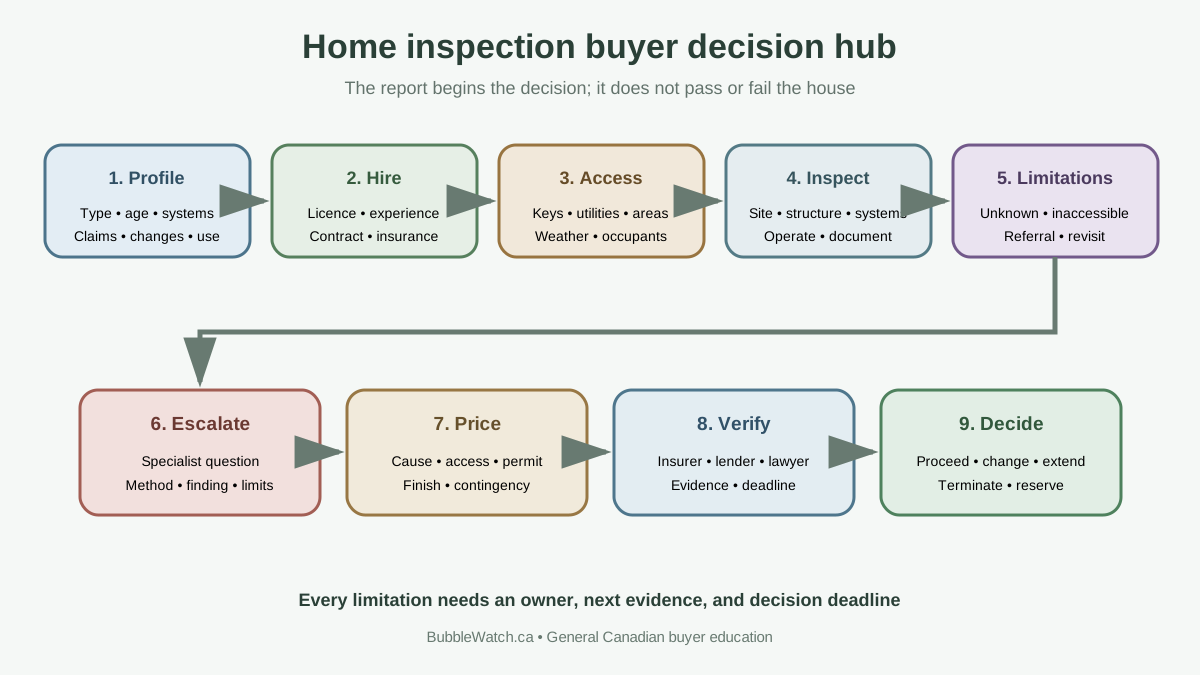
Short answer: inspect, escalate, price, and decide
Complete these ten tasks:
- identify the property type, age, use, and major alterations;
- select an independent inspector with relevant experience and insurance;
- read the contract and sample report before hiring;
- obtain seller records and secure full access;
- attend and document every system and limitation;
- separate urgent safety, active damage, capital work, and maintenance;
- retain specialists for questions outside general scope;
- obtain complete repair or replacement quotes;
- confirm insurance, lender, and legal consequences;
- make the offer decision before the condition deadline.
An inspection finding is the start of a decision chain. “Have roof reviewed” is useful only if the buyer still has time, access, and permission to obtain that review.
Define the property before booking
Send the inspector an accurate profile:
- detached, semi-detached, row, condo, co-op, mobile, modular, or rural home;
- approximate construction year and additions;
- storeys, finished area, basement, crawl space, attic, garage, and outbuildings;
- occupancy, tenants, suites, home business, and vacancy;
- municipal or private water, sewer, road, and utilities;
- heating fuels, cooling, fireplaces, solar, pool, hot tub, septic, and well;
- known renovations, permits, claims, floods, fires, pests, tanks, or environmental concerns;
- seller reports and disclosure answers;
- offer deadline and possible specialist needs.
Ask whether the quoted time, fee, and team fit that property. A standard urban appointment may not cover a barn, shoreline, retaining wall, private road, multiple dwellings, or large commercial-style system.
Choose the inspector using evidence
Innovation, Science and Economic Development Canada's current home-inspection guidance advises buyers to check local licensing where applicable, training, experience, associations, sample reports, written contracts, and professional liability insurance.
Ask each candidate:
- Are you currently licensed where the province requires it?
- What training and continuing education apply?
- How many similar properties have you inspected?
- Which standard or documented procedure do you follow?
- Which systems are included, excluded, sampled, or not operated?
- Do you enter attics and crawl spaces when safe?
- How do weather, utilities, occupancy, and access change scope?
- What tools are used, and what can they not prove?
- Which specialist relationships or referral fees exist?
- What liability, errors-and-omissions, and general insurance do you carry?
- Can I read a recent anonymized sample report and contract?
- When will the report arrive, and can I ask follow-up questions?
British Columbia's current Home Inspector Licensing Regulation shows why province matters: B.C. designates home inspection as a licensed activity and sets qualifications. Do not assume the same framework exists everywhere. Verify the regulator's current public register directly.
Association membership can add standards or complaint routes but is not a substitute for checking the person, contract, insurance, competence, and actual report.
Read the inspection agreement before paying
The agreement should identify property, client, inspector, date, fee, report deadline, scope, standard, exclusions, limitations, liability terms, dispute process, and cancellation terms.
Compare it with the offer. The report must arrive early enough for review, specialist access, quotes, insurer response, legal advice, and notice delivery.
Do not accept a broad verbal promise contradicted by written exclusions. Ask about:
- roofs, chimneys, pools, spas, septic, wells, detached structures, and retaining walls;
- appliances and life-safety devices;
- infrared, moisture, drone, sewer camera, radon, mould, asbestos, lead, and pest services;
- destructive testing and material movement;
- cost estimates or contractor recommendations;
- attendance and recording rules;
- reinspection and seasonal return visits.
The federal page notes that an inspector should not provide repair or renovation estimates as part of the inspection report. Buyers can use qualified contractors to price defined findings.
Preserve a usable inspection condition
Use local legal advice. The condition should allow enough time, access, and buyer discretion for the actual property, not merely a short general visit.
The inspection-condition workflow covers wording, deadlines, notice, specialist escalation, seller reports, invasive work, restoration, insurance, and waiver. Map appointments before setting the date.
Potential specialist needs include structural engineer, roofer, electrician, HVAC technician, plumber, sewer contractor, septic professional, well technician, environmental consultant, arborist, pest professional, chimney specialist, surveyor, and building-envelope professional.
If the market pressure encourages a pre-offer inspection, record its scope and limitations. A short showing inspection does not become more thorough because the buyer offers without conditions.
Gather the property file before the visit
Request:
- seller disclosure and prior inspection reports;
- permits, drawings, final inspections, and occupancy records;
- installation and repair invoices;
- warranties and transferable registrations;
- maintenance and service history;
- insurance claims and remediation files;
- utility bills and equipment rentals;
- surveys, title issues, easements, and shared-service records;
- condo documents or rural service records;
- photographs before finishes closed.
Use the property-disclosure evidence ledger to separate seller knowledge, documents, professional findings, and unknowns.
Send relevant records to the inspector early. Do not ask the inspector to interpret title, legal compliance, insurance coverage, or a laboratory result outside their competence.
Make every area accessible
ISED says an inspector cannot report on a snow-covered roof or locked furnace room. Access determines evidence quality.
Confirm access to:
- electrical panels, meter, service, and subpanels;
- furnace, boiler, heat pump, air handler, water heater, and fuel systems;
- attic hatches, knee walls, crawl spaces, and low roofs;
- foundation walls, sump, backwater valve, cleanouts, and floor drains;
- under sinks, tubs, showers, appliances, and laundry;
- garage, shed, deck, balcony, porch, and outbuilding;
- condo mechanical areas or common records where authorized;
- tenant areas under lawful notice and consent;
- exterior walls, grading, wells, septic lids, and shoreline systems.
Ask the seller to move ordinary stored items where reasonable, provide keys and remotes, turn on utilities, identify shutoffs, restrain pets, and disclose unsafe or contaminated areas. Do not move personal belongings or open sealed construction without permission.
Attend with a system map, not a cosmetic list
Follow the inspector and ask questions without distracting from safety or method. Photograph report references where permitted. Note room, elevation, component, weather, operating mode, and access limit.
Site and drainage
Review grading, driveways, walks, patios, retaining walls, swales, wells, septic areas, trees, fences, drainage, and water arriving from neighbouring land. Connect roof discharge to the final outlet.
Structure
Review foundation, columns, beams, bearing walls, floors, framing, roof structure, additions, settlement signs, and altered members. Use the foundation-crack workflow when movement and water need separate diagnosis.
Roof and exterior
Inventory every roof section, covering, flashing, penetration, chimney, wall transition, gutter, cladding, trim, window, and door. The roof buyer guide and window/door guide turn surface clues into specialist scope.
Attic, insulation, and ventilation
Check accessible sheathing, framing, insulation, air leakage, exhaust ducts, moisture, frost, pests, wiring, and ventilation paths. Record inaccessible cathedral and addition roofs.
Plumbing and drainage
Map source, service, supply, water heating, fixtures, drains, vents, sewer or septic, sump, and valves. Use the plumbing and water-heater inspection map for simultaneous demand, materials, rentals, and leak history.
Electrical
Identify service, panels, wiring methods, circuits, visible defects, alarms, generators, solar, batteries, and renovations. A general inspection does not replace an authorized electrical assessment.
Heating, cooling, and indoor air
Inventory each zone, fuel, equipment item, distribution path, thermostat, ventilation system, exhaust, condensate, and backup. Seasonal or safety limitations belong in the decision file.
Interior and life safety
Operate accessible windows, doors, stairs, guards, plumbing fixtures, cabinets, and included appliances within scope. Review egress, fire separations, smoke and carbon-monoxide alarms, trip hazards, and water damage without treating the visit as code enforcement.
Understand tools without overtrusting them
Moisture meters, thermal cameras, drones, outlet testers, gas detectors, pressure gauges, and cameras extend observation. Each has calibration, access, material, environmental, and interpretation limits.
Infrared displays surface temperature patterns, not mould or water by itself. A moisture meter reads within its material and method constraints. A drone shows surfaces, not concealed roofing layers. An outlet tester does not assess every conductor or connection.
Ask the inspector to state:
- what prompted the tool;
- what was measured or imaged;
- relevant weather and operating conditions;
- what conclusion the result supports;
- what it cannot rule out;
- which next test changes the decision.
Do not buy optional testing simply because equipment exists. Define the question first.
Adapt the checklist to the ownership form
Condo apartment
The unit inspection can review visible finishes, plumbing, electrical, heating or cooling equipment, windows, doors, appliances, and life-safety features within scope. It cannot replace legal review of the corporation.
Coordinate the physical visit with the status or estoppel file, reserve study, engineering reports, insurance, minutes, alterations, chargebacks, and responsibility boundaries. A stain at a window can involve the unit finish, common wall, roof, balcony, or corporation drain.
Rural or seasonal home
Add well quality and yield, septic, private road, fuel storage, backup power, shoreline, outbuildings, drainage, wildfire exposure, winter access, internet, easements, and emergency response. Schedule specialists early because travel and laboratory time can exceed an urban condition period.
Multi-unit or tenanted property
Map meters, services, heat, hot water, ventilation, alarms, fire separations, exits, laundry, storage, leases, and legal use. Obtain lawful access and do not infer approval from occupancy.
New construction
Builder, municipal, warranty, pre-delivery, and buyer inspections answer different questions. Record incomplete work, damage, substitutions, operating demonstrations, manuals, warranties, and statutory deadlines. A municipal inspection does not become the buyer's quality-control report.
Older or heavily renovated house
Add hazardous-material planning, mixed systems, concealed additions, heritage rules, obsolete equipment, structural alterations, and permit history. The National Research Council's archived older-house inspection checklist is historical rather than current code guidance, but it shows why site, structure, services, and repair consequences must be reviewed together. Use current professionals and authorities for decisions.
Write an inspection question list before arrival
Turn seller records and listing claims into neutral questions. Examples include: Which roof sections were replaced? Which circuits remain original? Where did the basement water enter? Which wall was removed? Who owns the water heater? Does the heat pump serve every room? What lies behind the finished crawl-space wall?
Give the list to the inspector before the visit. Do not demand predetermined conclusions. The inspector may observe evidence that changes or disproves the original concern.
Separate property questions from personal renovation wishes. Inspection time should first address safety, active sources, major systems, access limitations, and purchase risk.
Treat limitations as findings
Build a limitation register:
| Area/system | Why not inspected | Risk left open | Next evidence | Deadline owner |
|---|---|---|---|---|
| Roof | Snow cover | Covering/flashing condition unknown | Roofer revisit after melt | Buyer |
| Finished basement wall | No access | Foundation and prior wetting unknown | Records and controlled opening | Buyer/seller |
Common limits include snow, rain, heat, cold, stored contents, finishes, locks, tenants, unsafe materials, no utilities, shut fuel, low clearance, fragile roof, and inaccessible common property.
“Not inspected” is neither defective nor satisfactory. Decide how much unresolved risk the buyer can retain and price.
Escalate by question, not trade shopping
Give the specialist a precise question and the general report. Examples:
- Is the observed foundation movement active, and what load path needs repair?
- Does the electrical system meet the insurer's stated requirement?
- What caused the attic moisture, and which assembly must change?
- Which sewer defects lie on private property, and what repair methods are feasible?
- Is the furnace safe in the tested modes, and what remained inaccessible?
- What pest is present, what building damage exists, and what source conditions sustain it?
Require written methods, observations, limitations, conclusions, scope, and credentials. A sales quote without diagnosis may price the wrong work.
Triage the report into decisions
Use five bins:
| Bin | Meaning | Typical response |
|---|---|---|
| Immediate safety | Active danger or unsafe operation | Follow professional safety direction now |
| Active source | Water, fuel, electrical, structural, pest, or mechanical damage continuing | Diagnose and stop source |
| Specialist uncertainty | General inspection reached its boundary | Obtain named review before deadline |
| Capital project | Repair or replacement with material cost/timing | Complete quote and reserve |
| Routine maintenance | Ordinary ownership work | Add schedule and annual budget |
Priority labels are not cost estimates. A low-cost gas or electrical defect can be urgent; an expensive roof can be monitorable for a defined period.
Read the complete report, captions, photos, summary, limitations, and excluded systems. A summary page is not a purchase decision.
Convert findings into complete quotes
A useful quote states location, quantity, cause assumption, materials, method, access, removal, permits, safety controls, temporary services, testing, finishes, cleanup, tax, schedule, warranty, and hidden-condition rates.
Compare like scope. “Repair roof” and “replace main-house shingles including deck allowance and new flashing” are not competing prices.
Include collateral work: asbestos or lead assessment, electrical relocation, landscaping, drywall, paint, flooring, temporary heat, accommodation, engineering, and reinspection.
Use the home-maintenance reserve method to separate routine annual care, component reserves, near-term projects, and emergency liquidity.
Coordinate insurance, lending, and legal review
Send accurate material facts to the insurer before waiving conditions. Use the home-insurance closing guide for roof age, wiring, fuel, water history, wood heat, vacancy, rentals, and required repairs.
Ask the lender whether major defects, repair conditions, holdbacks, property use, insurance exclusions, or appraisal assumptions affect funding. Mortgage approval does not certify the house.
Ask local counsel about disclosure, inspection terms, notice, amendment, seller repairs, credits, holdbacks, extensions, termination, and document preservation. The inspector should not give legal advice.
Choose among five transaction responses
The buyer may:
- proceed with the original terms and a funded ownership plan;
- negotiate price based on complete scopes;
- require precisely defined seller work and reinspection;
- extend the condition for missing evidence;
- terminate where the contract permits.
A credit transfers execution risk to the buyer and may be preferable when seller work would be rushed. Seller repair can reduce immediate cash need but requires exact scope, qualified trades, permits, records, access, hidden-condition rules, and acceptance.
Do not allow a contractor's optimistic verbal estimate to consume the entire contingency. Unknown concealed conditions remain unknown.
Reinspect and use the final walkthrough
A reinspection checks agreed repairs within a stated scope. It does not rerun every part of the original inspection unless contracted.
Obtain invoices, permits, final inspections, warranties, photographs, test results, and specialist reports. Confirm recommendations were completed, not merely attended to.
At final walkthrough, compare original photos and check new leaks, storm damage, missing equipment, unfinished work, changed occupancy, removed fixtures, alarm status, utilities, and access. Use the final-walkthrough evidence map for the closing handoff.
Worked example: a short report summary hides three deadlines
The summary lists an old roof, aluminum branch wiring, and a damp basement corner. The buyer could ask for a round-number credit and move on.
Instead, the full report shows the roof was snow-covered, the panel is new but branch circuits remain unknown, and the damp corner sits below a downspout beside a foundation crack. The buyer has six business days.
Day one is used to schedule roofer, authorized electrical contractor, and foundation/drainage specialist. The roofer reviews records and accessible attic evidence but preserves a spring limitation. The electrician produces an insurer-ready circuit scope. The foundation specialist separates grading, crack seepage, and interior restoration.
The insurer accepts the electrical plan with a completion deadline. The buyer negotiates from three defined scopes and retains a roof contingency. The summary did not change; the decision quality did.
Buyer checklist
Before the inspection
- Property profile and specialist risks sent
- Inspector licence where applicable, experience, insurance, sample report, and contract checked
- Offer deadline supports report, specialists, quotes, insurance, and legal review
- Seller records requested
- Every area, utility, key, tenant, and pet access confirmed
During and after
- Attended and mapped all systems
- Tools and operating conditions understood
- Every inaccessible area entered in limitation register
- Safety and active sources separated from maintenance
- Specialist questions and written scopes obtained
- Complete quotes normalized
Decision and closing
- Insurance and lender acceptance confirmed
- Legal response delivered by the correct deadline
- Seller work has measurable evidence and reinspection
- Final walkthrough compares current state with inspection
- First-year project, reserve, and maintenance plan funded
Frequently asked questions
Is a home inspection mandatory in Canada?
Generally, buyers choose whether to obtain one, while contracts, provinces, lenders, insurers, or property programs can affect the transaction. Obtain local legal advice.
Does a home pass or fail inspection?
A general inspection describes accessible condition and limitations. The buyer decides using property facts, specialists, cost, insurance, financing, contract rights, and risk tolerance.
Should the buyer use the seller's pre-listing report?
Read it, but verify client, date, scope, access, independence, changes since inspection, and whether the inspector will accept a duty to the buyer. A buyer may still retain their own inspector.
How long does a home inspection take?
It varies with property size, age, systems, access, occupancy, weather, team, and scope. Ask the inspector to justify the scheduled time for the actual property.
Can the inspector quote repairs?
The federal consumer guidance says inspectors should not give repair or renovation estimates in the report. Obtain complete quotes from qualified professionals after diagnosis.
What is the biggest inspection mistake?
Treating a limitation or specialist referral as a minor disclaimer, then waiving the condition before obtaining the missing evidence.
What to read next
Use the inspection-clause planning guide before writing an offer so the inspection, specialist, insurer, and notice schedule is workable. If the report already exists, use the home maintenance and capital reserve map to turn findings into an ownership cash plan.
This article provides general Canadian home-purchase information, not inspection, engineering, environmental, health, safety, code, legal, insurance, lending, or contracting advice. Scope and requirements vary by province, property, inspector, contract, insurer, lender, and authority. Use current official guidance and qualified local professionals.
Advertisement

About David R. Chen, CFA
David R. Chen is a Chartered Financial Analyst and the Senior Housing Economist at BubbleWatch.ca. He brings 12+ years of experience in quantitative real estate analysis and mortgage underwriting. Formerly an analyst at a major Canadian bank, he specializes in modeling payment shock, regional affordability divergence, and private lending risk.
View David's professional bio & credentials →